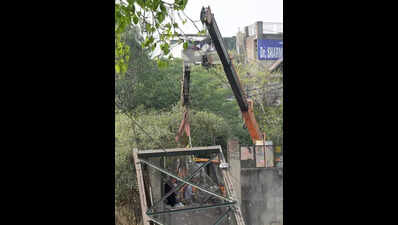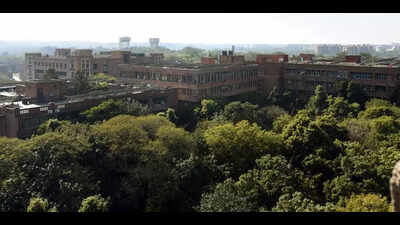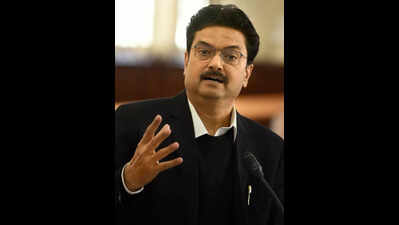





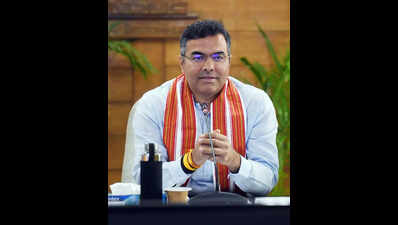
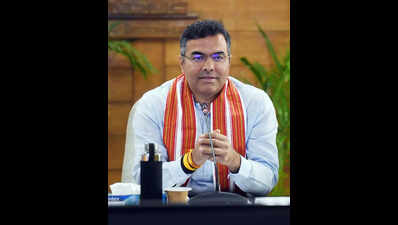
New Delhi: With the central empowered committee (CEC) having conducted an inspection recently, Public Works Department minister Parvesh Verma on Wednesday said the remaining civil work of phase III of the Barapullah elevated road project may start soon and the corridor might be opened by Dec.In making for 10 years now, the project was initially stuck due to two land parcels on the Yamuna floodplain that govt had to acquire from private individuals. Officials said there was a final hurdle in the form of 274 trees that fell in the way of the 3.5km elevated road between Sarai Kale Khan on the west of the Yamuna and Mayur Vihar on its east. The permission to fell the trees has been pending with the forest department for over two years now.Verma said the Supreme Court-appointed CEC inspected the project and the trees on June 21. The hearing of the committee is scheduled to take place on June 27 when PWD is hopeful of getting the permission to cut and translocate the trees.“Once we get the permission, the remaining portion of the elevated road will be built within five months or so. We hope to complete it and open for traffic by Dec this year,” Verma said, adding that 690-metre stretches — one measuring 400 metres and another 290 metres — currently remain unbuilt.The work on the 3.5km-long road, which promised to cut the driving time between east and south Delhi to just 20 minutes, started in 2015. It was initially planned to be built in 30 months, but missed several deadlines due to two small land parcels of 709.9 and 459.2 square metres that took years to be acquired to allow the construction on the 690 metres of the missing link.It was in July last year that the revenue department of Delhi govt announced a land acquisition award to take over 1,169 square metres of land in Nangli Razapur village, paving the way for the construction. However, govt then realised that there was yet another hurdle to be cleared before the construction can begin—felling and transplantation of 274 fully grown trees.While the project was initially estimated to cost Rs 964 crore, it has now reached Rs 1,330 crore. Verma blamed the previous govt for the cost and time escalation of the project. “Delhi paid the price—in both time and taxpayers’ money,” he said.