





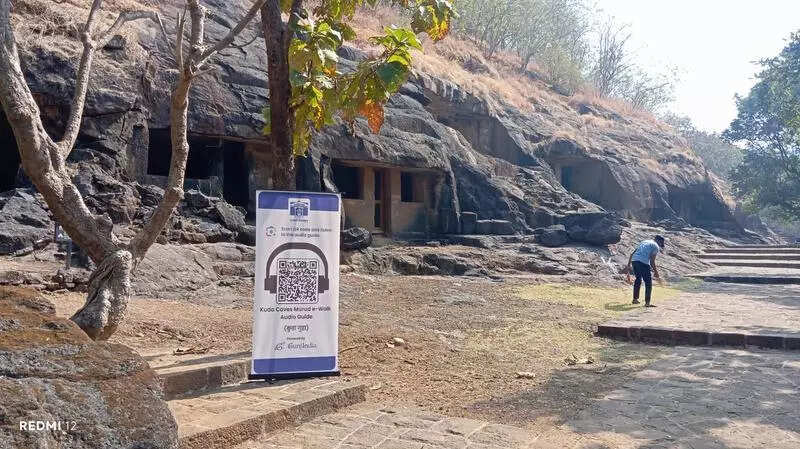
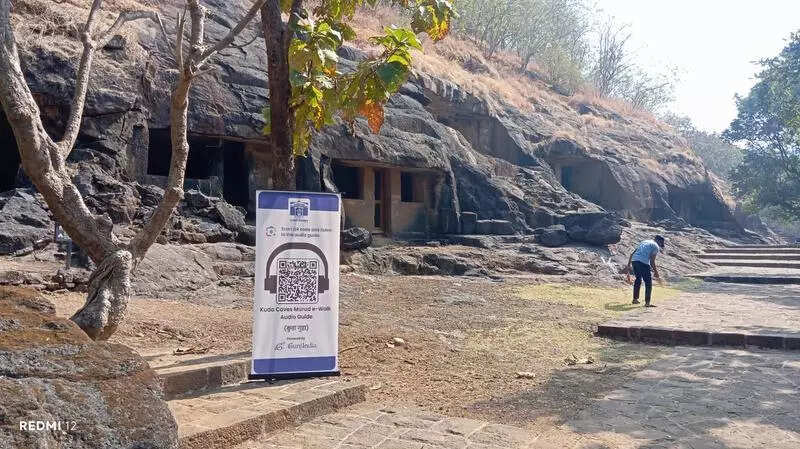
Pune: The Archaeological Survey of India (ASI) has rolled out a self-guided digital audio tour system at two major heritage sites in Maharashtra — Kuda Caves in Raigad district and Lohagad Fort in Pune district — allowing visitors to explore monuments independently using QR codes and their mobile phones.The initiative, introduced by ASI’s Mumbai circle, is part of a larger digital heritage programme that will be extended to at least 24 additional monuments across Maharashtra in a phased manner. “What we have introduced is a digital heritage walk. It is a kind of self-guided tour. Often, when people visit archaeological sites, they do not know what exactly is significant — what to see, what the architecture means, or why a monument is important. This system helps address that gap,” said Abhijit Ambekar, superintending archaeologist, ASI Mumbai circle.At Kuda Caves, the audio guide explains the site’s architectural and historical importance, including inscriptions that record donations made by traders from ancient settlements such as Chaul, Sopara and Kalyan. “All these caves were built through donations. The inscriptions mention who donated for a cave or for a water tank. Through the audio guide, visitors can now understand these details while walking through the site,” Ambekar said.He said Kuda is unique because of its coastal location. “Along the Konkan coast, you will not find any other cave complex like Kuda. Even Elephanta is located on an island, whereas Kuda is directly on the coast, just south of Janjira near Tala. This uniqueness is explained clearly through the audio tour,” he said.The system works through QR codes placed at entry points and key locations inside the monuments. Once scanned, visitors can choose between online and offline modes. “If there is a network issue, the entire audio can be downloaded once and accessed offline. The content remains active for 24 hours. As the visitor moves, the GPS-based system automatically plays the relevant audio at each location,” Ambekar explained.The audio guides are currently available in English and Hindi, with Marathi versions being introduced, starting with Kuda. Visitors can listen using earphones or directly on their phones as they walk.The technological support for the project is being provided by Gunj India, while ASI prepares the content internally. “Our teams visit the sites, prepare the text, sit with artists to record the narration in a studio in Mumbai, and then provide the material to the technical partners. It is a collaborative effort, but the content creation is entirely in-house,” Ambekar said.The project builds on a similar initiative first introduced by ASI in 2023 at Vadnagar, following large-scale excavations at the site. “That programme has seen visitors from 28 countries and around 70,000 people have experienced the digital walk so far,” he said.Following the pilot at Kuda and Lohagad, ASI plans to roll out the system at one monument every Saturday, starting with Bhaja, followed by Shivneri Fort and Naneghat, covering ASI-protected monuments across Pune, Konkan, Kolhapur and Mumbai regions in a step-by-step manner.