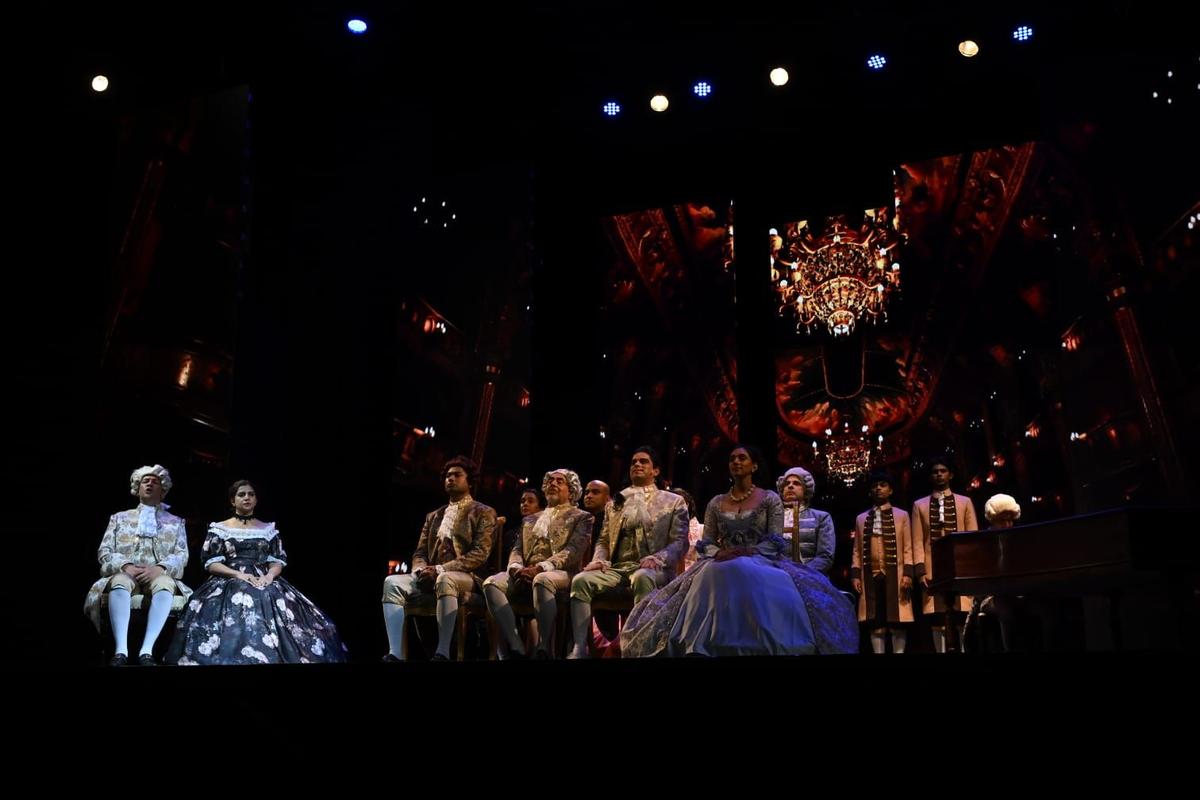





It is a late summer afternoon. Riz Ahmed takes to the stage to deliver a keynote that feels less like a celebrity talk and more like a manifesto. He begins by revisiting perhaps the most quoted line in the English language: “To be or not to be.” But rather than dwell on existential paralysis, he reframes it as a call to action, urging storytellers to reclaim the radical pulse of their craft. With his deft humour and unshakable sincerity, he traces how the centuries-old text of Hamlet finds fresh resonance today — especially in our fractured, fraught era of injustice, division and compromise.
We are at the 10th edition of BoF Voices, an annual gathering by the London-based fashion portal in the English countryside of Oxfordshire, that brings together fashion and luxury’s movers, shapers, and trailblazers.
Days later, just before the gala celebrations on the final day of Voices, Ahmed sits down to speak of his new film adaptation of Hamlet, set in contemporary London and anchored in a British South Asian family. Critics have given it both proverbial brickbats and flowers and Ahmed doesn’t shy away from that critique. He says he wanted Hamlet to be urgent, personal, inclusive, as a text that echoes for those who have ever felt outside the canon. His message to the audience at Voices, and now to readers, is clear: storytelling is not a luxury or a distraction. It is our most powerful technology of empathy.
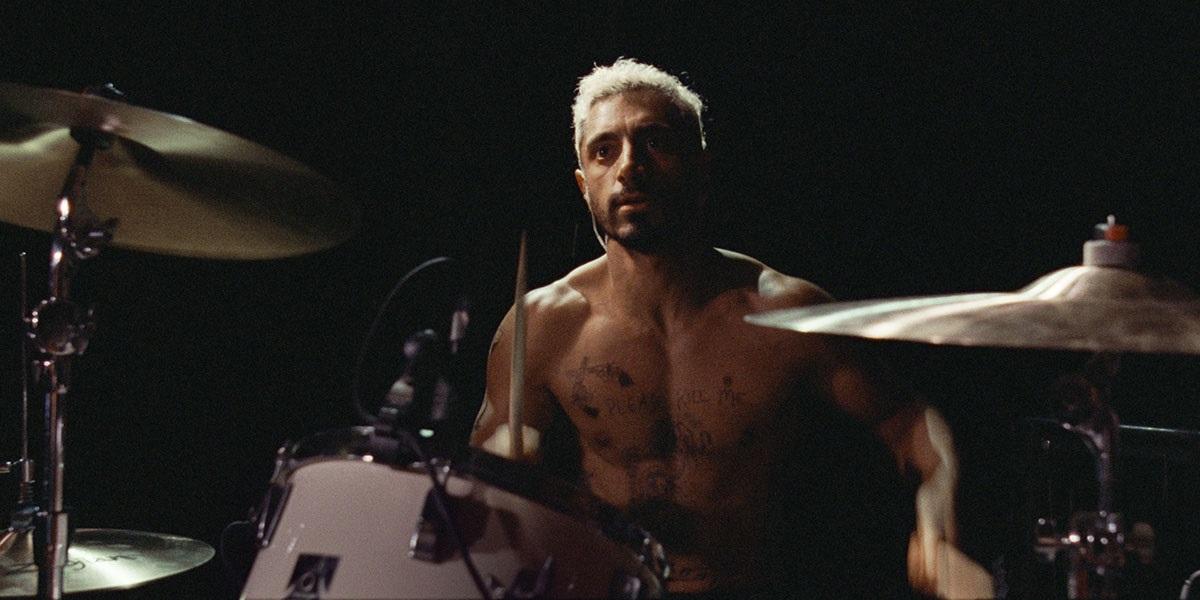
Riz Ahmed in his Oscar-nominated role in ‘Sound of Metal’.
In the conversation that follows, edited for clarity and flow, Ahmed, who was Oscar nominated as best actor in 2021 for Sound of Metal, charts his path from actor-musician to auteur, from that first encounter with Shakespeare in school to a film born of identity, rage and tenderness.

Okay, so, why Hamlet? You said it was 13 years in the making?

Yes, it was 13 years of development when I first approached Michael Lesslie, the writer, with the idea of Hamlet set in an Indian family, in an Indian family business. But the initial idea to make a film like that dated back to when I was 17 years old, so almost 20 years… A lot of those storylines in Shakespeare’s original that can feel a bit dated in a British context actually are very alive and kicking — whether it’s the prevalence of spiritual belief, or the different layers of family duty and obligation, or considerations about who you marry and how, or in particular, the tradition of someone marrying their sister-in-law if their brother dies and there are orphans to take care of.
All of these are not some kind of strange anachronistic thing, as they often are when it’s staged in Britain or in a Western context. These are part of our lived experience. And so just bringing Hamlet into an Indian family suddenly makes it feel real, immediate, vivid and contemporary… it’s somehow about making those core themes of love, loss, loyalty, duty, honour feel as immediate and real as possible. That happens when you make Hamlet brown.

“We really needed a voice who could cut through the noise and offer a clear, powerful call to action for human unity at a time when it feels like everything is breaking down. Few people are better equipped to inspire that shift in perspective than Riz Ahmed. An Oscar and Emmy-winning actor, producer, and musician, Riz has cemented his place as one of the most compelling artists of his generation through projects like ‘Sound of Metal’ and ‘The Night Of’, as well as through his music. He has consistently used his platform to advocate for authentic representation and humanitarian causes.”Imran AmedFounder and CEO, The Business of Fashion
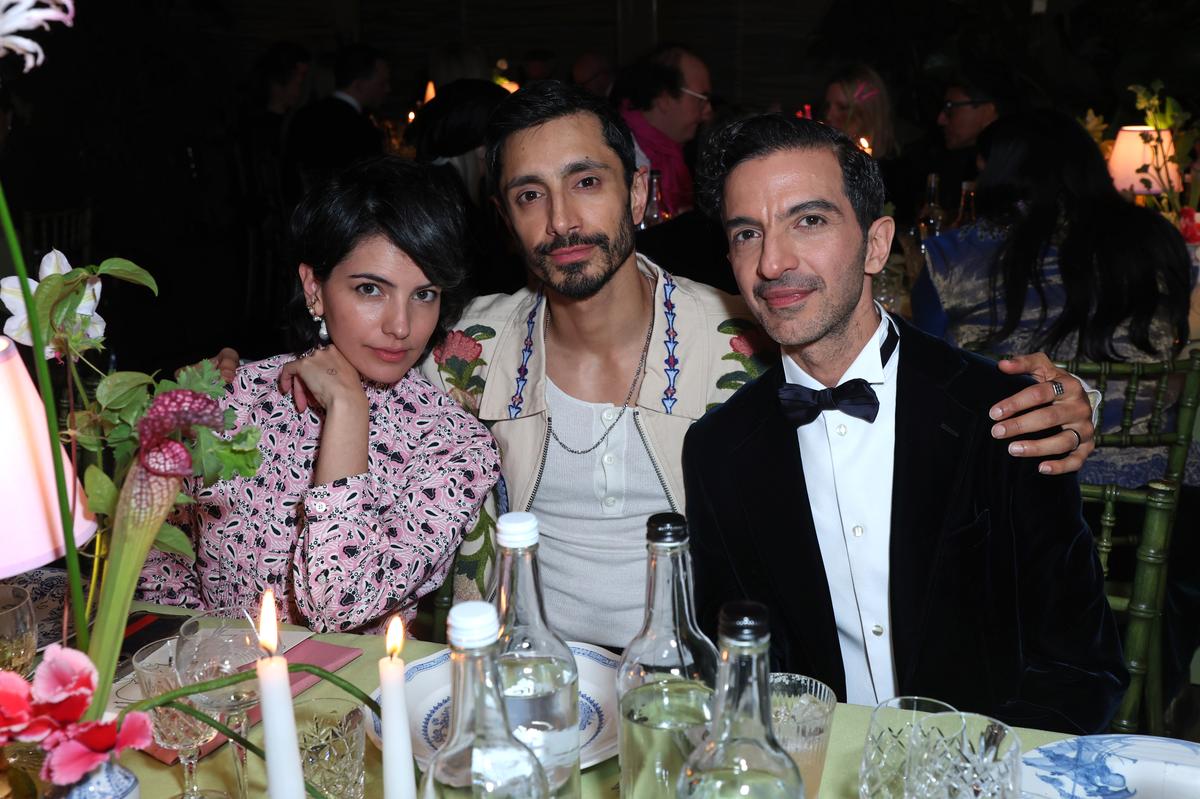
Riz Ahmed (centre) with his wife, author Fatima Farheen Mirza, and Imran Amed (right), CEO, The Business of Fashion, at a BoF Voices event in Chipping Norton, England, November 20, 2025.
| Photo Credit:
Getty Images
Make Hamlet brown. I love that. Did you have to really unpick the original text?
No, not really. We could have copied and pasted directly. But Lesslie did adapt the original in a really ingenious way to make it more accessible. He cut lots of exposition, made it lean, mean and action-packed. And Aneil Karia, our director, decided we don’t want this to feel like you’re observing a performance. We want to be on Hamlet’s shoulder, walking into a room with him, inside his mind.
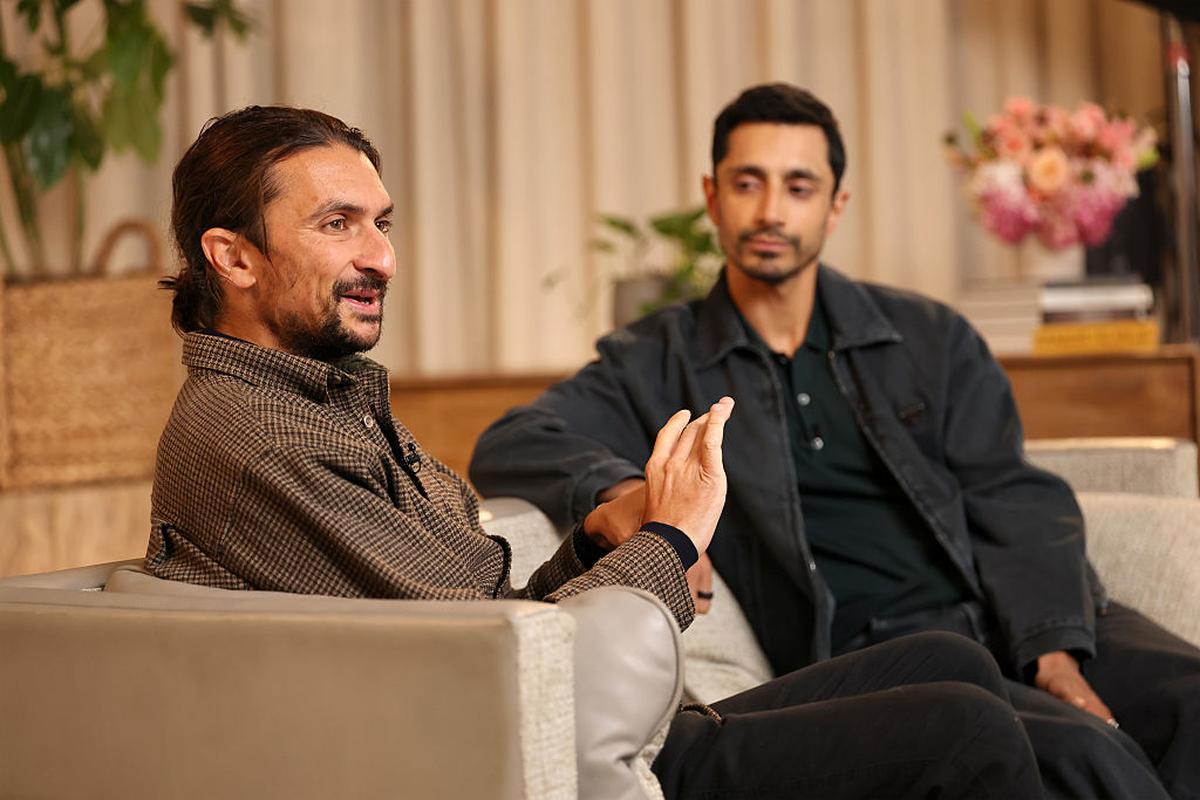
Director Aneil Karia (left) with Riz Ahmed
| Photo Credit:
Getty Images
Aneil works a lot in choreography. We’re both fans of Akram Khan who choreographed the dance sequence at the wedding, at the heart of the show. So I created a kind of dance, a movement map for the emotional journey to keep it visceral and emotional, not intellectual.
Hamlet also has Sheeba Chaddha — one of the most profound and powerful actors I’ve worked with. She’s in touch with something very spiritual and would talk about working with Irrfan [Khan] back in the day. I hold her in high regard. I’m actually working with her again soon. She should be considered a national treasure in India.
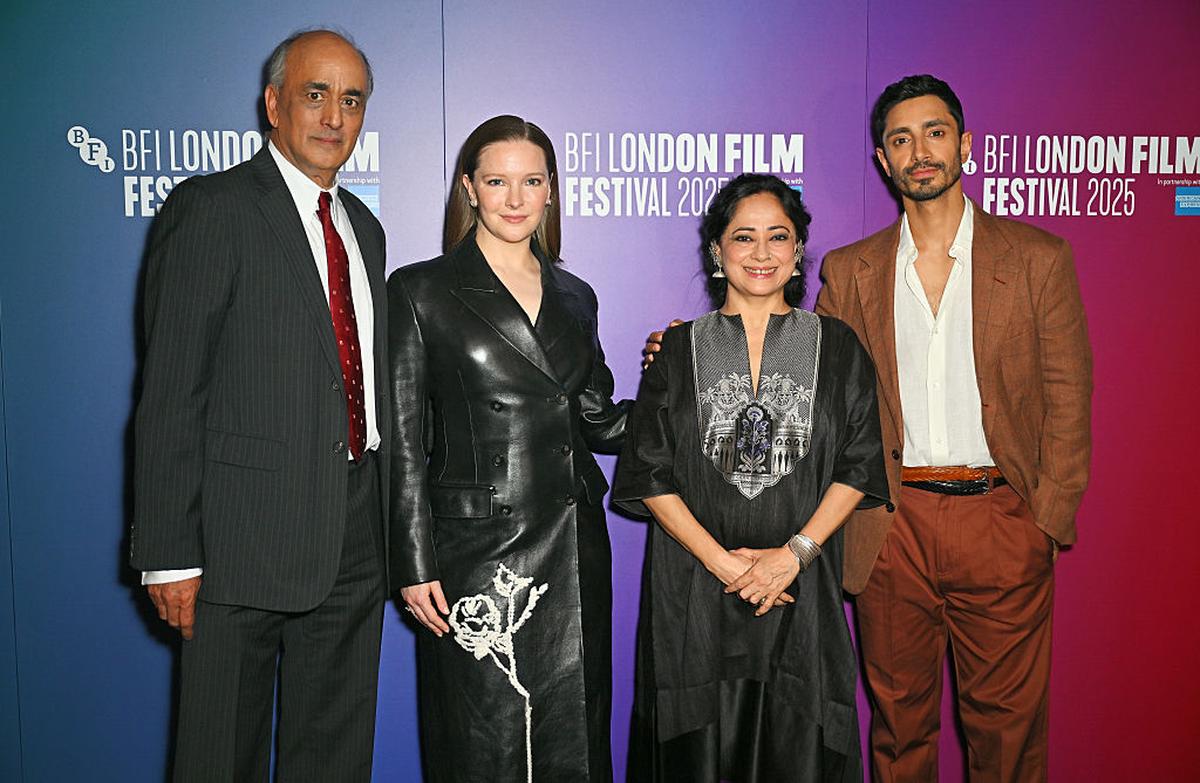
(L to R) Actors Art Malik, Morfydd Clark, Sheeba Chaddha and Riz Ahmed at a screening of their film ‘Hamlet’ in London, October 2025.
| Photo Credit:
Getty Images
A lot of your speech was about how storytelling has been “de-fanged and de-radicalised”. And I feel like your creative work now seems to be very much an act of activism… when you are choosing to tell stories that give a new perspective to people.
Stories inherently have a point of view, and the stories I’m interested in offer just a different point of view than what we’re used to. What I think is really interesting is that stories that stretch our empathy, stretch our consciousness and stretch culture in that way, are considered a form of politics or activism. I think that says something about how powerful and confronting stories can be — and about how accustomed we’ve become to the same old stories — rather than it saying much about my own intentions.
I’m trying to tell stories that I can be in, that I can see myself in, and that take us out of our comfort zone because I think it’s exciting. If that’s scandalising or controversial for people, I guess it just makes it a bit more fun.
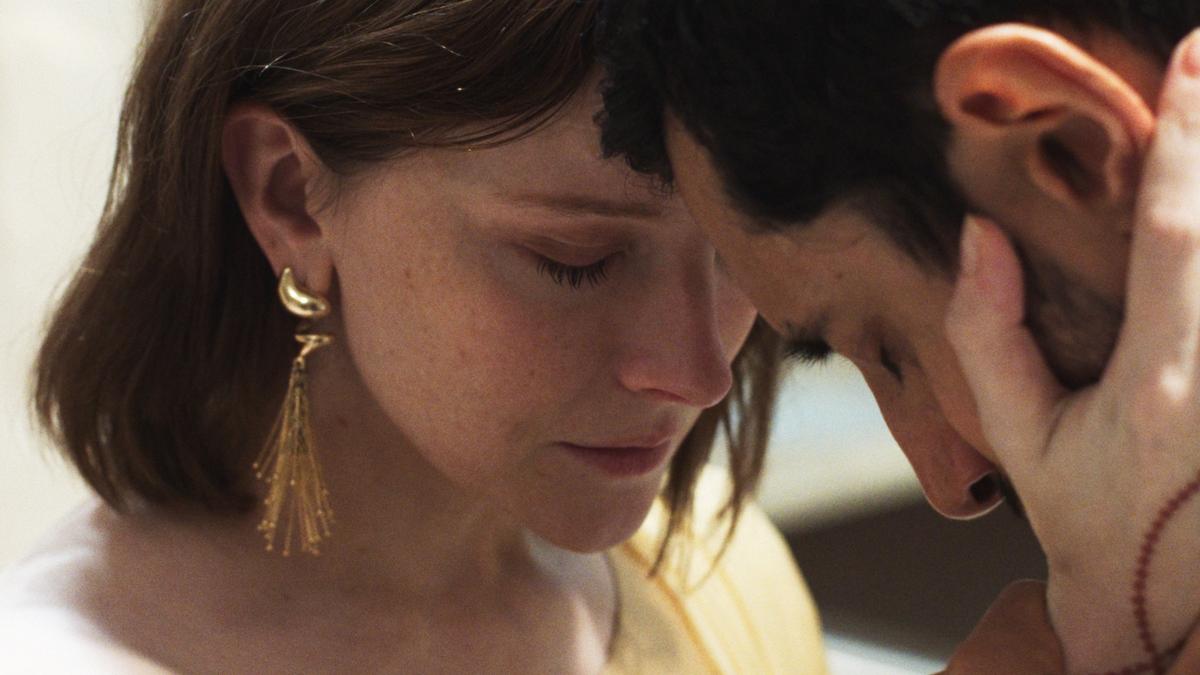
Morfydd Clark and Riz Ahmed in a still from ‘Hamlet’.
So, you’ve recently become a father. Does that change how you engage with the world, with storytelling in any way?
I’m not sure yet. I guess the biggest way is that every time I step away from my family to immerse myself in a role, I’m stepping away from my family. So that means there’s maybe a higher bar for some of the work I take on. It probably means I have more of an appetite to build some of my own projects. Maybe it’s something to do with nesting and building that I feel like I want to build a creative home for myself as well. And then building a creative family of collaborators. Maybe that’s bled into how I approach my creative life.
Where are you at the moment, creatively?
Two projects at the top of next year — one is a half-hour comedy [on Amazon’s Prime Video] and one is Hamlet. The last thing I did was a thriller [Relay] where I barely spoke for most of the film. I’m interested in doing more comedy — I miss that. I haven’t done a big one since Four Lions [2010]. I’ve never done horror before. There are some more action-oriented things I’m looking at.
I just feel very creatively restless, curious, and I have ADHD — I can get bored easily. So, the above is what keeps me going creatively.
The other thing that inspires me is this strange and destabilising time in our industry because of the advent of AI, the rise of streamers, the globalisation of storytelling. People watch anything from anywhere. There are subtitles now. I think those moments of disruption are moments of opportunity.
My own company, Left Handed, is really focused on that — it’s called Left Handed because the mantra is “go left”. We’re trying to flip the script and do things that are unconventional… If you find the right people who can spot the opportunity in disruption, it can be an exciting time. I feel like both of the projects coming out are kind of unlikely propositions.
Someone in the talks yesterday said we should “zag while everyone is zigging”. I’m curious to know, when it comes to AI, where do you see the opportunity in that?
You know what’s interesting? I think it’s going to force us to re-evaluate what telling a story really is and what creativity really is. I think we’re going to see more of a focus on process. I’ve worked with Wes Anderson [in The Phoenician Scheme] — people talk about how extremely stylised, very authored, every frame feels. You feel the author’s hand, how lovingly made it is. I think that’s going to have an increasing sense of value for people. That’s going to hold more weight and that’s what creativity is really about. That’s why children are so good at creating. For them, it’s not about the results, it’s about the process. They’re just enjoying the process.
The interviewer is an independent journalist based in London, writing on fashion, luxury and lifestyle.
Published – December 12, 2025 03:51 pm IST