



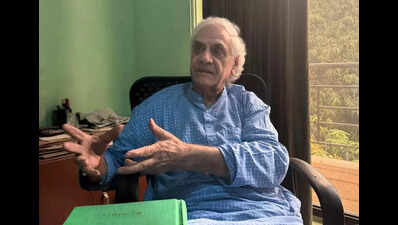
New Delhi: When environmental lawyer MC Mehta filed a petition in Supreme Court raising concerns about hazardous industries in Delhi in 1984, environmental issues were not considered “pressing” to the judicial system. As the case was listed after a few months, Mehta told TOI, it reflected that environmental matters were not viewed as “immediate emergencies”. “Though water and air acts were present on paper, nobody used to give weight to environmental matters then.” However, within days of the petition being filed, a gas leak occurred at a chemical unit in the city, spreading panic among residents in the neighbourhood. The incident pushed Mehta to approach senior judges of Supreme Court on the same day, carrying the original writ petition that warned about the risks. The judges immediately took note of the urgency, the matter was heard immediately and notices were issued. What followed became one of the most consequential environmental cases in the country — the Oleum Gas Leak Case. Supreme Court established “absolute liability” for hazardous industries in this landmark case.For Mehta, this case was only the beginning. He later filed a series of cases targeting pollution in the Ganga and its tributaries, vehicular emissions in Delhi, contamination of groundwater in Rajasthan’s Bichhri and a ban on mining in Aravali.His writ petition on the Delhi vehicular pollution case, filed in 1985, triggered a series of judicial orders. This case, which was disposed of on Thursday, became a cornerstone in Delhi’s long battle for cleaner air. “The court has given many orders with full reasoning — it’s just their enforcement. If 90% enforcement happens, it would cause massive improvement in pollution. Trees are being felled, rivers are polluted and waste mountains have grown,” said 79-year-old Mehta.He said the job of enforcement agencies was to be strict. “The laws are strong, and if agencies become strong in enforcement, only then they can save human lives. People who breathe polluted air fall sick; they need treatment. How many hospitals will you build,” said Mehta, whose first important environmental case was the Taj Trapezium Zone case filed in 1984, which made 292 industries to switch to natural gas or relocate.Mehta said the setting up of environmental courts was initially proposed like consumer courts, but National Green Tribunal was constituted, which has five benches in the country. “At least one environment court should be present in every district. India has over 600 districts, and how can just five benches serve the entire country?” wondered Mehta, adding there is lack of political will on environmental matters. He said when citizens collectively pressurised their local councillors or MLAs, only then it could lead to a visible change.On Delhi’s ridges and Aravalis, Mehta said when the wind blew, they acted as buffers. “It should be considered as an installed oxygen supply. If you cut trees in them, from where will you get cylinders?” asked Mehta, who is still fighting environmental matters in courts and NGT.Mehta feels that he has not done great work. “Article 51A lists Fundamental Duties, and among them is the duty of every citizen of India to protect the environment, rivers and have compassion for animal life. This is our duty.”