






Sheik Mahaboob Subhani and wife Kaleeshabi trained under Sheik John Sahib.
| Photo Credit: M. Srinath
The passing of Sheik Mahaboob Subhani in Srirangam, his adopted home since the 1980s, has renewed focus on the lesser-known legacy of Muslim exponents of Carnatic music in southern India.
Born into a family of nagaswaram musicians in Peda Kothapalli village in Prakasam district, Andhra Pradesh, Mahaboob learned to play the nagaswaram from his father Sheik Meera Sahib at the age of seven. He was the eighth-generation inheritor of his family’s musical legacy, and along with his wife — Kaleeshabi Mahaboob— a torchbearer of mangala isai (sacred music).
The recitals presented by the duo, later accompanied by their son Firose, during the annual Tyagaraja Aradhana in Tiruvaiyaru, were popular among rasikas, united by singular love for music.
Woodwind instruments such as the shehnai and nagaswaram have showcased the musical talent of many Muslim exponents in India, whose artistry long embodied the spirit of inclusivity. Most of these musicians, who trained under Hindu gurus, embraced the shared cultural practices that shaped their musical journeys.
“We are Muslims by faith; but playing the nagaswaram is our passion. I believe our music strives to bring people together, because we revere and respect both unconditionally,” Sheik Mahaboob had said in an interview to The Hindu earlier.
The exponents’ home in Srirangam is a shrine to the nadaswaram as a divine instrument, and reflects their blended cultural legacy. It also shows how the Indian classical landscape has always been marked by diversity, which has enriched its repertoire.
Talking about the changing dynamics of Carnatic performances, Mahaboob often emphasised the importance of sharing the stage with fellow artistes. Recalling the experience of collaborating with vocalist T.M. Krishna, Mahaboob said, “Not many musicians are comfortable performing with instrumentalists. Krishna’s constant appreciation with ‘bale’ always pushed us to give our best.”
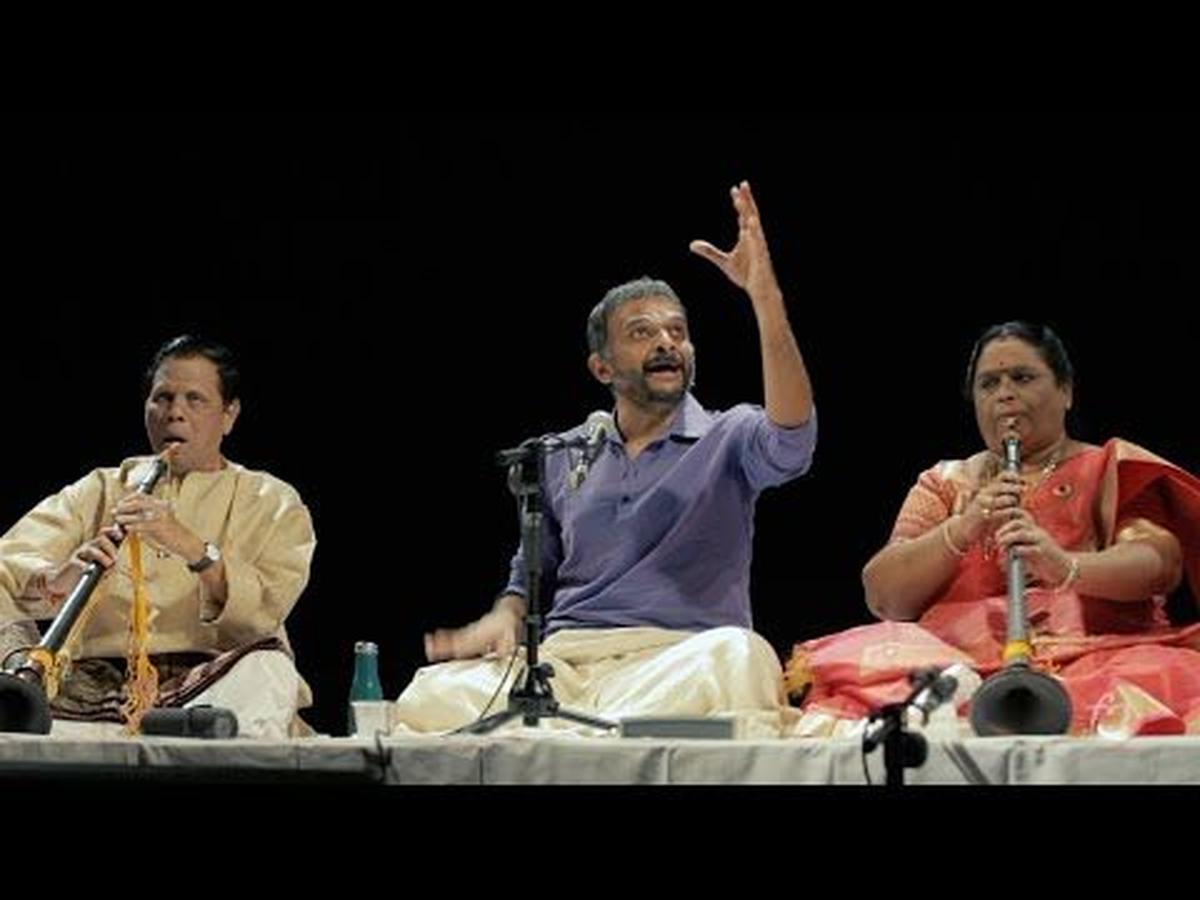
Mahaboob Subhani and Kaleeshabi performing with T.M. Krishna in 2020.
| Photo Credit:
Special Arrangement
Mahaboob’s own journey was one of remarkable transformation — from a young man who drifted away from his musical legacy and took up work in a tobacco factory to support his family, to eventually returning to the nagaswaram. He credited this return to his wife Kaleeshabi, his first cousin, from the nearby village of Cherukapadu. Though her conservative family did not allow her to go to school, her early talent for the nagaswaram was recognised by her paternal uncle, Sheik John Sahib, who trained her.
“Initially, nobody wanted me to perform on stage, especially with men. But appreciation from vidwans made my family relent,” Kaleeshabi had shared in a 2020 interview with The Hindu.
Mahaboob used to attend Kaleeshabi’s concerts in their village, not knowing that one day she would become his life partner. Marriage offered Kaleeshabi a way out of her family’s objections to her choice of profession, even though Mahaboob himself was still a newcomer to the concert circuit. “When we got married, I wasn’t a great performer due to lack of practice,” he recalled. “I took almost a year to regain my footing, at least to support her on stage.”
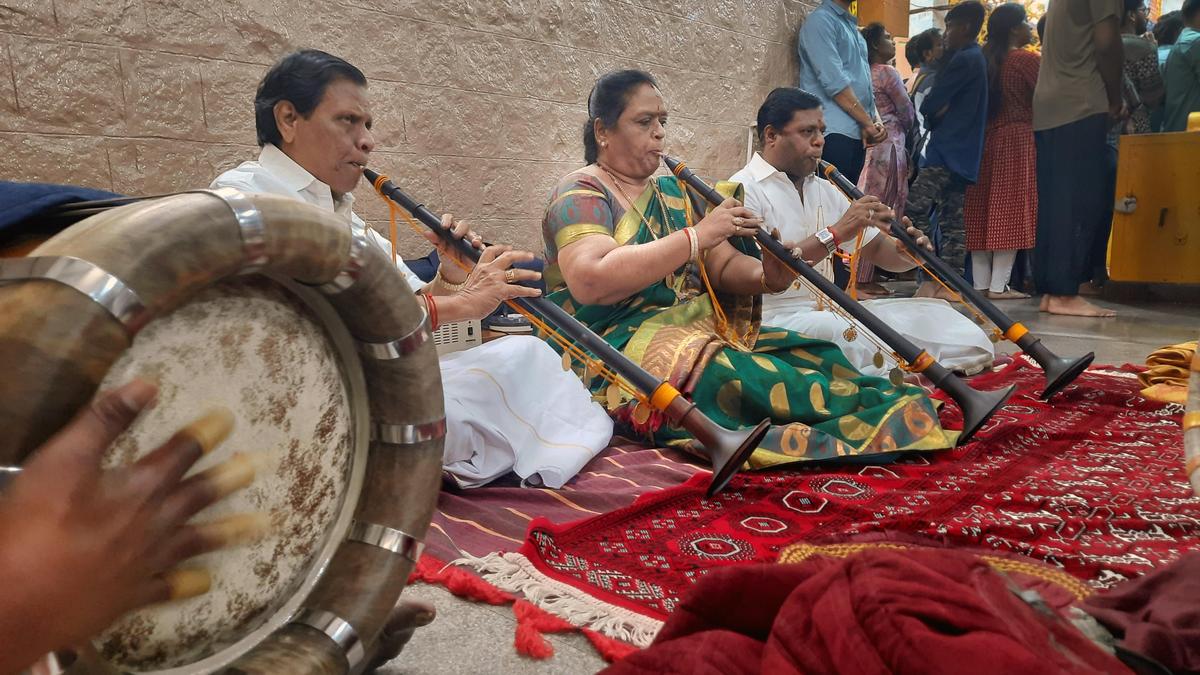
A nagaswaram performance by the Mahaboob family at Dodda Ganapathi temple.
| Photo Credit:
N. Ravichandran
Their first concert was in Madurai in 1976, before their marriage, when Kaleeshabi trained Mahaboob for a month. A year later, they were married and began performing together.
The duo trained under Sheik John Sahib and underwent vocal music lessons from K. Chandramouli, Principal, Government Sarada Sangeetha Kalasala in Kurnool and nagaswaram exponent Sheik Chinna Moulana in Srirangam. They shifted permanently to Srirangam in the 1980s, where Mahaboob continued training under Sheik Chinna Moulana. They received many awards and accolades, including the Padma Shri in 2020. They were the Asthana Vidwans of Sri Sarada Peetam in Sringeri. In 2005, they gave a two-hour recital at the Rashtrapati Bhavan at the invitation of former President APJ Abdul Kalam; and on his advice, began playing concerts for the mentally challenged children.
Though the music may have paused briefly, Mahaboob and Kaleeshabi’s legacy will continue to enthral rasikas with the same intensity of expression and melodious harmony.
Published – March 05, 2026 02:42 pm IST