





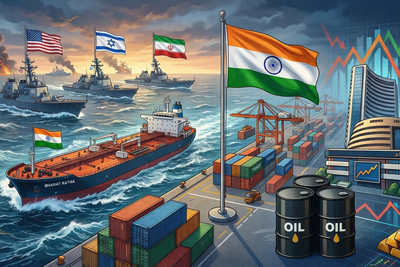
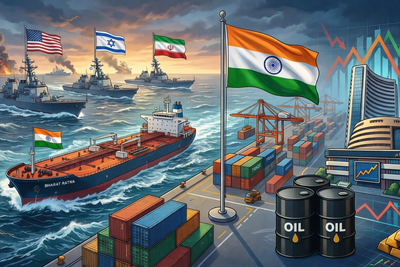
The ongoing US-Israel conflict with Iran has both geopolitical and economic consequences for the world, and India is expected to be impacted too if it persists. Policymakers are closely monitoring crude oil prices and cargo movement following the renewed tensions in the Middle East, though they maintain that it is premature to gauge the broader economic fallout.The immediate effect is expected to be visible in energy costs, given India’s heavy dependence on imported oil and gas, much of which transits through the Middle East. However, any sustained increase in crude prices would directly affect both consumers and businesses. Meanwhile, Dalal Street also reacted negatively to the news with Nifty falling below 24,700 and Sensex shedding over 1,600 points. During the day, benchmark indices traded in red with NSE Nifty50 closing at 24,865, down 1.24% and BSE Sensex trimming 1048 points or 1.29% to end the day at 80,238.85. In the currency market, Rupee mirrored the fall, plunging past the 91 per US dollar mark to 91.32 in early trade.Executives at major consumer goods companies have flagged concerns over the ripple effects of rising crude oil prices, supply chain interruptions, weaker consumer sentiment and potential disruptions in remittances from the Gulf, just as demand had begun to recover amid the Middle East conflict.Ajay Srivastava, founder of the Global Trade Research Initiative, said the consequences for India would be both economic and strategic. “Disruption in the Strait of Hormuz threatens a major share of its crude oil and LNG imports, raising freight costs, insurance premiums, and fuel prices, while a surge in global oil prices could widen the current account deficit and fuel inflation,” he said.
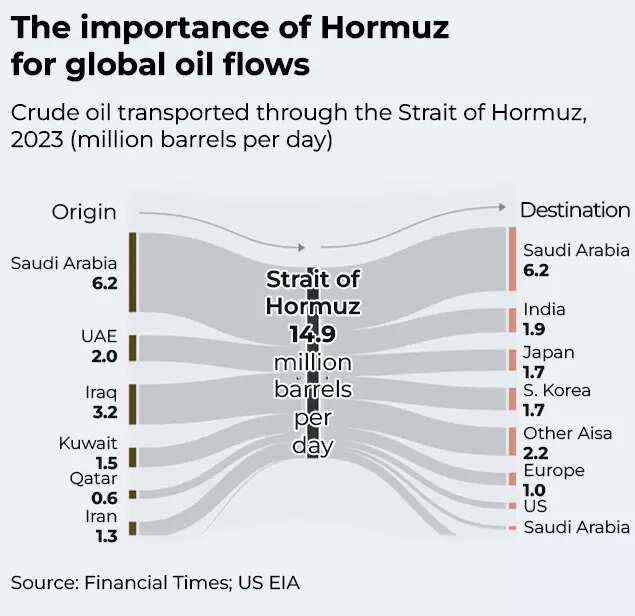
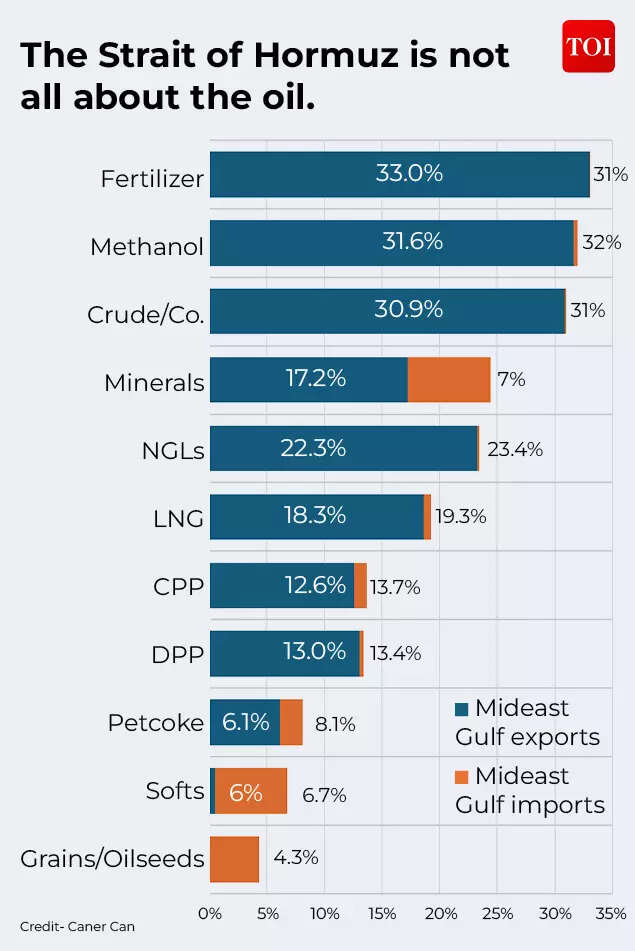
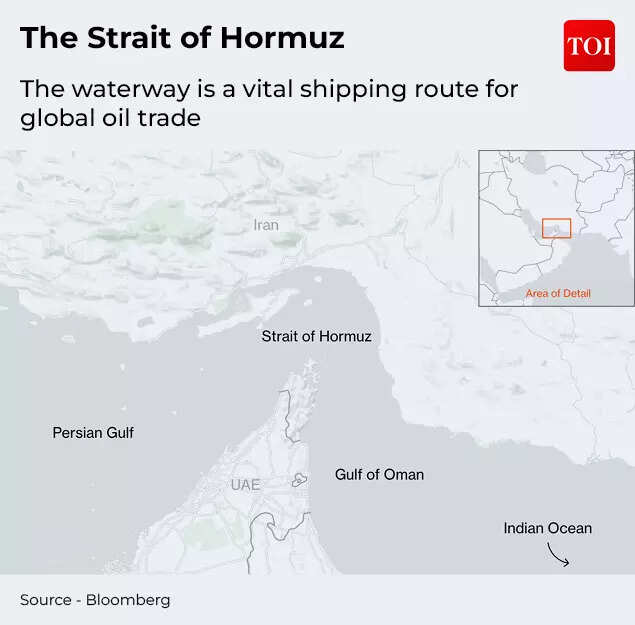
Exporters have voiced serious apprehensions about vessel movement through the Strait of Hormuz and the Bab el-Mandeb Strait, two strategic sea lanes vital to global commerce. These maritime corridors are key arteries linking India to the Gulf and onward to major markets in North America and Europe.The Strait of Hormuz, a narrow 33-kilometre channel connecting the Persian Gulf to the Arabian Sea, is widely recognised for its role in global oil trade. However, its importance extends well beyond crude shipments, as it also facilitates a significant volume of broader commercial traffic.What do the ongoing Middle East tensions mean for India? Let’s understand:
1. Impact on oil prices
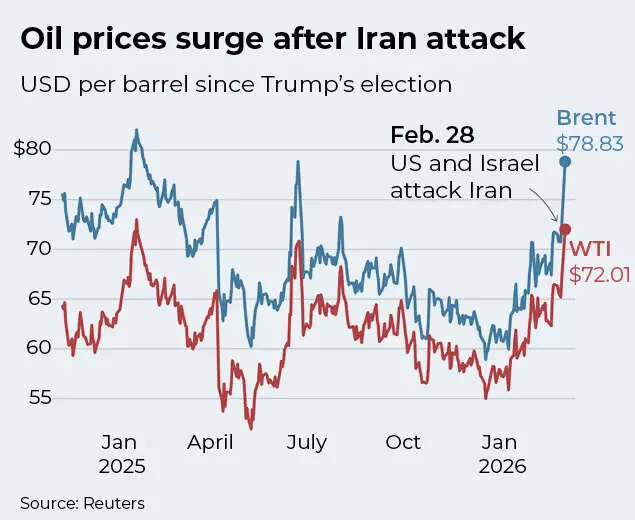
Crude oil prices have risen over 10% on fears of disruption in supplies transiting through the Strait of Hormuz. Between 2.5 and 2.7 million barrels per day of India’s crude imports move through the Strait of Hormuz, primarily sourced from Iraq, Saudi Arabia, the United Arab Emirates and Kuwait. In recent months, the share of Middle Eastern oil in India’s import basket has increased as refiners trimmed some purchases of Russian crude, heightening reliance on Gulf suppliers and amplifying sensitivity to any disruption in the strait.According to Kpler data, Russian crude cargoes are still present in the Indian Ocean and Arabian Sea region, including volumes held in floating storage. Should Middle Eastern flows tighten, refiners could potentially step up purchases of Russian grades in the short term. Nevertheless, Gulf shipments retain a logistical advantage, typically reaching India in five to seven days, compared with 25 to 45 days for cargoes from the Atlantic basin.
According to a TOI report, Centre has so far managed retail fuel prices through a combination of taxation adjustments and margins allowed to oil marketing companies, and that approach is expected to continue. While oil retailers had been earning healthy margins on petrol and diesel before global prices firmed up, the first line of response would likely involve trimming these margins. If necessary, the government also has room to cut domestic taxes and import duties to cushion the impact.If hostilities continue, trade flows in and out of India could face disruptions, particularly supplies of oil, gas, fertilisers and other essential inputs sourced from the western region. For now, authorities have not reported any shortages.GTRI has said that refiners could respond to any closure of Hormuz by redirecting supplies through pipelines leading to Red Sea ports. India might also expand sourcing from Russia, the United States, West Africa and Latin America. Another buffer could come from drawing down strategic petroleum reserves to manage immediate supply shocks.Even so, the think tank has cautioned that such alternatives would involve higher transportation costs and longer transit times. Sumit Ritolia, Lead Research Analyst for Refining and Modelling at Kpler, said India may be able to manage higher crude prices and short-term supply constraints, but flagged greater vulnerability in liquefied petroleum gas supplies. “Escalating Middle East tensions once again highlight a structural reality: India remains materially exposed to the Strait of Hormuz – not just for crude oil, but even more so for LPG and LNG,” he said.
Impact on trade
Ship movements over the coming days will be crucial, especially as some vessels remain stranded following military action by the US and Israel and Iran’s retaliatory response. Broader trade flows across the region and shipments transiting Hormuz, face significant risks. The commerce ministry has initiated discussions to assess how evolving developments could affect India’s external trade.
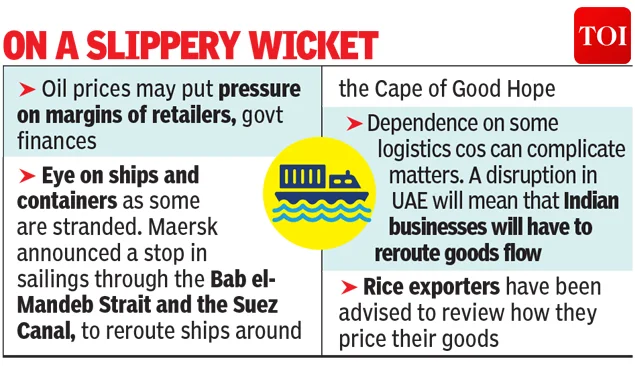
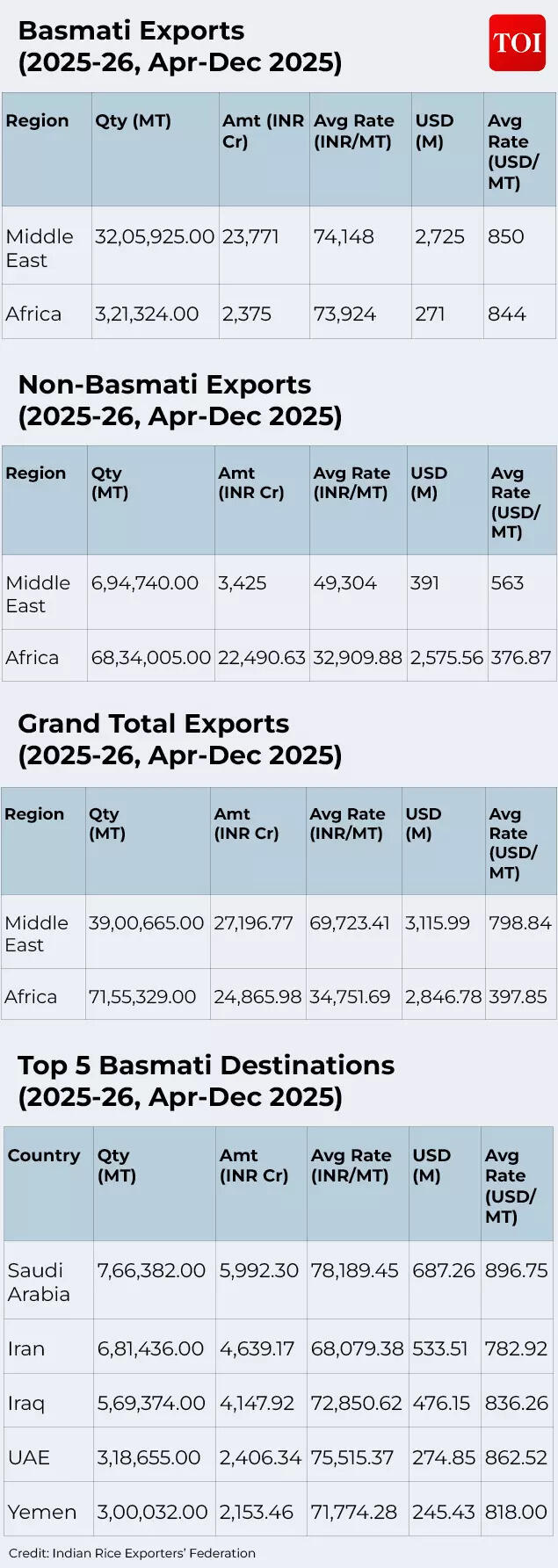
Federation of Indian Export Organisations president SC Ralhan said hostilities are already straining established logistics networks. Airlines are adjusting routes, and maritime trade across the Red Sea and key Gulf passages is facing mounting uncertainty.If rerouting becomes prolonged, cargo destined for Europe and the United States may need to sail around the Cape of Good Hope, extending transit by 15 to 20 days. Such detours are expected to drive up freight and insurance costs. Industry sources indicated that clarity on shipping capacity, alternative routes, coverage terms and freight pricing may take several days to emerge.The Indian Rice Exporters Federation has advised members not to enter into fresh cost, insurance and freight commitments for shipments to Iran and other Gulf destinations, warning that disruptions could escalate logistics and insurance expenses. The federation noted that five principal Basmati markets — Saudi Arabia, Iran, Iraq, the United Arab Emirates and Yemen — are located in the Middle East and collectively account for nearly half of India’s Basmati exports.
The Middle East also hosts critical sea lanes through which a substantial portion of India’s exports to major markets such as the United States and Europe are transported. These destinations together represent about 56% of India’s merchandise exports.Danish container shipping major Maersk announced on Sunday that it would temporarily suspend sailings through the Bab el-Mandeb Strait and the Suez Canal, instead diverting vessels around the Cape of Good Hope. If such rerouting continues, shipments bound for Europe and the US could face an additional two to three weeks of transit time, tightening container and vessel availability.Complicating matters further is India’s significant reliance on DP World for handling a substantial share of its cargo. Any disruption in the UAE could force Indian businesses to redirect their trade routes.Escalating tensions could affect India’s $4.5 billion electronics and technology exports to the Gulf region, even though direct trade in these products with Iran remains minimal.Commerce and industry ministry data show that the UAE is a key market for Indian electronics. During the first nine months of FY26, from April to December, shipments of electronic goods to the UAE totalled $4.1 billion, making it the second-largest buyer of such products from India.The UAE ranked as the second-biggest destination for smartphones manufactured in India, with exports valued at $3.1 billion. Saudi Arabia was the second-largest Middle Eastern market for Indian electronics and stood 15th globally, with exports worth $387 million during April-December FY26. Israel recorded the highest share of consumer electronics exports from India.
Air travel crippled
Across the Middle East, thousands of Indian nationals – including tourists, expatriates, pilgrims, public representatives and families travelling with children – have found themselves stranded. The escalation led to widespread airspace closures and the shutdown of Dubai, the world’s busiest transit hub. Air connectivity across the Middle East, stretching from the UAE to Israel, continues to face major disruption, with nearly several thousand flights operated by regional carriers such as Emirates, Etihad and Qatar Airways cancelled across their global networks. Indian airlines including IndiGo, Air India and Akasa have also cancelled many flights.Normal operations hinge on when it is considered safe to resume flights in the conflict-affected airspace.Air India has said that its services to North America and Europe would operate via alternate flight paths through available Middle Eastern air corridors, a move expected to increase travel time. In a statement, the airline said, “Flights to New York (JFK) and Newark (Liberty International) will operate with technical stops at Rome (Fiumicino Airport).”With Pakistani airspace shut to Indian carriers, they are unable to use the Pakistan-Afghanistan-CIS corridor for westbound flights, a route currently accessible to Lufthansa and other Western airlines.
Higher grocery bills & inflation?
Higher grocery bills for Indian households may be loading with staples such as pulses likely to become costlier as trade disruptions drive up global prices, industry representatives have said.“If the war continues beyond a week, the price of pulses will increase,” Suresh Agarwal, president of the All India Dal Mill Association told ET.India relies on imports of around 5–6 million tonnes of pulses each year, including tur, urad and lentils, sourced largely from Myanmar, Canada and African nations. This dependence makes domestic prices vulnerable to international supply shocks.Crude oil and its derivatives form a crucial part of the cost structure for everyday consumer products such as detergents, biscuits, toothpaste and paints, apart from packaging materials. Petrochemical inputs are extensively used in items including soaps, shampoos, creams, hair oils, bottles and tubes. These derivatives contribute more than a quarter of input costs for FMCG companies and roughly 40% for paint manufacturers.Global markets are preparing for inflationary pressure and potential supply disruptions in one of the world’s most critical oil-producing regions. B Thiagarajan, managing director of Blue Star, told ET that southern markets, which are heavily supported by remittance inflows, could face a sharp slowdown if the conflict persists. He added that any sustained increase in oil prices would weigh on consumer confidence more broadly. Industry executives stressed that the magnitude of the impact would hinge on how long hostilities continue. Havells India chairman Anil Rai Gupta said consumption trends and pricing pressures would depend entirely on the duration of the conflict.Auto component manufacturers are also monitoring the situation carefully.
Insurance premiums could be hiked
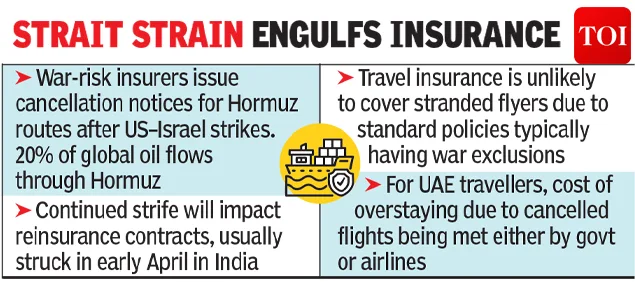
Insurance companies are preparing for the possible activation of “notice of cancellation” provisions in war-risk policies and for sharp spikes in war-risk premiums. In response to fears of a potential closure of the Strait of Hormuz, Iranian vessel seizures and retaliatory military action, several marine war-risk underwriters have already issued cancellation notices for ships navigating the corridor. Many vessels have opted for alternative routes, driving up operational expenses.Although aviation insurance policies remain in force, airlines are exercising caution by suspending services in the affected region. Insurers note that policy terms often contain a grey area, requiring the insured party to take the same level of precautions they would have adopted even without insurance coverage.“In case of ships and airlines, insurers can issue a notice of cancellation of war cover for specified zones after due notice. For ships already at sea, ongoing voyages will remain covered until cancellation. Post-cancellation, they may impose geographic limits or increase premiums,” said Kunal Khanna, MD–Reinsurance and global head of natural resources, Edme Insurance Brokers. “If the conflict continues for long, it will impact reinsurance contracts, which are typically struck from the beginning of April in India,” he added.