






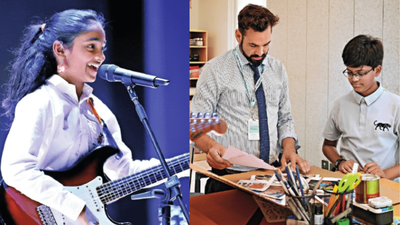
PUNE: India’s education landscape has entered a new moment, and it feels different from the familiar race for marks and competitive exams. Across major cities and emerging hubs, parents are discovering campuses that look and feel like the great British schools they once imagined only in novels or travel brochures.Parent Sreelatha Chandra said she was drawn to the high calibre of British education and strong values when schools with deep history and powerful brand identities came to India. “It has only been one semester, but we have already noticed that our daughter is more confident, happier, and going out of her comfort zone.” The child goes to Harrow in Bengaluru.
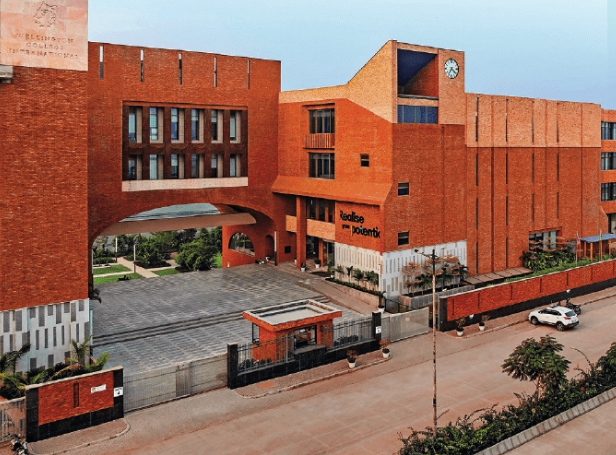
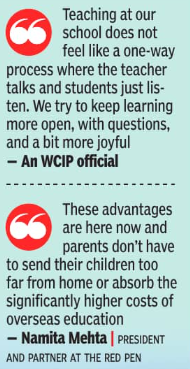
These schools are bringing their values, teaching styles, house systems, teacher culture, and discipline to Indian soil. What once required long flights, high costs, and emotional distance is now available just a few hours from home.Wellington College International Pune officials said Indian parents love the core elements of a British education, the wider holistic nature, and not just the curriculum. It is the culture around learning, relationships, and personal growth.Their approach to teaching is gentle but purposeful. Their classrooms focus on reflection, discussion, and connection to real life.Over time, they see children become “more self-assured and willing to speak up. They are kinder to each other, more responsible, and less afraid of making mistakes.”National Education Policy made it easier for international institutions to open in India. Namita Mehta, president and partner at The Red Pen, said that NEP’s timing has aligned well with the evolving demand.Families today want strong academics, a safe emotional environment, and global university pathways, but without the stress of sending children overseas.
The appeal is simple but deep. Indian parents have always valued structured schooling. Many have studied abroad themselves or have friends sending their children overseas. They are aware of the advantages that come from discussion-driven classrooms, confident communication, independent thinking, and exposureto diverse cultures.For them, the arrival of British schools in India feels like an opportunity to offer their children a worldclass experience that is both global and grounded. They also appreciate the financial difference. A year in a top UK school can cost more than Rs 50 lakh. The same institutions in India offer the same curriculum, ethos,and global pathways for less than half that amount. This affordability without compromise has become one of the biggest drivers.Wellington College parent Genevieve Yeley said the care and individual shepherding that each child is given is unique. “Their international student body was very appealing, as it is so beneficial for kids to experience different cultures and make friends from around the world.” For her, the school’s kindness, structure, and global exposure helped her children settle comfortably in India.Harrow International School Bengaluru’s head said it is not just “what we teach, but how we teach it.” Their classrooms are designed around inquiry and discussion. The Harkness method, where students sit around a table and learn through conversation, is central. “Our methodology centres on inquiry-driven learning where students sit together, discuss ideas as equals, and learn to think aloud with clarity and courage, ” the school head said.This builds confidence and independence in a way that rote learning cannot. Harrow believes the emotional environment matters just as much as the academic one. “Pastoral care is not an add-on. At Harrow, it is the backbone. Students feel known, supported and understood,” the school says. That sense of safety allows children to take risks, try new activities and grow in maturity.Shrewsbury International School with a 500-year history carries a legacy of deep academic thought and whole-person education. Shrewsbury uses the Cambridge syllabus from Grade 6 to 12, where only 25% marks are based on memory and 75% on application, analysis, and evaluation. “That is a much better way of preparing for the world, particularly now that we are surrounded by artificial intelligence and intelligent machines,” the school added.Shrewsbury also invests heavily in hands-on learning. “There is a big difference between working with ideas and bringing them to life,” they say.Their labs, studios, and design workshops give children space to experiment, fail, fix, and try again. Their design technology centre includes advanced tools, including 3D printers. But what the school values most is diversity. “Because pupils interact with others from different cultural backgrounds, they begin to be exposed to different perspectives. At Shrewsbury, we do not just tolerate diversity; we celebrate it.”All of this reflects a change in what Indian parents want for their children. Marks still matter, but not at the cost of confidence, emotional well-being, or creativity. Parents want children who can think deeply, ask questions, communicate clearly, and adapt to a world that is changing fast. They want them to have strong values and a global outlook but also remain rooted.Mehta said British schools will shape the premium education space in the coming decade, offering a unique combination of academic rigour, emotional care, and global pathways. “British schools will occupy a distinct niche, combining tradition, structure, and pastoral care with a local presence that is more accessible for families than overseas schooling,” she said.As these campuses grow in India, they are creating spaces where children can learn deeply, speak honestly, grow gently, and still dream boldly. And for many families, that is the future they have been waiting for.