




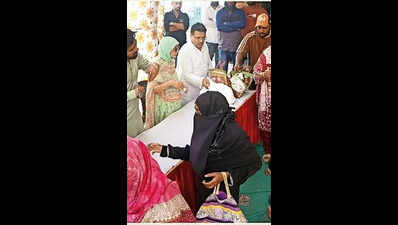
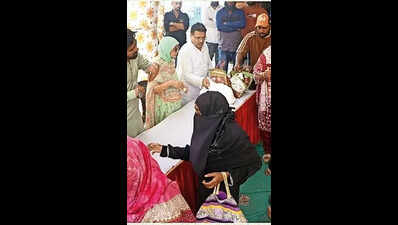
A group of burqa-clad women huddle in the ground-floor hall of Anjuman-i-Islam Saif Tayabji Girls’ School on Belassis Road in Mumbai Central. Brief speeches by Yama Patel, foundation head and city chairman of the World Memon Organisation (WMO), Haji Mudassar Patel, and Anjuman president and senior radiologist Padmashree Dr Zahir Kazi underscore the importance of supporting poor families with ration during the holy month of Ramzan. Moments later, the distribution of “Ramzan ration kits” begins.The scene is one of several such distribution drives across the city. A nutritious intake at iftar, dinner and sehri (pre-dawn meal) is essential to endure a day of fasting. For families that cannot afford groceries for wholesome meals, individuals and organisations step in with ration kits.“The idea is to ensure the poor receive nutritious food at night through the month. We began during Ramzan in 2020 amid Covid and have continued every year since,” says Patel, who, along with WMO India president Haseen Aghadi, partnered with Anjuman to expand the outreach.“The Memons are known for their generosity. This assistance in the holy month is vital for poor families,” says Dr Kazi, as senior Anjuman functionaries Mushtaq Antulay and Rehana Ahmed look on.For many, the effort transcends religious lines. Bandra-based businessman and BJP politician Asif Bhamla continues a 25-year-old initiative started by his late father, Wali Mohammed, sending thousands of ration kits to needy families each Ramzan.“My volunteers distribute kits in poor pockets of Malwani, Dharavi and other sprawling slums. The poor are the poor — we do not discriminate. Ramzan is also a time to promote communal harmony and national integration,” says Bhamla. At night, his decorated mandap near a mosque in Bandra West becomes a meeting point for community leaders, celebrities and politicians to exchange greetings.For Razia Chasmawala, deputy chairperson (women’s wing) of WMO, Ramzan means spending long hours in the slums of Malwani, Bhiwandi and Nalasopara. “The need is enormous. My heart breaks at the deprivation I see. Some argue charity should focus only on self-reliance, but my priority is to help the destitute fight hunger,” she says. Many fondly call her the “Mother Teresa of the Memons.”Typically, Ramzan kits contain flour, rice, pulses, sugar, sewaiyan, dates and bottles of sherbet — provisions meant to help families prepare nourishing iftar and dinner meals. Kits vary in size depending on family needs.Why does zakat — the obligatory charity of 2.5% of annual savings — and other giving assume special importance in Ramzan? “A hadith says good deeds performed in Ramzan earn rewards 70 times greater than in other months. That is why many devote more time to prayer and charity during this period,” explains Mufti Jasimuddin of the Andheri West-based Markazul Maarif Education and Research Centre.For beneficiaries like Amina Begum, a widow in Mumbai Central, the support is crucial. “We are a family of five. My income as a housemaid is barely enough this month. The ration kit is a great help,” she says.