






The history of cinema tells us that in propaganda films, women are frequently depicted as vulnerable victims to generate fear, suspicion, or hatred toward a targeted community or minority group that is framed as an enemy. If Gadar and Dhurandhar prototypes seek to win over the foe’s female, The Kerala Story is about guarding ‘our’ girls from falling into ‘their’ trap.
While the original was about the alleged coercion of non-Muslim women in Kerala into converting to Islam and joining the Islamic State through manipulative relationships and indoctrination, the sequel goes beyond Kerala to the Hindi heartland but employs the same device to exploit protective patriarchal instincts to frame the ‘other’ as an existential threat to family, honour, purity, and society itself.

By portraying women as innocent, gullible, or endangered, the film mobilises outrage and gradually justifies hostility, discrimination, or even violence against the demonised group. It depicts the Muslims ghettos as dark holes where ‘our’ daughters would be sucked in.
The Kerala Story 2 Goes Beyond (Hindi)
Director: Kamakhya Narayan Singh
Duration: 131 minutes
Cast: Ulka Gupta, Aditi Bhatia, Aishwarya Ojha, Alka Amin, Sumit Gahlawat, Arjan Singh Aujla
Synopsis: It follows three young Hindu women from different Indian states who defy family traditions to pursue love with Muslim men, only to face deception, coercion, forced religious conversion, and loss of freedom.
A textbook example of polarising cinema that sees audiences as Hindus and Muslims, the film follows three parallel narratives of Hindu women who enter relationships with Muslim men, leading to manipulation, forced religious conversion, and severe consequences. For a message where parents need guidance, the UA certificate baffles.
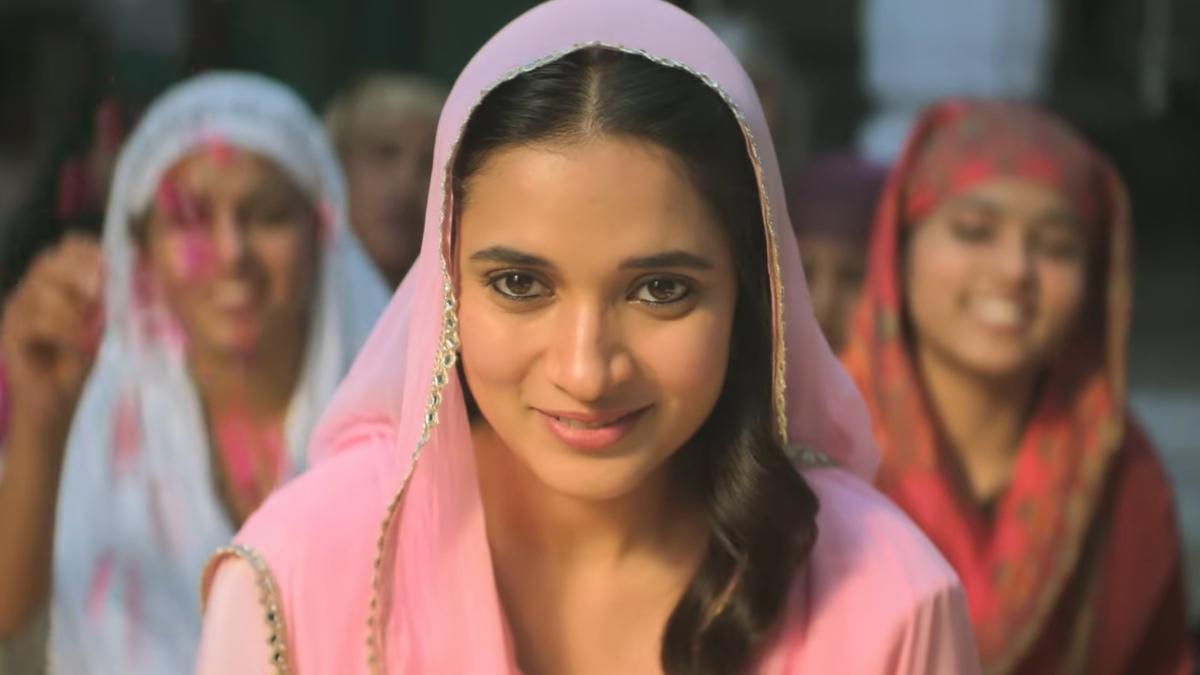
A still from the film
| Photo Credit:
Sunshine Pictures
Surekha (Ulka Gupta), a liberal, progressive woman from Kochi, falls in love with Salim, a married journalist who presents himself as liberal but later reveals his true intentions. Divya (Aditi Bhatia), a young dancer and social media enthusiast from a conservative family in Jodhpur, rebels against her parents’ restrictions and falls for Rasheed, who promises her freedom to pursue her passion, only to betray her. Similarly, Neha (Aishwarya Ojha), an ambitious, Dalit javelin thrower from Gwalior, is lured by Faizan, who hides his identity and promises to support her career. However, once the relationship begins, he exploits her trust.
The performances are better than the original, and Singh has a clear grasp of what he is trying to convey, but after the initial promise, the film falls into a predictable pattern, with the background score announcing the emotion in advance. Undermined by bias, poor cohesion, and trumped-up claims, the screenplay, aimed at audiences seeking validation of their majoritarian fears, reads more like an ideological pamphlet than compelling cinema.

When it turns references to isolated criminal cases into a systemic communal conspiracy, it seems someone has shot the dinner-table dilemmas of people who feel the word ‘fraternity’ in the Preamble has lost its meaning. It depicts one community as participants in a coordinated effort to proselytise, manipulate, and alter India’s demographics through interfaith marriages and forced conversions. While real cases of coercion or abuse exist, the film generalises them into blanket indictments.
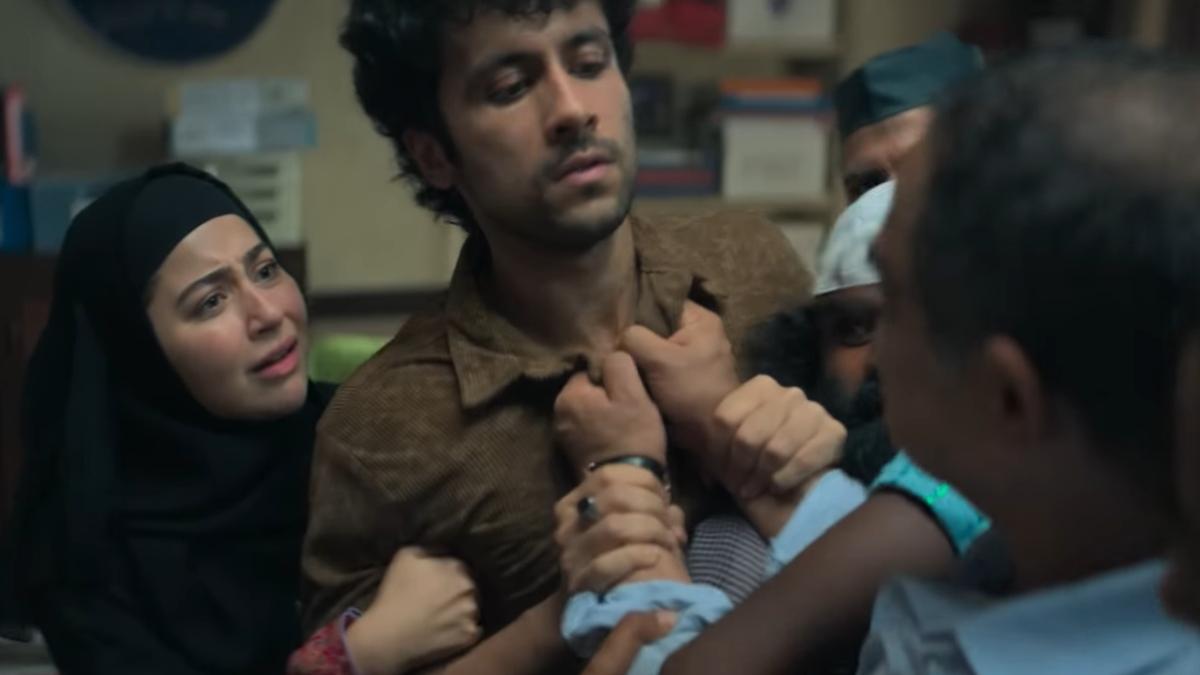
A still from the film
| Photo Credit:
Sunshine Pictures
The story links individual relationships to a larger alleged plot, referencing concepts such as “Ghazwa-e-Hind,” whose 2047 deadline curiously aligns with India’s march toward becoming Viksit Bharat. A cleric character articulates a goal of transforming India into an Islamic state under Sharia law via such tactics. While political Islam needs to be debated upon, the film’s intrinsic logic doesn’t hold as the boys show their true colours immediately after a smooth wedding and conversion. How will their project of demographic change fructify if they push women into prostitution or force them to change their food habits? In an effort to keep the situation black-and-white, the narrative suffers.
The nuance comes in the way the writers look at the flaws within the Hindu fold, where you can feel the echo of the WhatsApp forwards that berate the community for being secular and liberal, where they rag parents for not inculcating religious values in their children. The oft-repeated rhetoric of 57 Muslim nations and the growing threat of Muslim migrants in the West doesn’t hold, for the geopolitics tells us that combined Muslim-majority nations are not a unified adversary and countering extremism involves community engagement, not blanket suspicion. Similarly, Singh’s attempt to bring the caste angle into conversion is politically warped.
Eventually, the makers reveal their political position as the relentless negative framing of a community leads to endorsing extrajudicial demolitions or bulldozer justice as a satisfying, cathartic response, with a strident background song invoking Babur and Aurangzeb, to the alleged crimes committed by Muslim characters.
Watch it if you are looking for a lesson in the mechanics of divisive political narratives on screen.
The Kerala Story 2 is currently running in theatres.
Published – February 28, 2026 08:09 pm IST