




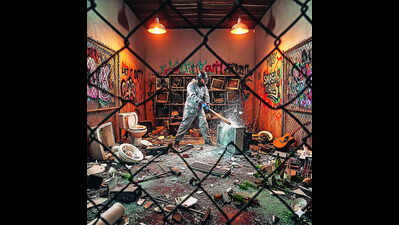
Do you feel anger and frustration building up inside you, wishing you could smash a thing or two? Imagine hurling a glass bottle against a wall and feeling the tension leave your body as it shatters into shards. This weekend, feel the release with every swing, every smash at rage rooms that are becoming stress busters to battle everything from burnouts, pressures, and intrapersonal issues.How a rage room worksAt a rage room in Delhi, the experience begins with a cheeky message on a standee at the entrance: ‘Breakup ka dukh hai, ya EMI ka bojh, sab ka The End yahaan.’ After signing a consent form, participants choose their package – Wreckzilla with 65 breakables, Emotional Detox with 120 breakables, or Rampage with 30 breakables. Add-ons include larger appliances like a TV or even a fridge.Dressed in overalls and boots, you step into the smash zone, pick up a hammer, and channel every troubling thought into a decisive blow.
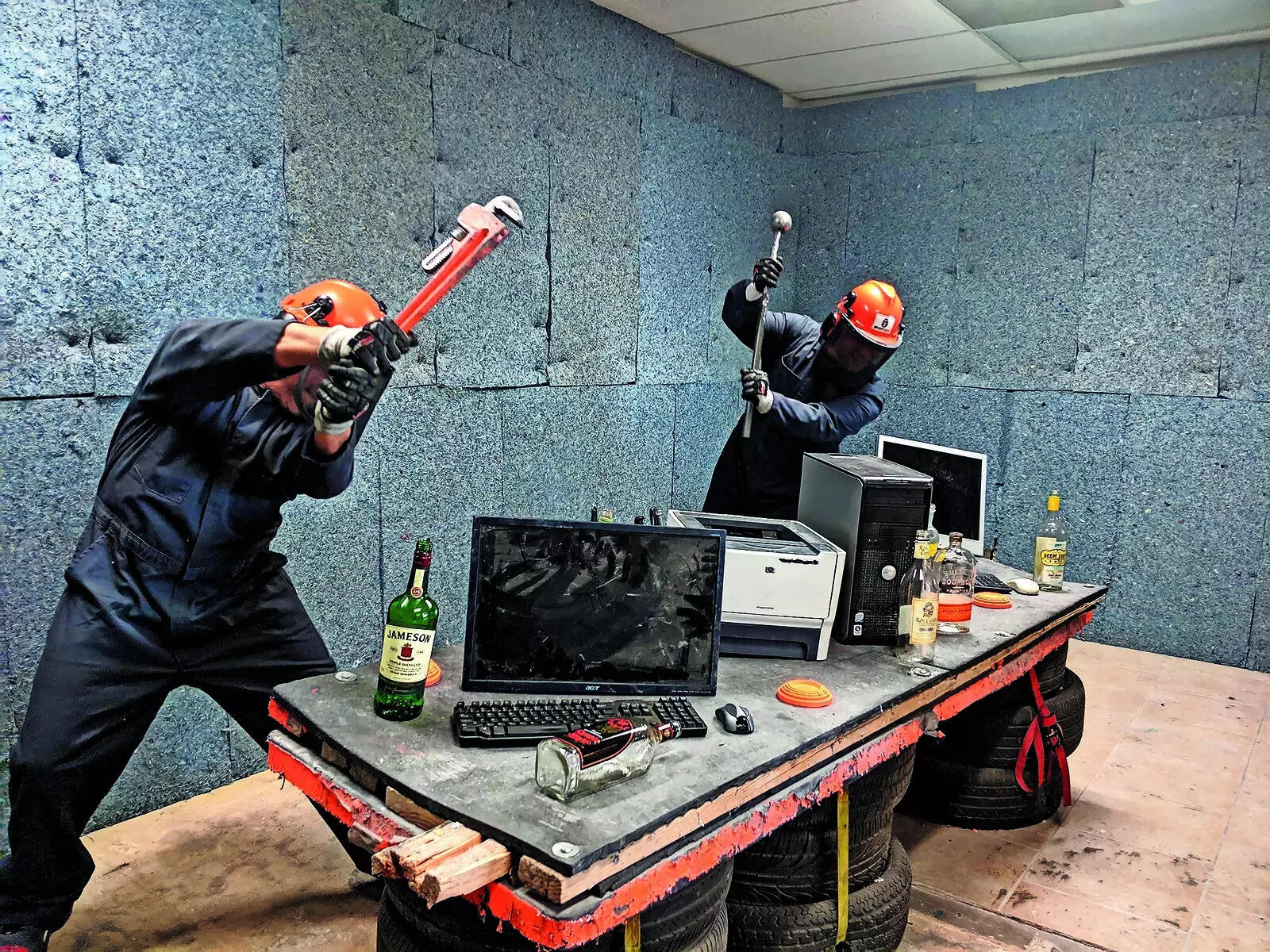
Dressed in overalls and boots, you step into the smash zone, pick up a hammer, and channel every troubling thought into a decisive blow.
‘More women come to the rage room’Puneet Kumar, centre manager at Delhi Rage Room in Lajpat Nagar, says relationship troubles, workplace stress, and anxiety are common triggers.“Corporate burnout, marital issues, and breakups are some of the reasons people come. Most visitors are between the ages of 15 and 35. Teenagers often come in for what they call ‘breakup busters.’ Some parents bring their children for a one-time recreational activity to help channel their energy,” he says.“Many people experience high stress and actively seek outlets for emotional release. Spaces like rage rooms offer a controlled and safe environment where these emotions are regulated without causing harm. Activities like these can provide immediate stress relief and give us a temporary sense of emotional lightness somewhat similar to the effects of any intense physical exercise,” says Kratika Ramesh, a licensed clinical psychologist.
From issues at work to relationship issues, women frequent rage rooms more than men. Their bottled-up emotions and endured pain are visible in how they smash things. Bahut baar log ro bhi padte hain. Rage room se baahar aa kar halka mehsoos karte hain
Puneet Kumar, centre manager at Delhi Rage Room
‘Recreational, not a regular avenue for relief’Rage rooms are a recreational, stress-relief experience, or maybe something that you try out once for your entertainment and curiosity. “People need to be wise about the habit-building capabilities of such short-term relief methods, which can develop into further dysregulation or other difficulties in real-life instances, if exposed to these methods frequently. It must be recreational, not a regular avenue for relief. Long-term emotional and overall well-being will still always depend on healthier coping strategies such as effective communication, active problem solving, self-reflection, guided relaxation practices, and, when needed, reaching out for psychological support,” says clinical psychologist Kratika.

‘Recreational, not a regular avenue for relief’
‘Corporate burnout, digital overload surface as irritability, intrusive thoughts’ Like rage rooms, rage therapy, where people smash ceramic mugs and then rebuild the piece using the Japanese tradition of kintsugi, is also gaining popularity. Prachi Pandey, who curates this experience, says, “Over the past few months, we’ve seen participation in rage therapy sessions from diverse backgrounds… In our sessions, we let them express themselves freely and then encourage open, healthy conversations. Once they feel calmer, we guide them back to working with ceramics. Through the process, they understand emotions like frustration or helplessness, but also learn to gather their thoughts, reconnect with their inner strength, and move forward.”
I’ve lived away from my family since I was ten, in a hostel. Those years gave me both pain and strength. I chose rage therapy to release those emotions. Breaking and rebuilding through kintsugi reflects my journey, turning cracks into gold
Sara Khan, a college student who recently attended a rage therapy session with Small World
The way we handle emotional distress is changing. According to psychotherapist Nishi Joshi, modern stressors like corporate burnout, digital fatigue, and political division have fostered a “background hum” of constant frustration. “In recent years, there has been a noticeable shift in how people seek relief from emotional overwhelm. “Economic uncertainty, corporate burnout, digital overload, political polarisation, comparison culture, and the pressure to perform have created a background hum of frustration and helplessness. For many, this frustration does not present itself as quiet sadness, it surfaces as irritability, agitation, intrusive thoughts, and pent-upanger. Instead of turning exclusively to meditation apps or mindfulness practices, many are opting for more visceral outlets rage rooms, scream therapy, high-intensity workouts, and even structured rage therapy sessions. Meditation asks for stillness, which can be intolerable when the nervous system is dysregulated. So, cathartic spaces provide a socially sanctioned outlet for emotions that are otherwise judged, suppressed or moralised – especially anger.” “The popularity of such avenues may reflect that people are not simply angrier, but overstimulated, unheard or emotionally saturated, say psychology experts. It signals a demand for emotional spaces that acknowledge complexity: not just peace, but power; not just calm, but containment,” she adds.
Instead of meditation, many are opting for more visceral outlets like rage rooms, scream therapy, HIIT, and even structured rage therapy sessions. Such cathartic spaces provide a socially sanctioned outlet for emotions that are otherwise judged, suppressed or moralised – especially anger
Nishi Joshi, a psychotherapist

Kintsugi workshops offer a mindful, hands-on experience in the ancient Japanese art of repairing broken pottery with golden lacquer or fast-curing epoxy (@small.world)