





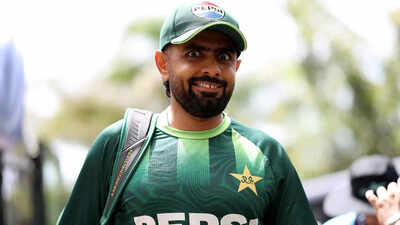
TimesofIndia.com in Kandy: A four-year-old post by former South Africa batter Herschelle Gibbs, who worked with Babar Azam at Karachi Kings in the Pakistan Super League (PSL), is doing the rounds on social media. Gibbs had urged Babar to add a couple of attacking shots to his game to improve his strike rate. In a reply to one of the fans, he also took a jibe at Babar’s reluctance to seek advice. “He’s very much in his own world with his batting, not open to many suggestions,” Gibbs had written.In every Pakistan nets session, Babar cuts a lonely figure. He pads up and bats, and the only cricketer who speaks to him for advice is Abrar Ahmad, who made his international debut under Babar. For Shadab Khan, Babar is still the skipper, as he keeps calling “skip” before bowling to him in the nets.
Babar remains a leader in the group, but he has lost his aura after failing to evolve his game. He has played four T20 World Cups and has not hit a single six since the 10-wicket win against India in Dubai in 2021, when Varun Chakravarthy was the bowler.In 2025, he was dropped from the T20I setup, with coach Mike Hesson stating that Babar needed strong performances in the Big Bash League (BBL) to earn a recall. After Pakistan’s loss to India in the Asia Cup, Babar was brought back. However, his poor run for the Sydney Sixers, where he scored just 202 runs in 11 innings at a strike rate of 103.06, sparked intense debate over his inclusion in the T20 World Cup squad.Fans, coaches, and former cricketers have all trained their fire on him.ALSO READ | Chasing Virat Kohli, carrying Pakistan: Sahibzada Farhan’s goals in T20 World CupDespite the criticism, the 31-year-old remains the leading run-scorer in T20Is, with 4,571 runs. No batter has crossed fifty more often in the format’s 21-year history, doing so 39 times, along with three hundreds. His 475 fours are also the most by any batter. Yet the numbers that matter most in T20s paint a harsher picture. A strike rate of 128.18 strips him of any claim to all-time greatness and is the lowest among batters with at least 3,500 runs in the format.
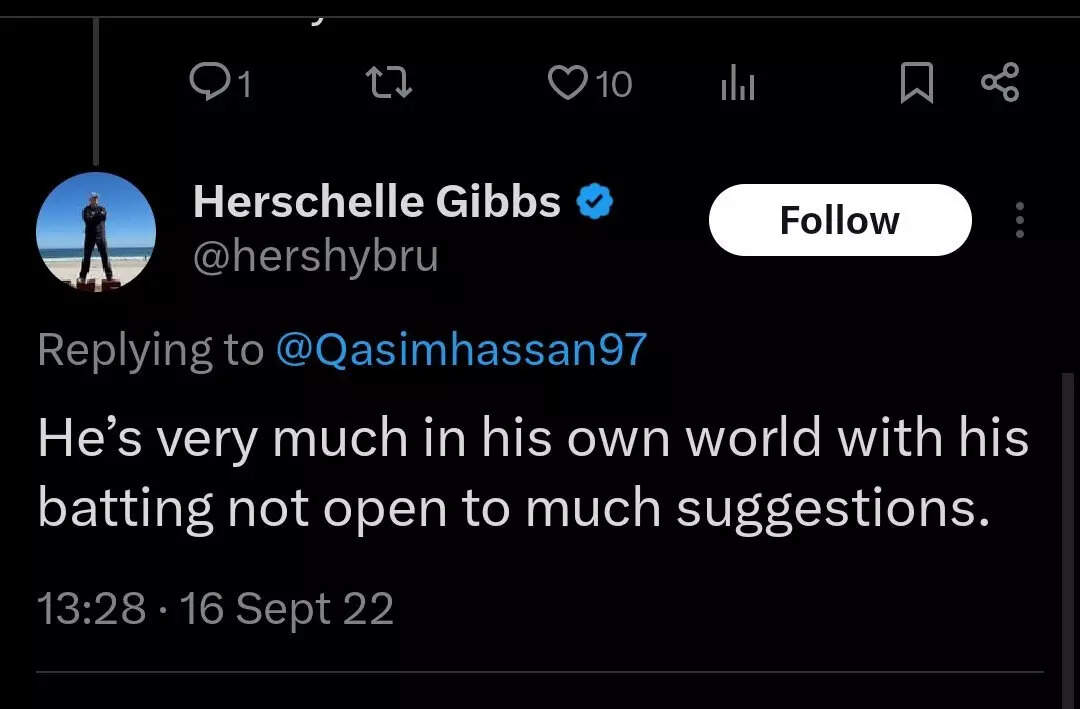
Herschelle Gibbs’ social media post on Babar Azam has been doing the rounds. (Image: X)
In the pre-match press conference ahead of Pakistan’s washed-out game against New Zealand, Hesson did not hold back while addressing Babar’s powerplay strike rate and backed his stance with numbers. “Babar is well aware that his strike rate in the powerplay is below 100 in T20 World Cups,” Hesson said.Across the four T20 World Cups Babar has played, he has faced 217 balls in the powerplay for 187 runs. His strike rate of 86.17 is the lowest among batters who have faced a minimum of 200 deliveries in that phase.Babar did not even come out to bat against Namibia at his newly designated No. 4 position. Instead, Khawaja Nafay and then Shadab Khan were sent out, marking the first time in Babar’s T20I career that he did not bat.After the Namibia match, Shadab defended the decision and spoke about the clarity within the group. “Babar knows exactly when his role comes into play. The messages are clear for every player. The team changes according to conditions, and that’s what is happening,” he said.
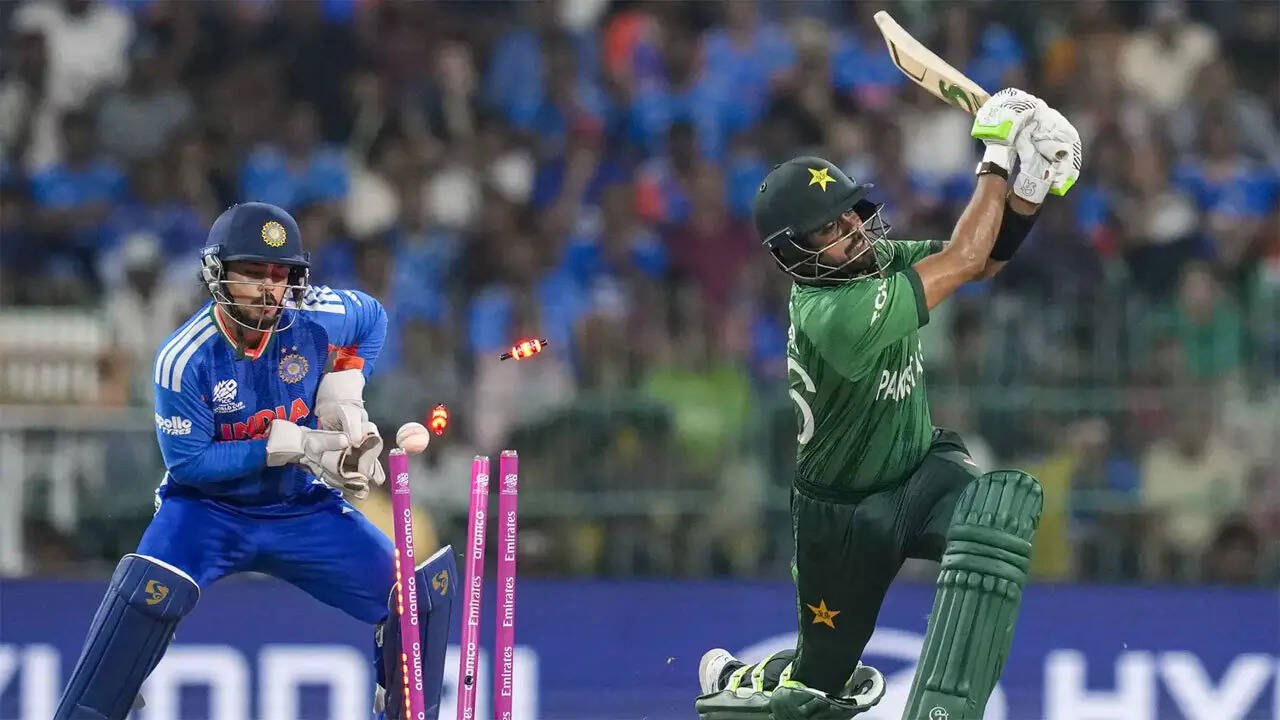
Babar Azam (PTI Photo)
A few days later, Hesson further explained Babar’s role. “We brought Babar back for a specific role post the Asia Cup. We wanted stability through the middle, and he gives us that. When we reached the 12th over the other day, Babar was not the best option. We had players better suited for the end. Babar understands that. He knows his skill set and also knows when others can perform that role more efficiently,” Hesson said.During nets in Kandy on a humid Monday afternoon, Babar was seen batting mostly against the left-arm spin of Mohammad Nawaz and a local net bowler. Hesson stayed close, constantly talking to him. Instead of the wild slog he attempted against Axar Patel in Colombo, Babar worked on playing with the spin and executed a few elegant inside-out shots.Power has never been Babar’s game. He mastered the anchor role, but in modern T20 cricket, that role has lost relevance. Teams now demand momentum in the powerplay. Pakistan, however, have persisted with anchors at the top. Whether it was Babar or his former opening partner Mohammad Rizwan, the strategy often ended up increasing pressure on the rest of the batting order due to slow scoring rates.
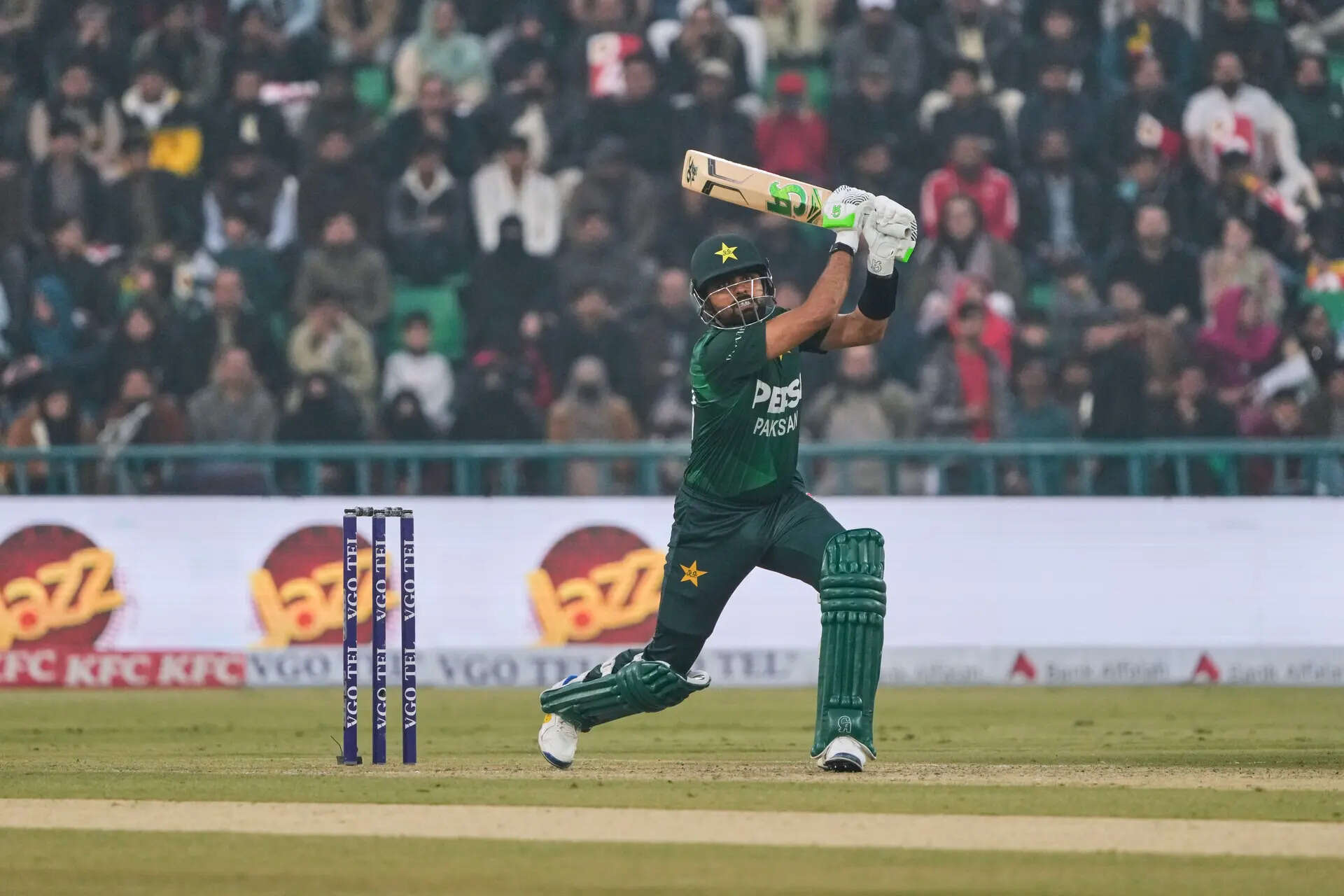
Pakistan’s Babar Azam follows the ball after playing a shot during the third T20 cricket match between Pakistan and Australia, in Lahore, Pakistan, Sunday, Feb. 1, 2026. (AP)
Babar was once tipped as the “King” of Pakistan cricket. Comparisons with Virat Kohli were constant, and for a brief period, he was mentioned alongside Steve Smith, Kane Williamson, Kohli, and Joe Root as part of the modern greats. That peak, however, did not last, and now with every match he is becoming the “match ka mujrim” for Pakistan.Former Pakistan captain Rashid Latif believes Babar’s second removal as captain has left a mental scar. “He should not have taken the captaincy again after being removed the first time. That was a mistake. The second sacking dented his confidence,” Latif told TimesofIndia.com.At 31, Babar stands at a career crossroads. The talent is unquestioned, but the demands of modern T20 cricket have moved faster than his evolution. With spin expected to dominate in Kandy, the likely recall of Abrar Ahmad, and the need for a left-hander such as Fakhar Zaman in the top order, Babar’s place is no longer guaranteed. Even if he plays, his role is shrinking. The crown he once wore comfortably now sits uneasily, and time is no longer on his side.