






Javed Akhtar once famously said art and culture are the vocal cords of society. This week, writer-filmmaker Anubhav Sinha and co-writer Gaurav Solanki give a sarkari statistic on rape, a scarred face, an unflinching voice, and a social context. The outcome is deeply disquieting as the film investigates the pervasive rape culture, institutional complicity, and the gruelling aftermath for survivors. Sinha’s relentless expression of the state of helplessness and depravity makes one leave an impression of anguish on the seat’s armrest.
The face is of Parima (Kani Kusruti), a school teacher in Delhi who is abducted from central Delhi and is brutally gang raped in a moving SUV before being discarded on a railway track.

The pressing voice is of Raavi (Tapsee Pannu), Parima’s lawyer, whose efforts to bring the culprits to book are hamstrung by a venal criminal justice system and societal indifference, where the guilty could easily cook up evidence of innocence while monkeys chew up the survivor’s proof of ordeal. Another urgent voice is of vigilantism, personified by an undercover agent, Kartik (Kumud Mishra). Haunted by personal loss and systemic failure, he walks the dangerous line between righteous anger and extrajudicial violence.
Assi (Hindi)
Director: Anubhav Sinha
Duration: 133 minutes
Cast: Taapsee Pannu, Kani Kusruti, Kumud Mishra, Satyjit Sharma, Jatin Goswami, Mohammad Zeeshan Ayub, Manoj Pahwa, Seema Pahwa, Supriya Pathak, Naseeruddin Shah
Synopsis: When a Delhi schoolteacher is abducted and brutally gang-raped by a group of men, her devoted husband and a fierce lawyer battle a corrupt, apathetic justice system.
Continuing his audacious cinematic journey of mapping pressing societal problems, Sinha puts the two voices in context without sensationalising the subject. He captures the randomness of the crime, the clinical ways to push it under the carpet, and the dangers of getting radicalised by prolonged injustice in an atmosphere where courts of mob justice on social media demand an eye for an eye.

Mohammed Zeeshan Ayub in ‘Assi’
| Photo Credit:
Benaras Media Words/YouTube
One of the few contemporary filmmakers who understands the behaviour and character of the Hindi heartland, Sinha’s cinema is less art, more articulation. His films speak a language that cuts across class divides among the audience. In Assi, the syntax has sharpened. It excels as a moral interrogation of complicity — familial, institutional, and societal. It humanises perpetrators chillingly—they treat the crime with the nonchalance of a game with beer stakes. Yet, each has a female friend or relative, highlighting everyday patriarchy’s normalisation of violence.
Through Raavi, the writers get personal without losing sight of the facts of the matter, through the defendant’s rasping lawyer (Satyajit Sharma in a terrific turn) and a well-meaning judge (Revathi is absorbing as the sponge of gravity) who knows the difference between the letter and the spirit of the law.

After Mulk, Taapsee dons the black coat again, but this time she is more assured as an amalgamation of cynicism, frustration, and steely resolve. Her performance anchors the film’s legal backbone, making Raavi a necessary moral force of stability and anger amid the chaos.
It is Kani’s performance, however, that is the most compelling element of the film, for the actor plays Parima as a person rather than a symbol. She embodies the role with raw conviction, using her body language to show the assault’s echoes. The physicality is not performative, and the emotional trauma is internalised to convey the lingering effects of the assault on body and soul. Solanki ensures that, unlike many cinematic depictions of survivors, Parima is not reduced to a passive victim or a melodramatic figure seeking revenge.
Hope floats in the form of Vinay (Mohammad Zeeshan Ayub), the supportive husband of Parima, who is no longer sure if the city is as safe as he believed it to be when he shunned the rigidity of his parochial village. The film evocatively depicts the tender relationship with his son, who suddenly grows up in the court’s corridors.
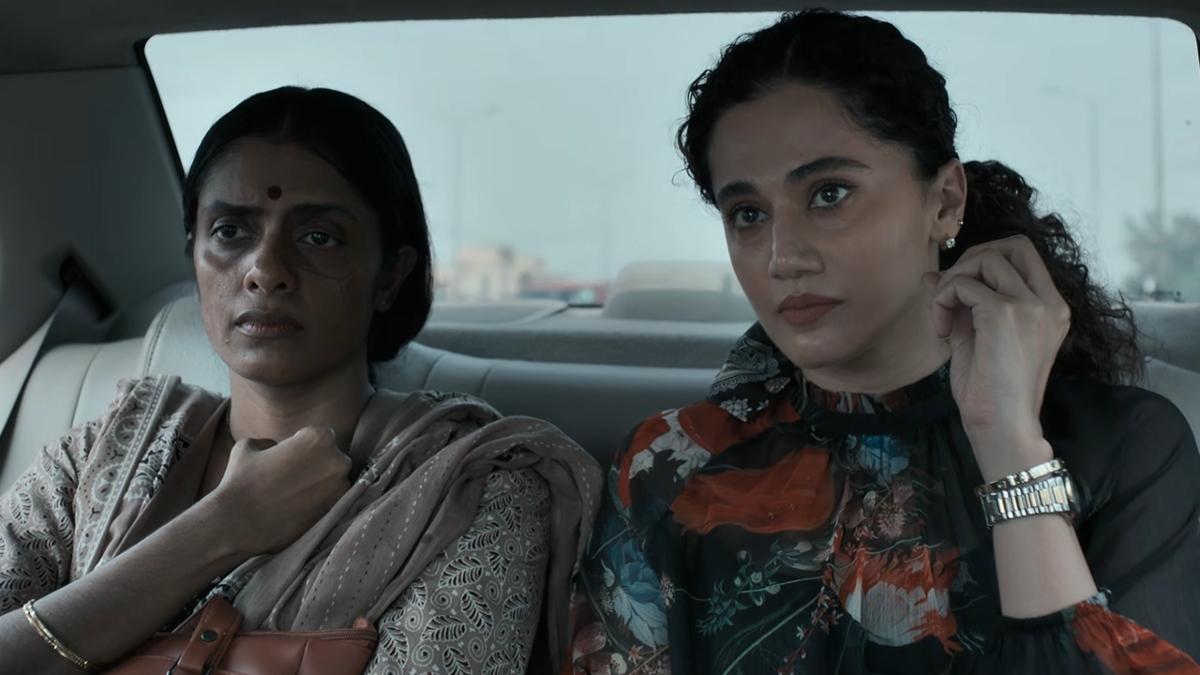
Kani Kusruti and Taapsee Pannu in ‘Assi’
| Photo Credit:
Benaras Media Words/YouTube
Then there is Sanjay Narwal (Jatin Goswami), the morally ambivalent policeman who, like his mythical counterpart, makes us understand the social complexity of corruption and implores us to set a benchmark for moral descent.
The film quietly points out that these crimes are not always committed by street kids. Boys from good schools and respected families also misunderstand consent and biology.
The unflinching gaze travels into schools to see how our young people are practising their counting skills, and peeks into the conversations in the students’ WhatsApp group. The lessons in sex education and gender equality at home are no less revelatory. It enters living rooms where patriarchy breeds, and it stops at the neighbourhood eatery where the father (Manoj Pahwa) of the youngest accused explains matters of taste and variety with metaphors of chhole bhature and momos.
Ewan Mulligan’s cinematography makes Delhi look menacing in wide shots, while close-ups add emotional intensity. Editor Amarjit Singh shapes the story like a tense thriller, keeping only what’s necessary and avoiding extra explanation.
The camera quietly captures everyday racism and sexism. On a bus, women dance to the folksy Kala Sha Kala. At a wedding, middle-aged women dance to the Bollywood number Main Tandoori Murgi Hoon Yaar Gatka Le Saiyaan Alcohol Se (Dabangg 2).
In terms of form, Sinha tends to overarticulate facts and references to us related to the emotion. More than a story, his socially conscious work serves as a critique, offering a new perspective on the problem in each paragraph. In Assi, familiar storytelling patterns emerge. The screen’s reddening to reveal the underlying statistic doesn’t add to the tension. When Vinay points out the Malayali/Madrasi difference to a father who doesn’t understand the seriousness of the crime, it seems Vinay is addressing the audience that one more angle has been ticked.
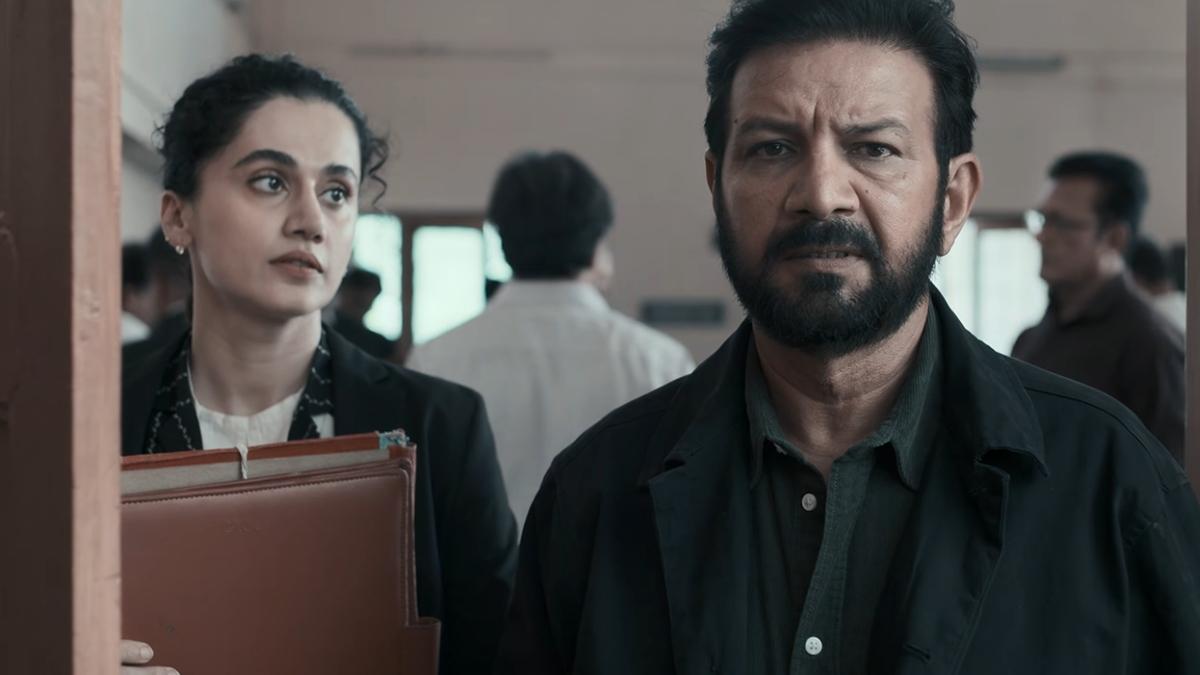
A still from the film
| Photo Credit:
Benaras Media Words/YouTube
The good thing is, despite being deeply political, Assi’s subtext is not confined to any one side of the ideological discourse on the problem. It talks about how the line between the voter and the social media troll is blurring, how heroes often turn out to be monsters, and invokes the Hindi poet Uday Prakash to remind us that silence is not an option. But there are no easy answers or neat resolutions either. As one leaves the theatre, the words of the principal (Seema Pahwa) of Parima’s school linger: What’s our plan to stem this rot?
Assi is releasing on February 20 in theatres.
Published – February 18, 2026 01:33 pm IST

