



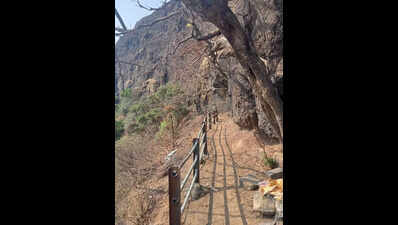
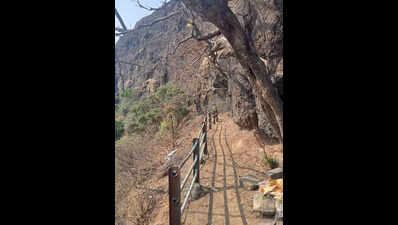
Pune: The death of a 52-year-old tourist at Rajgad Fort on Saturday once again threw a harsh spotlight on the absence of basic safety, medical and emergency response facilities at one of Maharashtra’s most frequented heritage destinations. Sandeep Balkrishna Pawar, a resident of Baramati, collapsed while descending from the Balekilla (citadel) area of Rajgad Fort on Saturday morning. Despite immediate efforts by fellow trekkers and locals, Pawar could not be revived and was later declared dead due to cardiac arrest at a rural govt hospital in Velhe. While the incident was officially attributed to a heart attack, trekkers, locals and conservationists said the tragedy underscored a larger and long-ignored problem. Rajgad Fort lacks even the most basic safety and emergency support despite witnessing heavy tourist footfall. It is one of the prominent historic forts and a major trekking destination, attracting hundreds of visitors every weekend. However, there is no permanent medical post, no emergency response team, no ambulance stationed nearby, and no structured evacuation mechanism in place. According to eyewitnesses, Pawar collapsed suddenly while returning from the Balekilla. Fellow tourists attempted to help, but the steep terrain, lack of medical equipment and absence of trained first responders severely delayed assistance. “He did not respond to any movement. There was no medical help available on the fort. Precious time was lost in bringing him down,” said a trekker who was present at the spot. Forest department guards and local youth eventually assisted in shifting Pawar to the base village. He was later taken to a govt hospital by police, where doctors declared him dead, said Pune rural police officials. Conservationists pointed out that emergency response at Rajgad is largely dependent on chance — the presence of local volunteers or fellow trekkers — rather than an organised system. “This is not an isolated issue. Every weekend, thousands of tourists climb forts like Rajgad, Sinhagad and Torna. Yet, the administration failed to put in place basic medical and rescue infrastructure,” said heritage activist Datta Nalawade. Locals repeatedly raised concerns about the risks posed by overcrowding, slippery paths, lack of signage, absence of lighting and poor mobile connectivity on the fort. “There are no first aid centres, stretchers, trained rescue staff or clear emergency protocols in place. In case of accidents, fractures or medical emergencies, reaching help becomes a challenge,” said Velhe resident Akash Sangde. Experts said the growing popularity of monsoon trekking was not matched by investment in safety, turning historic forts into high-risk zones during peak seasons. Following Saturday’s incident, demands have grown louder for state govt to deploy medical teams, emergency vehicles, trained rescue personnel and basic safety infrastructure, especially on weekends and holidays. Heritage and trekking groups also urged authorities to regulate crowd numbers, install warning signage, and create dedicated emergency response units at the base of major forts. “As Rajgad continues to draw large crowds, Pawar’s death serves as a grim reminder that heritage tourism without safety planning can turn fatal, and that administrative neglect may cost more lives unless urgent corrective steps are taken,” said veteran mountaineer Umesh Zirpe, who has recommended several measures to enhance the safety and security of visitors at forts statewide. “We witness these kinds of incidents time and again. Many forts now have Unesco status, so the number of visitors is going to increase in the coming years. Therefore, it is essential to arrange basic medical aid for them 24×7. State govt should rope in private agencies or NGOs if it is not possible for them to handle emergency situations,” added Zirpe. Trekkers also pointed out that basic facilities are lacking at the fort, and many visitors who arrive are not physically fit, contributing to unfortunate deaths in the last few years.