



From Sangeetha Mumoorthigal
| Photo Credit: Special Arrangement
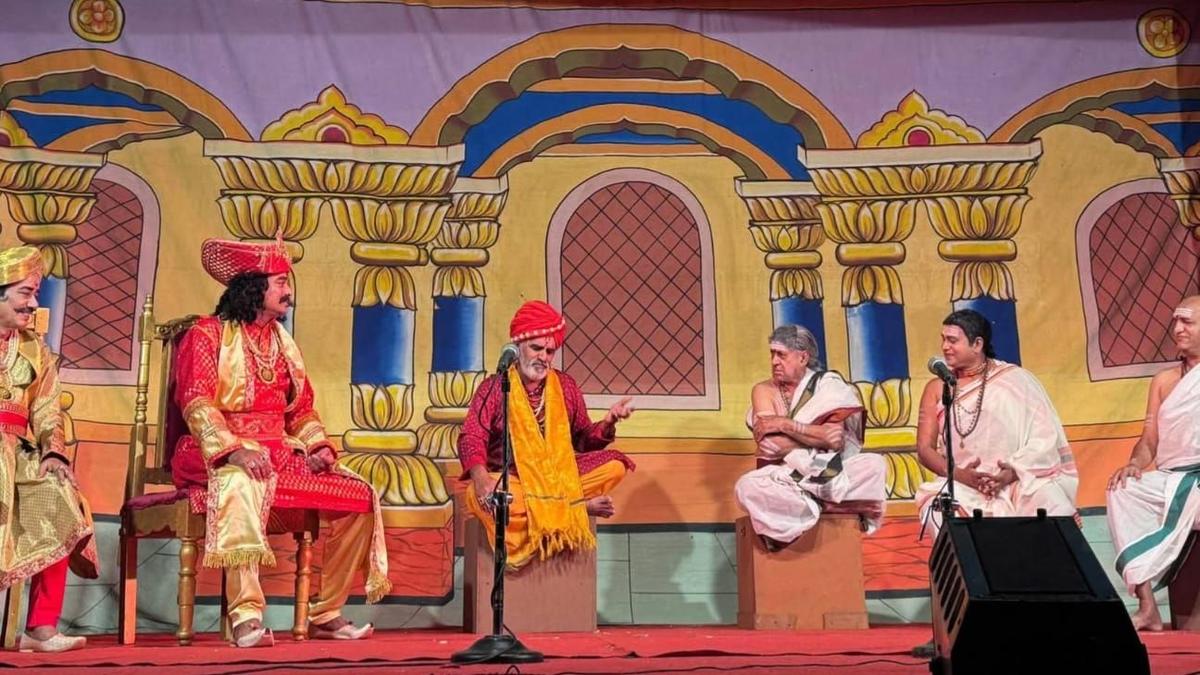
Encapsulating the greatness of Syama Shastri, Tyagaraja, and Muthuswami Dikshitar — the Trinity of Carnatic music — within a single performance is nothing short of a challenge. Yet, United Visuals undertook this formidable task with their latest production, Sangeetha Mumoorthigal, staged recently at Hamsadhwani. Conceptualised by writer Veesvee, dramatised by T.V. Varadarajan and scripted by Chandramohan with music direçtion by Bombay Jaishree Ramnath, the play wove together episodes from the lives of these stalwart musicians and composers.
Hailing from the Thanjavur region, it is interesting that the Trinity lived and created music at the same period of time — a phenomenon reminiscent of the Renaissance period in Western art, dominated by Leonardo da Vinci, Michelangelo and Raphael. The play chose to focus on the personal camaraderie among the three and dramatise some significant incidents.
The play opened with an introduction to Syama Sastri set against the backdrop of an agraharam, and then moved on to depict Tyagaraja and Muthuswami Dikshitar. Given the practical constraints that restricted frequent scene changes, the production employed inventive technique of using pertinent imageries. The idols of Devi, Rama and Subramanya were thoughtfully interchanged in the puja-room props to represent the homes and beloved deities of the three legends. The play also drew attention to members of their family, a facet of their lives not widely known.
Incidents of popular appeal such as the rendition of raga Amritavarshini by Dikshitar to bring rain to a drought-prone land; Tyagaraja’s humility and magnanimity in acknowledging the superior quality of music of a nagaswaram vidwan; Syama Sastri rising up to the challenge posed by musician Keshavayya and defeating him; and dance sequences illustrating Dikshitar’s contribution towards the music education of the Tanjore Quartet — were incorporated into the play.
Costumes, props and settings were thoughtfully employed to evoke the nativity and cultural milieu of the period.
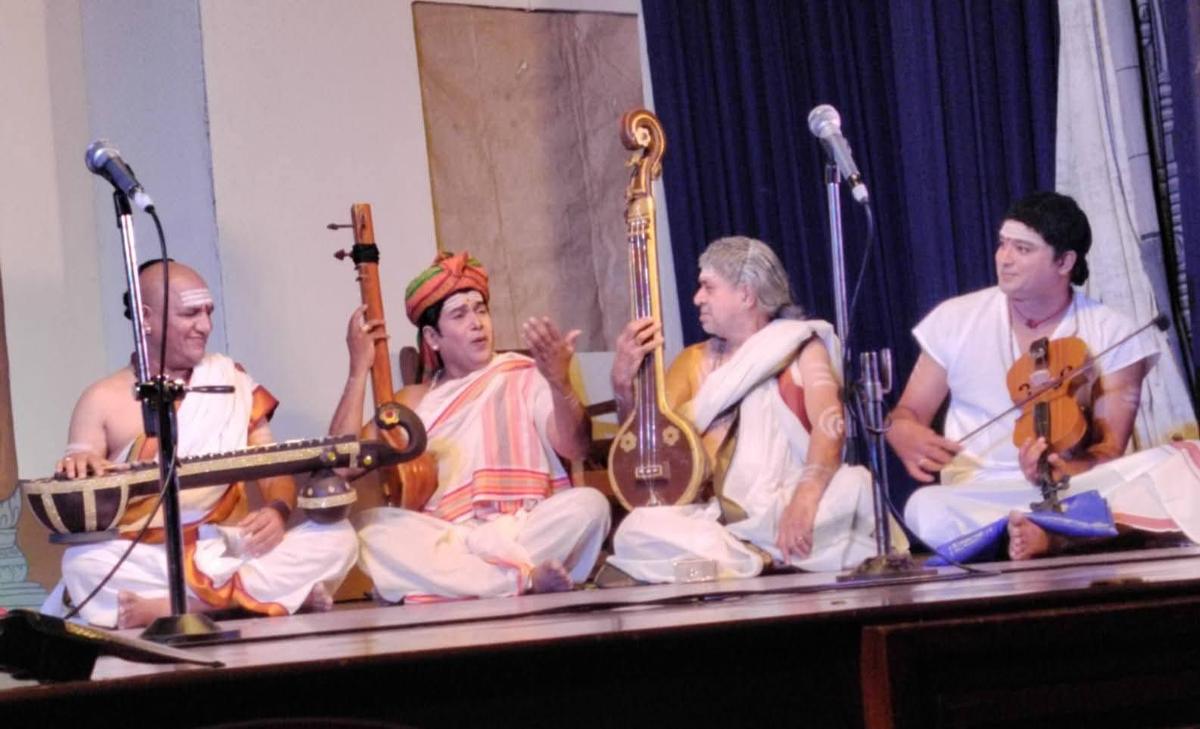
The play is a fine blend of drama and music
| Photo Credit:
Special Arrangement
It is difficult to lip-sync to a recorded voice, but the actors enacted their roles with commendable conviction. Ramesh as Muthuswami Dikshitar appeared a little self conscious, but Varadarajan as Syama Sastri and Balagurunathan as Tyagaraja were convincing. In a predominantly dialogue-oriented approach, the actors adhered well to the demands of the script.
Some sequences such as Dikshitar learning Hindustani music and his creation of Nottuswarams felt contrived and did not flow well with the narrative. Scene transitions could have been executed in a more professional manner. Selecting appropriate songs from the vast repertoire of compositions of the Trinity can be daunting but Veesvee and Bombay Jayashri chose the ones that perfectly suited the play. They were incorporated at pertinent moments. Many young musicians have lent their voice to the musical score conceptualised by Jayashri; but a consistent voice for each of the Trinity would have been more effective.
Despite a seamless flow of scenes, the ending felt abrupt. Perhaps, the play’s impact would have been greater had it been anchored by a sutradhar, who would have helped foster a better connect with the audience through his story telling.
Published – February 11, 2026 03:34 pm IST