




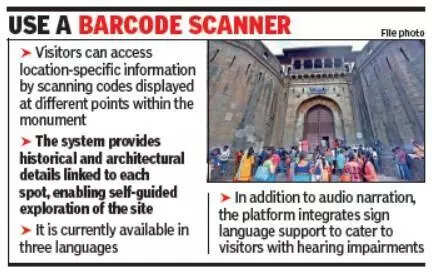
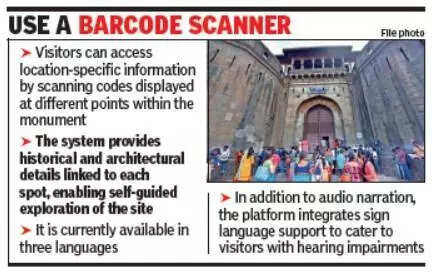
Pune: Archaeological Survey of India (ASI) launched phase 2 of Shaniwarwada’s audio guide on Saturday at the historic fort complex. The new phase expanded the existing audio guide with location-specific narration across the monument and introduced Indian Sign Language (ISL) video interpretation for visitors. Officials said the second phase has been developed under the supervision of the ASI’s Mumbai Circle and focuses on improving interpretation while making the monument more accessible to visitors with hearing impairments. The audio guide is part of ASI’s collaboration with GunjIndia to provide multilingual, geo-triggered audio guides at protected monuments across the country. A senior ASI official said the inclusion of ISL is in line with the organisation’s broader policy to improve accessibility at monuments for persons with disabilities. “ASI has taken a decision to progressively introduce accessible interpretation at all monuments under its care, including facilities for the deaf and hard-of-hearing,” the official said. Under the programme, the ASI Mumbai Circle plans to roll out audio guides at 25 additional protected monuments by March 31. Shaniwarwada staff and officials from the ASI Mumbai Circle and Pune sub-circle were involved in implementing the project. The audio guide is aimed at providing visitors with structured historical information while moving through different sections of the monument. The initiative, introduced by Abhijit Ambekar, superintending archaeologist, ASI Mumbai Circle, is part of ASI’s broader push towards digitising monument-related information and using technology to improve visitor engagement without physical guides or printed material.Use a barcode scanner Visitors can access location-specific information by scanning codes displayed at different points within the monument The system provides historical and architectural details linked to each spot, enabling self-guided exploration of the siteIt is currently available in three languagesIn addition to audio narration, the platform integrates sign language support to cater to visitors with hearing impairments