




Once motion-picture was a photographer’s experiment. Decades later, it was a narrative film at the hands of a magician. A century later, it was altered high-definition by engineers. At present, the landmark is IMAX, the brainchild of filmmakers, a businessman, and an engineer.
Behold, Image Maximum
IMAX stands for “Image Maximum” in a manner reminiscent of the beginnings of cinema where the first ever theatre screens scared the wits out of people and made us run out in fear. Over time our brains were primed and we realised that an approaching train inside the theatre screen will not actually pop out and hit us. The nostalgic and innovative spirit of cinema is revived once again with IMAX whose Canadian creators aimed to make the viewing experience so atmospheric that you feel like you are actually there inside the story.
IMAX
was invented by Canadian filmmakers Graeme Ferguson and Roman Kroitor, with businessman Robert Kerr, engineer William Shaw.
IMAX Corporation
is the company founded by Ferguson, Kroiter, and Kerr that manufactures all things IMAX.
I’m sure these days you must be frequently seeing all these dashing, blockbuster films being released in IMAX. Perhaps, some of you even think that the term is simply a brand. Let me tell you, IMAX is a brand, a technology, a camera, and an immersive viewing experience altogether!
As the name connotes, IMAX is something big. A larger-than-life sort of theatre screen, a specialised camera capable of filming massive frames…everything’s just huge with IMAX!
Unique aspect ratio
Apect ratio is nothing but the proportions of an image. It is the ratio proportion of the height and width of an image (how an image appears on screen; screen proportions). For instance, a 4:3 aspect ratio means that the image is 4 units wide and 3 units tall. This same ratio can be expressed as 1.33:1 which is the decimal representation and means that the width of the image is 1.33 times the size of its height.
According to film industry convention, 1 is always the value assigned to the image’s height. This consistent value was kept so that comparison between formats was easier understood.
The debut of IMAX in 1970 was revolutionary as it brought a new aspect ratio for film viewing to existence — 1.43:1. This new film format was larger and required a larger screen to be displayed.
Some frame proportions!
1. The photographer, Eadweard Muybridge – 22×14 cm cards
2. The magician, Georges Méliès – 4:3 or 1.33:1 (standard at the time)
3. HD (High-Definition) – 16:9 or 2.39:1
4. IMAX- 1.43:1, 1.90:1
Hitherto mainstream and conventions
There’s always a time for things. During the time period of the classical Hollywood golden era of cinema, theatres were stars as they were the only place people could go to watch films. 1.375:1, a ratio called “Academy ratio” was the norm then. But film technology doesn’t stay still and always develops. Soon after, widescreens like CinemaScope and VistaVision became the common projection standards.
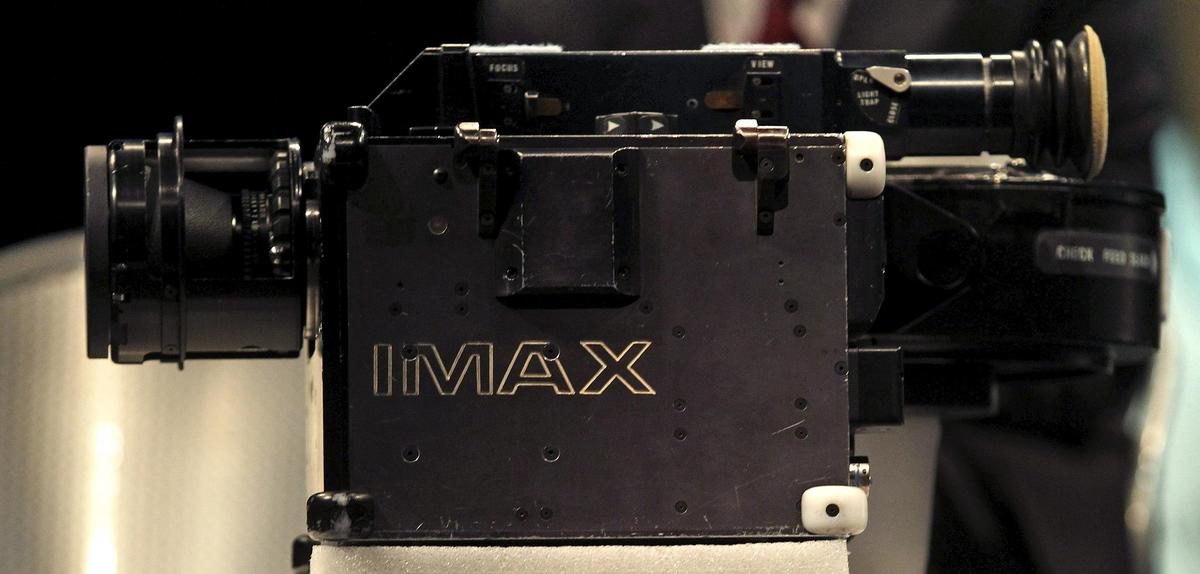
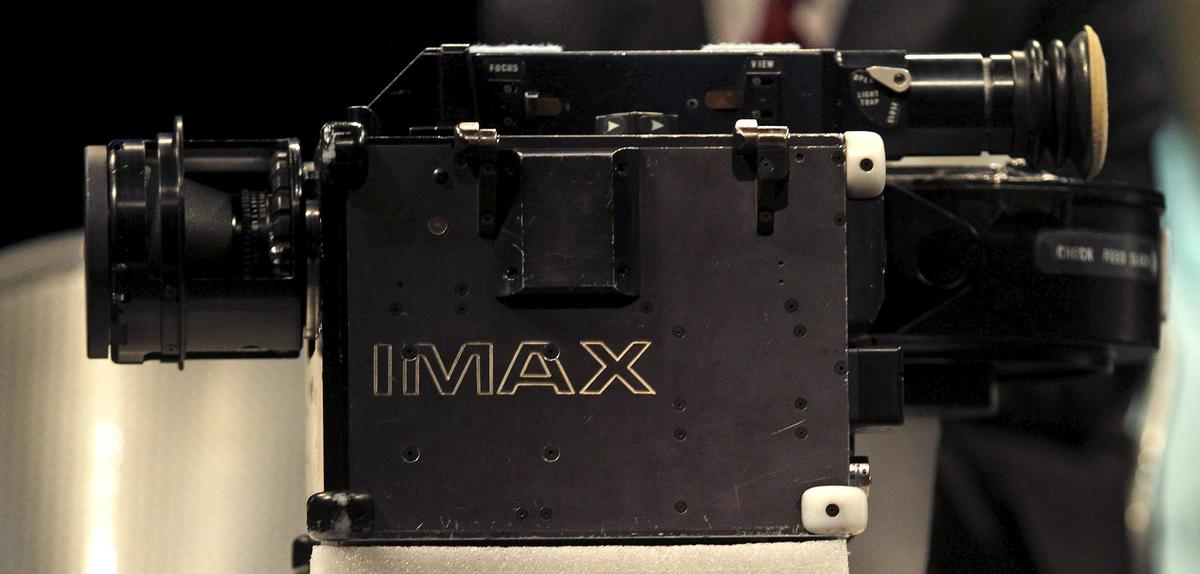
A close-up of one of two IMAX cameras is seen at the Smithsonian National Air and Space Museum in Washington, U.S.
| Photo Credit:
Reuters
When IMAX was the projection rookie during the 1970s, it didn’t quickly catch on. Not only was it a new and highly-specialised tech but also an expensive one at that. While other film formats prevailed in the mainstream, the tinkers never stopped tinkering with IMAX. The technology kept on developing and NASA joined the team to develop IMAX cameras for filming in space.

“Studios didn’t want to film a movie in our format (which required bulky, expensive cameras and lots of film) unless thousands of theatres were equipped to show IMAX films. Theatre owners wouldn’t convert to IMAX until many more IMAX films were available.”Richard GelfondCEO of IMAX
The first IMAX film is Tiger Child which was shown at Expo ‘70 in Osaka, Japan.
So different, it stands out immediately
We will have to wait and see how a full-length film entirely made in IMAX will feel like. And what better than to have a titanic Homerian story with the champion of IMAX working behind it. Christopher Nolan is widely known for championing the use of IMAX in commercial cinema, changing the film viewing experience at the theatre. He brought the popularity of IMAX cameras which use 70mm film to shoot. It was his move against the digital, stressing large format filmmaking and has successfully brought theatre fame back to vigour.
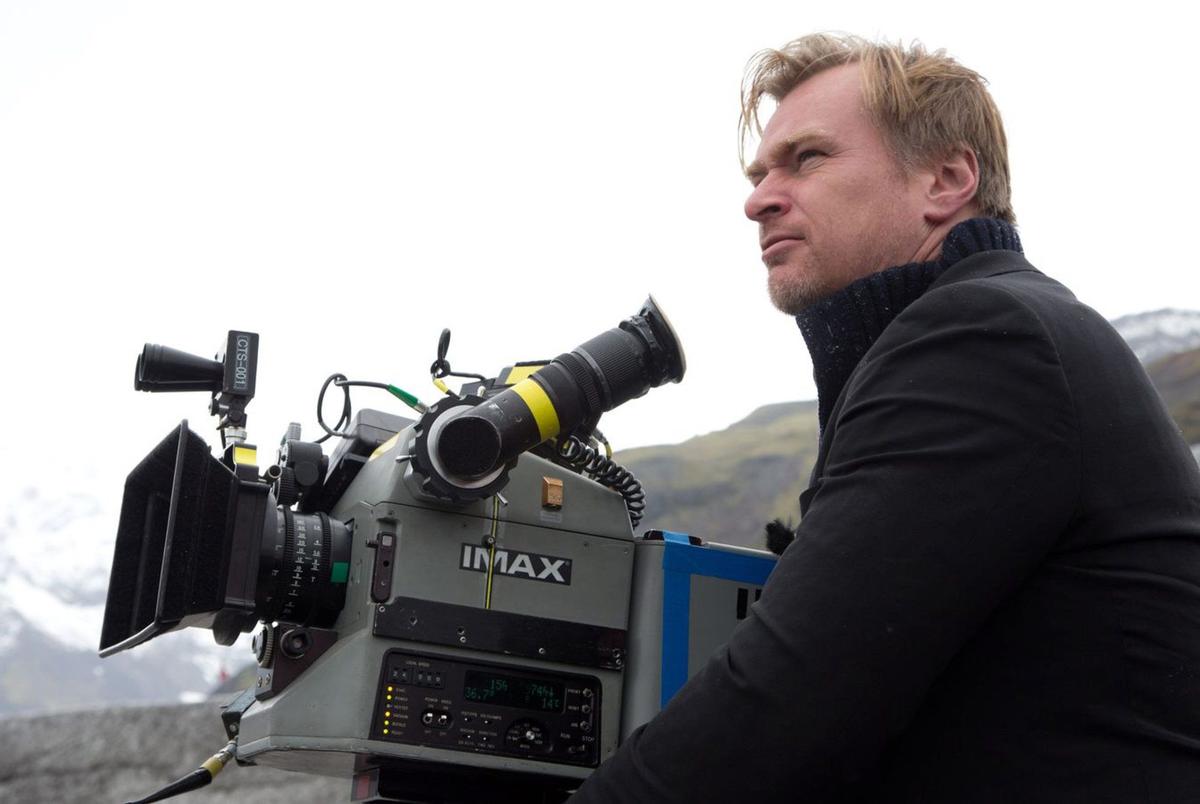
Christopher Nolan filming with IMAX camera.
| Photo Credit:
Wikimedia Commons
IMAX technology
IMAX cameras: IMAX cameras work with a 70mm film to shoot. The format is noted as 15/70 meaning there are 15 perforations (tiny holes along the edges of film) per frame. Compared to others, it is a wider strip (every frame having large surface area) and is run through the camera sideways. You can immediately note the difference here in the picture. This larger frame reduces the grain and enhances the quality of the image. IMAX 70mm gives you 10 times the image resolution of a 35mm film.
Reducing grain is where IMAX makes the biggest difference.
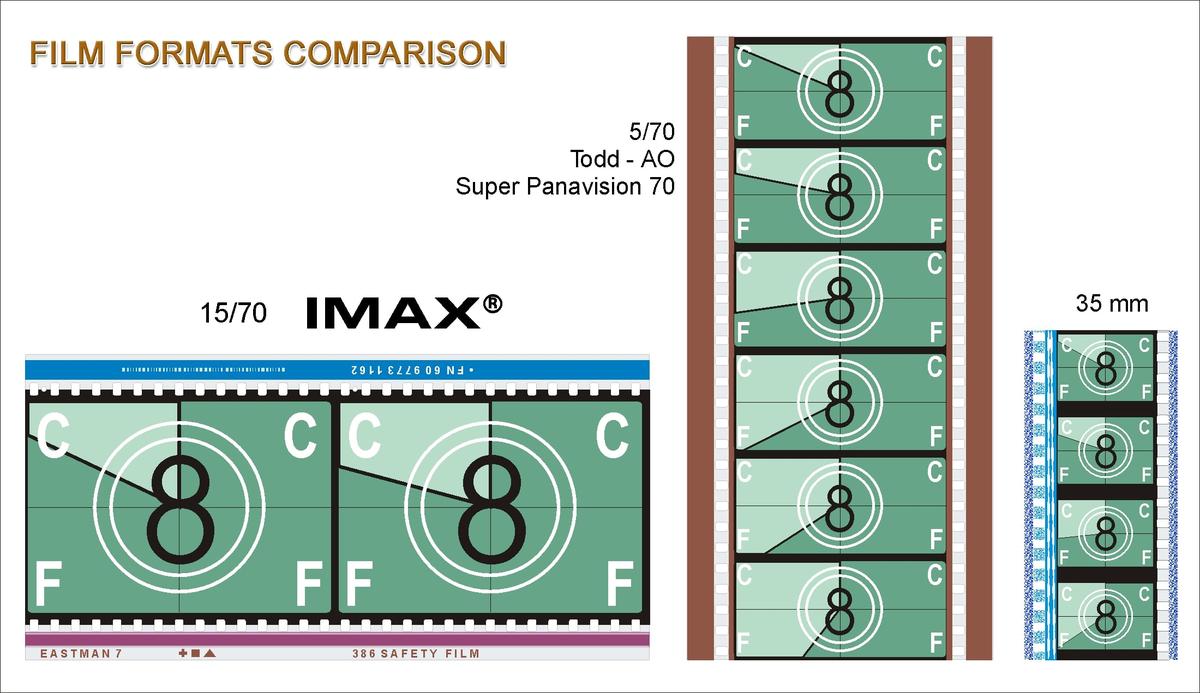
IMAX film is run through the camera sideways.
| Photo Credit:
Wikimedia Commons
IMAX screen: If a film shot on an IMAX camera is projected on a normal theatre screen, the shot composition will be different (due to different aspect ratios). Suppose there are three characters standing tall amongst a crowd and the scene was shot in IMAX camera. If this shot is played on a normal screen,the backs of the heads of some people in the crowd will be cropped out at the bottom and there’ll be less sky on top. If that same shot was projected on an IMAX screen, it would be immersive due to the combination of the higher resolution image, large frame and unique aspect ratio.
IMAX screens are different because it accommodates every change required for the IMAX film to be as immersive as possible.
IMAX Digital: IMAX Digital is the lower cost digital variant of the IMAX production system where the aspect ratio is different and still unique – 1.90:1
IMAX projector and sound system: IMAX uses dual projectors that maintain uniform clarity. An IMAX theatre also uses 12-channel sound technology for best sound experience.
Did you know?
There are more than 1700 IMAX theatres around the globe but only about 30 of them (which mostly are in the U.S.) are true IMAX screens with 1.43: 1 ratio and capable of displaying 15/70mm film.
Published – January 20, 2026 01:00 pm IST