


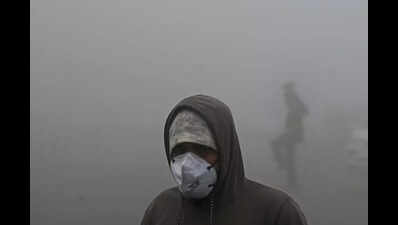
New Delhi: Out of 365 days, Delhi met the national ambient air quality standard (NAAQS) for PM2.5 of 60 micrograms per cubic metre on just 156 days, or 43% of days, in 2025, while the WHO’s safe guideline of 15 micrograms per cubic metre was met on only five days.For PM10, the national standard of 100 micrograms per cubic metre was met on 84 days, and the WHO’s safe limit of 45 micrograms per cubic metre was met on just nine days. Data shows that compliance largely coincided with periods of favourable meteorological conditions.
An analysis of Central Pollution Control Board (CPCB) data by thinktank EnviroCatalysts shows that the monsoon months were the cleanest. In 2025, the daily PM2.5 levels were below 60 micrograms per cubic metre on all days in July and Aug. It was also below NAAQS on 29 days in Sept and 22 days in June. The city recorded excess rainfall this monsoon season, data from India Meteorological Department shows. In contrast, the winter season was the most polluted, with not a single day meeting NAAQS in Jan and Nov. However, Dec 2025 saw four days when the PM2.5 concentration dipped below 60 micrograms per cubic metre because of strong winds. A similar trend was observed for PM10 in 2025. The national standard was exceeded on all days in Jan, Feb, April and Nov. The monsoon months saw the fewest days when it exceeded NAAQS—19 in June, three in July, nine in Aug and 20 in Sept. Data reveals that there was little change in the number of days Delhi met the daily NAAQS over the past few years. The year-to-year fluctuations mostly depended on meteorological factors, including rain intensity and wind speed. The city saw 117 days in 2024, 152 days in 2023, 115 in 2022, 150 in 2021 and 173 in 2020 when the daily PM2.5 concentration was below 60 micrograms per cubic metre. Sunil Dahiya, founder and lead analyst at EnviroCatalyst, said, “The air pollution levels are so high in Delhi that even the rains can’t bring them down under the breathable limits. Unless we cut down emissions at source, we will have to pray for sustained high-intensity rains to provide clean air, which doesn’t happen often. The emissions are way beyond the carrying capacity of the region and must be cut down in the larger airshed.” However, nitrogen dioxide (NO₂) was below the national daily standard of 80 micrograms per cubic metre on all days from Jan to Oct. However, the national standard was surpassed on five days in Nov and two days in Dec in 2025. It is a highly reactive gas generated by burning fuel and includes emissions from vehicles, power plants and industries. Dipankar Saha, former head of CPCB’s air laboratory, said Delhi falls in the Indo-Gangetic Plains, which acts as an air basin during winter. “It collects dust from all the upstream areas and drains through the basin to the Bay of Bengal. However, dust and other toxicity can be reduced through strict measures on emissions control and the use of cleaner fuel,” said Saha.