




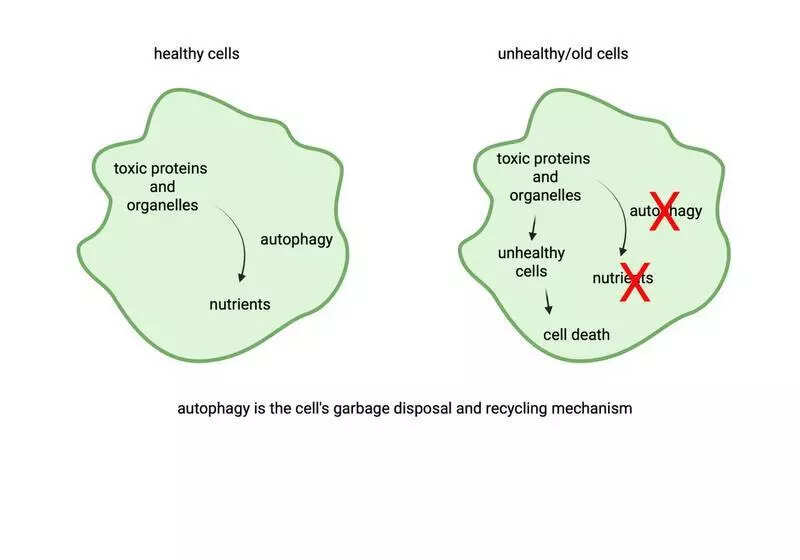
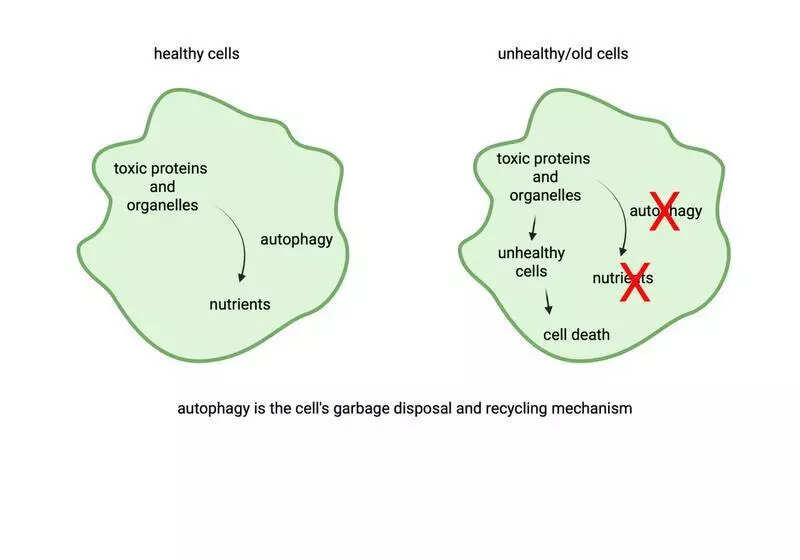
Pune: Scientists at the Agharkar Research Institute (ARI) in Pune have made an important discovery that helps explain how ageing begins in body tissues. Their research suggests that ageing may start not inside stem cells, but in the support cells that help the former survive and work properly. Stem cells are special cells that help the body grow, repair damage, and stay healthy. These cells live in a small environment called a ‘niche’, where nearby support cells ‘take care’ of them. ARI researchers found that these support cells are more easily damaged as we grow older. The study was carried out using fruit flies, which are commonly used in science as their body systems work in ways similar to humans. The study was published in the international science journal Stem Cell Reports recently. The researchers discovered that when these cells lose their ability to clean and recycle waste inside them — process called autophagy — they begin to weaken and break down. “Autophagy is like a housekeeping service inside every cell. It works quietly all the time to remove waste and keep cells healthy. When this system fails, cells begin to age and fall sick,” said Kiran Nilangekar, lead author of the study. The ARI team focused on stem cells and, among them, germline stem cells, which are especially important as they produce eggs. Using fruit flies, the researchers studied germline stem cells in the ovary and nearby support cells called cap cells. What surprised them was that the stem cells showed very low dependence on autophagy. Even when autophagy was reduced, the stem cells survived and continued functioning. “But the surrounding support cells told a completely different story,” explained Bhupendra V Shravage, senior scientist and group leader at ARI. “The niche cells were extremely dependent on autophagy. When this cleaning process was disrupted, these cells aged quickly, accumulated damage, and eventually stopped working.” The support cells play a vital role by sending chemical signals, especially Bone Morphogenetic Proteins (BMPs), to stem cells. These signals tell stem cells to remain healthy and not change into other cell types too soon. “When autophagy failed in the support cells, BMP signals weakened. As a result, stem cells slowly disappeared, not because they were damaged, but because their support system collapsed,” said Shravage. “This shows that ageing is not just about damage inside stem cells. It is also about the failure of the ‘neighbourhood’ that supports them. If the environment breaks down, even strong stem cells cannot survive,” the researchers stated. Although the study was done on fruit flies, the basic processes studied are similar in humans. Scientists believe the findings could help explain age-related fertility decline and tissue degeneration in organs such as skin, intestine, and muscles. “As India faces challenges like rising infertility and an ageing population, understanding how support cells fail with age becomes very important. Protecting these niche cells may one day help us maintain healthier tissues for longer,” Nilangekar added.