
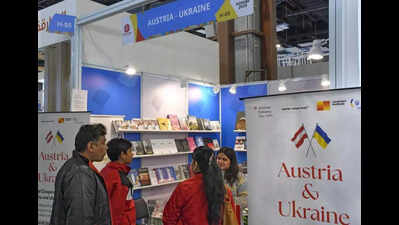
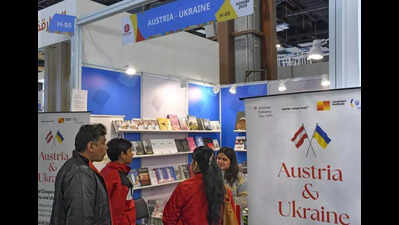
New Delhi: At the the international pavilion of the World Book Fair, there is a stall where you cannot buy books. This modest space in hall 4 of Bharat Mandapam is for publications from Ukraine. Readers cannot buy physical copies of any book because it is nearly impossible to get fresh stock from a country in the thick of a full-scale war for four years. These books in the stall are all that they have. Visitors can scan QR codes for each book, then download and read them.
Many of the books are from the war, and of the war. They are written by soldiers and volunteers, men and women who have been at the centre of the conflict. But there are other voices too in the pages. There are books on food and art — subjects that may seem insignificant because the war consumes all the discourse. But art and food are what people hold on to in tough times. The stall has been set up in collaboration with Austria. The fair itself has been organised by National Book Trust under the ministry of education, with the India Trade Promotion Organisation as the co-organiser. For Ukrainian author Lyubko Deresh, who travelled to Delhi all the way from Kyiv to be part of the festival, the stall and the books are deeply symbolic. “Since the full-scale invasion in 2022, Ukrainian culture and literature have gone through a boom. It is paradoxical, but real,” he said. “Despite the Russian aggression, interest in Ukrainian literature has grown sharply, and the book market has expanded.” Deresh said the literature is both a testimony and a way of survival for Ukrainians. “We have probably around 1,000 books on the war. These are written by warriors on the frontlines and by people far from the war zone. It is flourishing under very sad circumstances, but many strong literary voices are also emerging,” he said. Some of the titles on the shelves read: War It Is! Through Volunteers’ Eyes; We All Stand Together for Ukraine; and We Were Killed Because We Are Ukrainians. For many Indian parents, this stall is a way to explain Ukraine and the war to their children. “We wanted to understand what is really happening in Ukraine now,” said Saurabh Gupta, a visitor from west Delhi who brought his son, who reads in Class VII. “We were curious about how the Ukrainian people are living through this phase, what their culture looks like today, and how they are coping with the war.” Samrit, a civil services aspirant who was lingering near the display, said: “I want to see more from Ukraine in the future.” Volodymyr Prytula, an official of the Ukrainian embassy, explained why physical copies of the books are not being sold here. “We have many books from the embassy library. Transporting books from Ukraine at the moment is extremely expensive, so we were not able to bring copies for sale. That is why we created the QR codes.” The presence of the Ukranian books is itself a symbol of solidarity. “Our minister of foreign affairs started this. She decided to support Ukrainian artists, especially since many of them are now living in Vienna after seeking refuge,” said Michael A Pal, director of the Austrian Cultural Forum in New Delhi. “The idea is to give Ukraine a visible stage.” In a fair full of new releases and bestsellers, the mere presence of the stall is a win in itself. It offers visitors a connection and Ukranians one more window.