



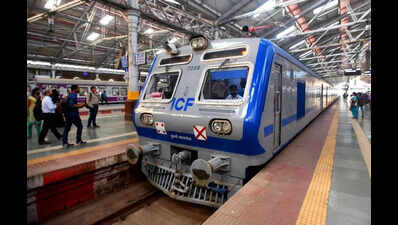
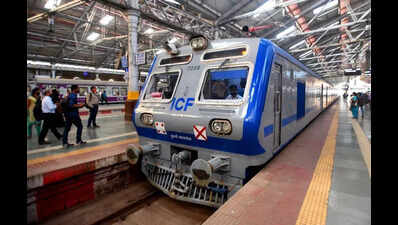
Mumbai: Central Railway (CR) will reintroduce AC local services on the Harbour line from Jan 26 with 14 services, including one each in the morning and evening peak hours. Meanwhile, Western Railway (WR) will add about a dozen AC local services by converting some of its existing non-AC locals.CR’s Harbour move is a comeback. The railways had first started AC locals on the Harbour line on Dec 1, 2021, but later withdrew them due to poor demand. This time, officials said the inclusion of peak-hour trains is meant to make the service more practical for office commuters, especially those travelling towards Navi Mumbai.Sources said the Harbour relaunch is also being seen as a test of changing commuter behaviour after the pandemic years, with more passengers willing to pay extra for comfort during longer journeys, extreme heat or heavy rains.On CR’s Main line, too, AC locals have been expanding. CR added 14 more AC services from April 16, 2025, taking the weekday Main line AC count from 66 to 80. CR has a per day ridership of about 1.02 lakh.Commuter groups say the Harbour AC services will work only if timings are convenient and frequency is adequate. If the trains are too few or poorly timed, they warn, the Harbour corridor could again see low patronage like in 2021.WR already runs 1,406 suburban services, including 109 AC services, and carries around 3 million passengers daily, as per official data. At present, 1.3 lakh passengers travel by AC on WR.The new AC additions will come through replacement of non-AC runs, meaning overall frequency is expected to remain broadly unchanged.Railway officials say the strategy is to expand AC options without cutting the number of trains available to the larger commuter base that relies on standard locals. They added that converting selected services is meant to ensure the AC timetable remains stable and predictable, rather than being treated as an occasional “special” that appears and disappears. Regular commuters, however, say the success of the upgrade will depend on whether the converted services are timed around high-demand slots and whether crowding on parallel non-AC trains is monitored after the switch.