




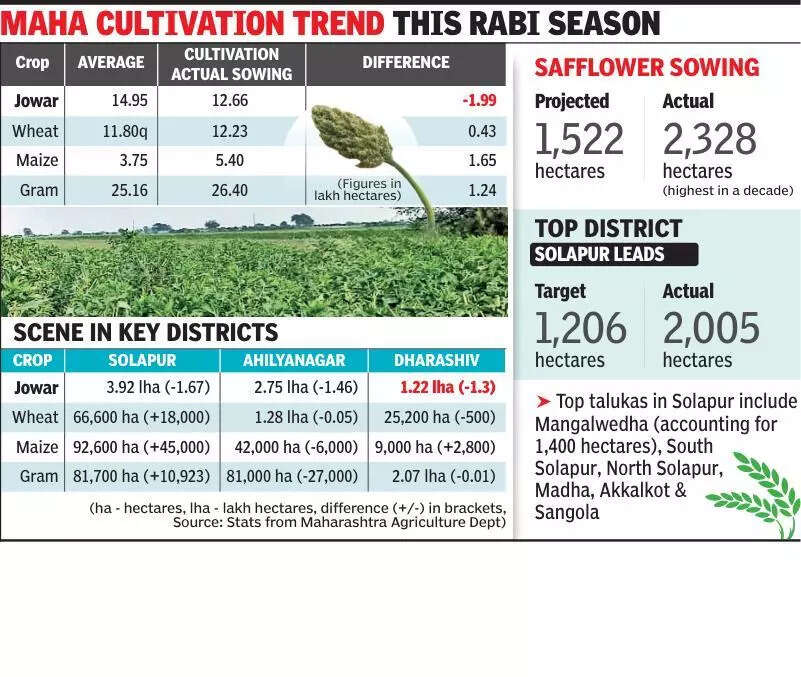
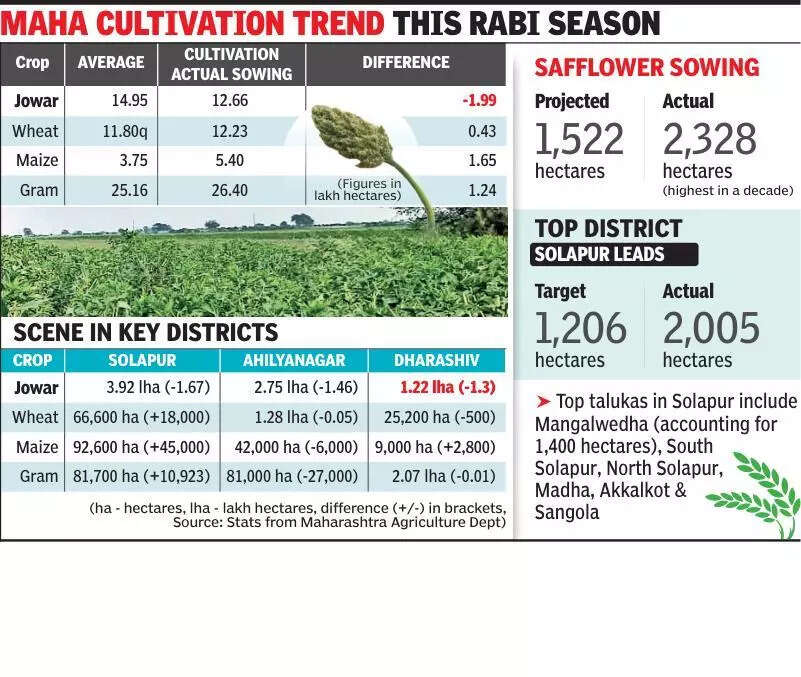
Pune: Safflower (kardai) cultivation in the Pune division, covering Pune, Solapur and Ahilyanagar districts, has recorded a sharp increase this rabi season, with farmers sowing more than 150% of the official target, indicating a revival of interest in the traditional oilseed crop.“This surge can be attributed to favourable agro-climatic conditions and a growing awareness among farmers about the crop’s economic viability and agronomic advantages,” an official said.Safflower is known for its ability to withstand moisture stress and thrive on residual soil moisture after the monsoon. Solapur district has emerged as the frontrunner in safflower cultivation this season, achieving about 166% of the target. In Pune district, against a target of 119 hectares, actual sowing touched about 256 hectares this season. “The increase reflects farmers’ efforts to diversify cropping patterns amid rising input costs and price volatility in other rabi crops,” another official said.Sanjay Kachole, district agriculture officer, described the trend as encouraging. “Safflower sowing had declined in the district over the last two decades. Its resurgence indicates that farmers are experimenting with their crop choices, which brings diversity to local markets,” he said, adding that steady market demand for safflower further motivated farmers to return to the crop.In Ahilyanagar, against a target of 197 hectares, sowing was reported on only about 28 hectares, up by about 14%. Uneven soil moisture conditions in parts of the district discouraged farmers from opting for the crop this season, the officials said.Experts said safflower’s renewed popularity was also driven by its lower input requirements and relatively stable demand for edible oil. “The crop has a duration of about four months and fits well into rabi crop rotations. This year’s cold weather is favourable for vegetative growth, which could support improved yields if conditions remain stable,” said a senior agriculture department official.Authorities, however, cautioned farmers about the potential risk of aphids and other pests, which tend to multiply under fluctuating temperatures. “Regular monitoring and timely integrated pest management are crucial. If pest infestations are not addressed early, they could affect productivity despite the higher acreage,” the official said.If weather conditions remained favourable, the expanded safflower acreage was expected to contribute positively to oilseed production and farm incomes in western Maharashtra this season, the officials added.SAFFLOWER CULTIVATION UPDATESOWING AREAProjected: 1,522 hectaresActual: 2,328 hectares (highest in a decade)Top DistrictSOLAPUR LEADSTarget: 1,206 hectaresActual: 2,005 hectaresTop talukas in Solapur include Mangalwedha (accounting for 1,400 hectares), South Solapur, North Solapur, Madha, Akkalkot & SangolaBENEFITS OF SAFFLOWERWithstands moisture stressThrives on residual soil moistureAttractive rabi option in rain-fed areas