




The new year is set to begin with a trip down nostalgia lane for Marathi cinema as director Hemant Dhome etches a narrative around an old school in coastal Maharashtra in his latest release, Krantijyoti Vidyalay Marathi Madhyam. Named with a feeble touch of revolution, invoking a pressing urgency for safeguarding the language, the film was initially planned as a tale of some school friends coming together for a reunion years later. Hemant narrated the one-liner to actor Siddharth Chandekar, his frequent collaborator, who felt that the story needed a strong anchor point.
“Two days later, I thought what if there’s a Marathi medium school that is going to be demolished and its ageing principal calls upon some old students, which becomes the occasion for this reunion. That’s how the idea developed,” Hemant recalls as the nostalgia tale now ringed with a purpose. The concern came from a personal space for the filmmaker. “Even my school got demolished, and I was quite disturbed when I heard the news. There are many such Marathi schools across Maharashtra that are getting closed for newer things to be built in their place,” he says.
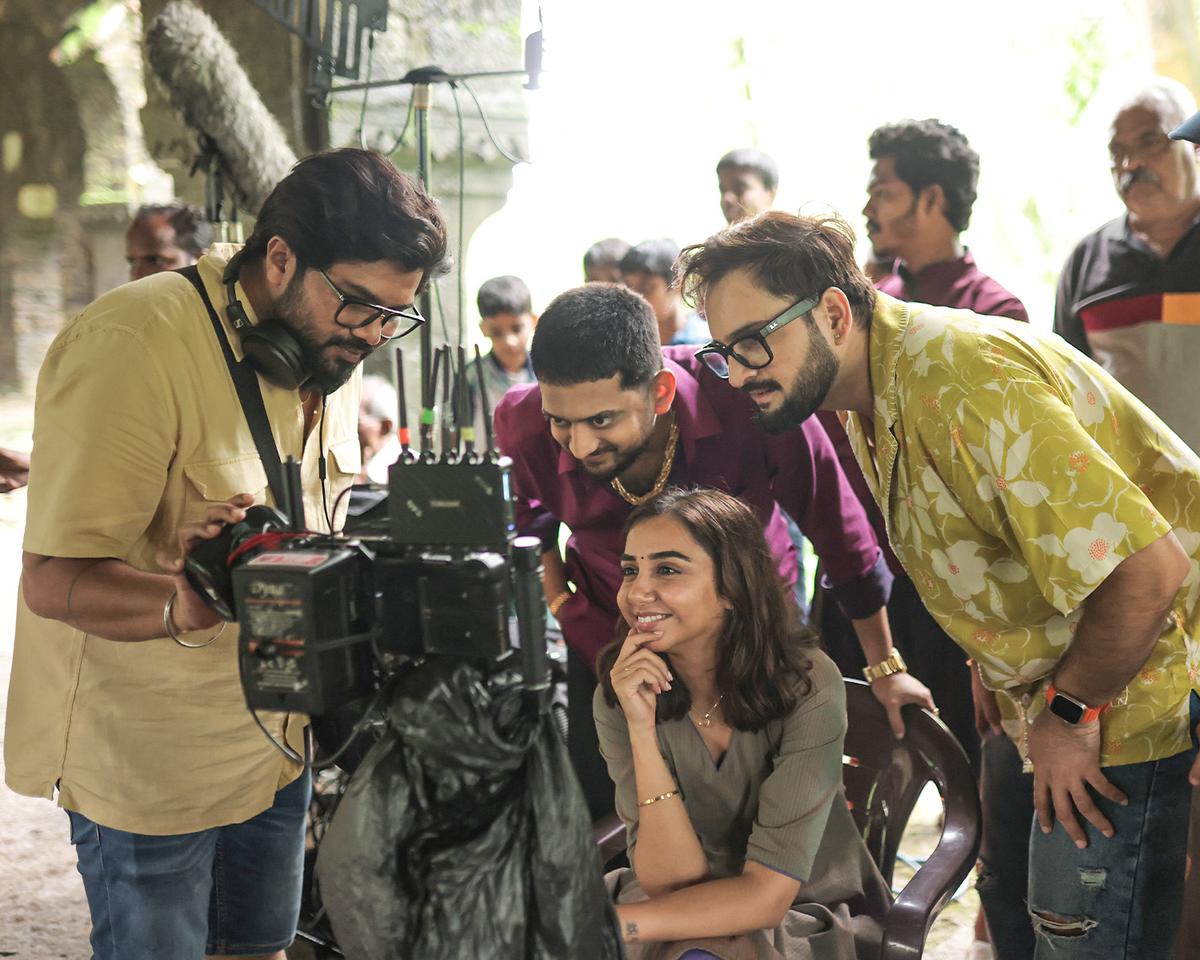
Hemant Dhome, Amey Wagh, Prajakta Koli and Siddhant Chandekar from a behind-the-scenes moment during the film’s shoot
| Photo Credit:
Special Arrangement
“It is not just about Marathi. Even other regional language schools are getting closed. Tulu is one such language that is on the verge of extinction. If all our regional languages disappear like this, then we won’t be able to say that India is a diverse country. I just found all this quite relevant and wanted to express it through the film, although with a touch of entertainment,” he adds.

Entertainment has been an unmissable feature of Hemant’s films ever since he made his debut in 2017 with Baghtoys Kay Mujra Kar. With a familiar touch of humour and emotions, the film addressed the concern of the decaying state of historical forts around Pune, particularly those associated with the celebrated Maratha king, Chhatrapati Shivaji Maharaj. Since then, Hemant has surrounded his films with a range of contemporary themes, including women’s liberation in Jhimma (2021) and Jhimma 2 (2023), as well as the urban alienation of living in a foreign country in Sunny (2022).
With Krantijyoti Vidyalay, Hemant returns to some of the themes he explored in his debut about Marathi language and culture. He says that he began pondering over these concerns while studying in college in Pune. “I started realising some things while meeting new people and having conversations with them. I have been lucky to meet the right people at the right time in my life. Eventually, I felt like giving back something to society through whatever I know, which is writing, acting and directing,” he says.
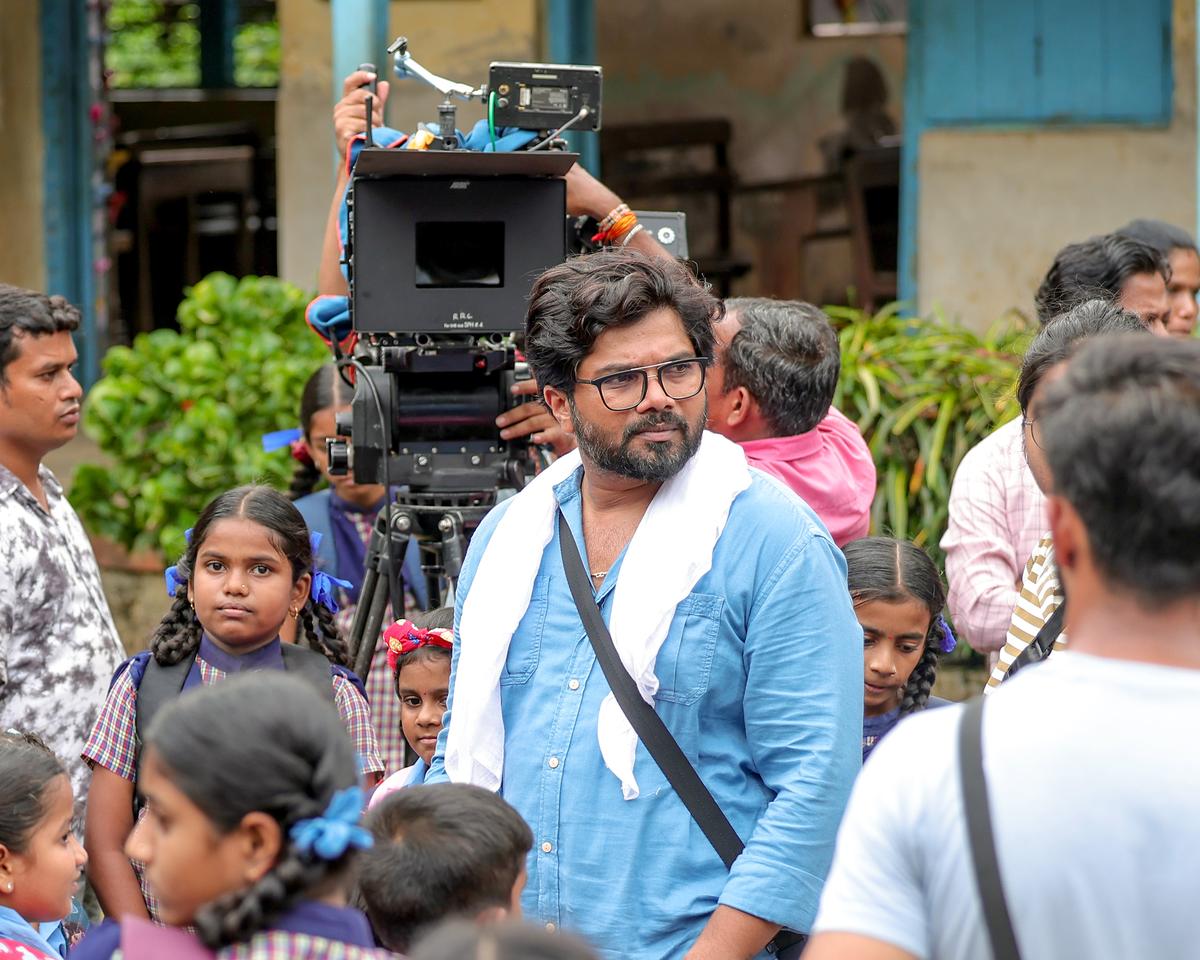
Hemant Dhome during the film’s shoot
| Photo Credit:
Special Arrangement
Hemant’s films are built around a strong conscience, brought to life with a vibrant colour palette and an overall feel-good vibe. For him, it is important for his films to be aspirational. “There is already a lot of grimness in the world, which is filled with so many greys. So, I have always wanted to bring some positivity in the midst,” he says. “Those coming to see the film should feel happy about themselves and life in general. I want to give hope to everyone who is spending their three hours watching it.”

The hopeful outlook of the visuals is only furthered with the melodious overlays. The film’s music has been composed by the charismatic duo, Harsh-Vijay, with an even, rustic flow in verses written by Ishwar Andhare. The trio are also the mind behind the successfully running Marathi musical play Folk Akhyaan — written and directed by Andhare — which combines myriad sounds from Maharashtra to weave a story about the decline of local culture in the region. The shared energies align well with the themes of Krantijyoti Vidyalay, as Hemant describes the process of working with them, “joyous”.
“I wanted to work with someone with an understanding of folk music and Marathi culture. Having seen their play, I knew the extent of their art as they composed original songs for it,” he says. “They are quite raw as artists; they don’t have the technical knowledge of cinema. So, they broke all patterns while making music for the film,” says the director.
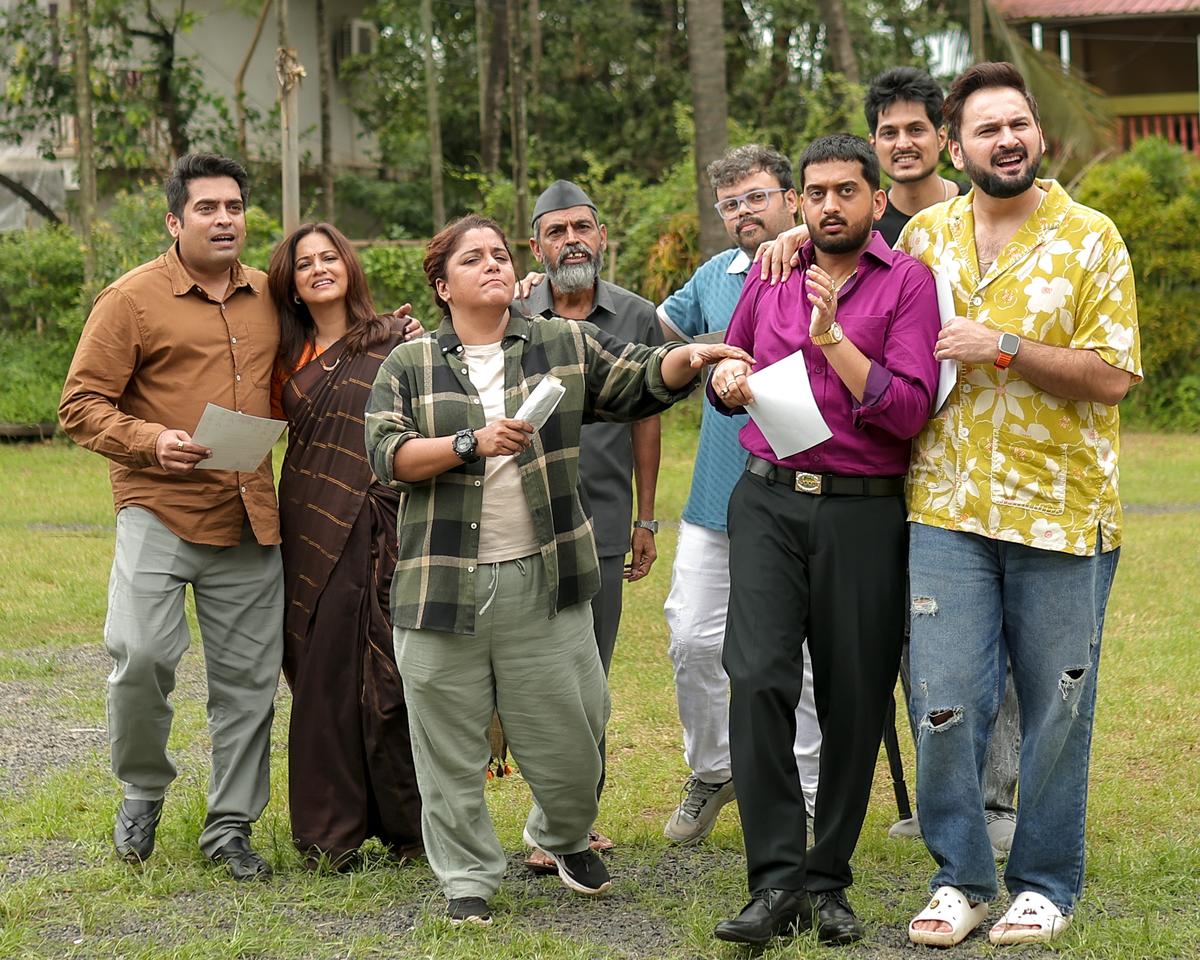
A still from the film
| Photo Credit:
Special Arrangement
Hemant has also been diligent in voicing his concerns for Marathi films getting lesser screens in theatres. When shows for Sunny started getting cancelled after the first day, he had expressed his anguish on social media. Hemant says that the limited reception to Marathi films at the box office is partly due to the dominance of Bollywood.

“There is no other way but to compete with Hindi films in the state. At the same time, it is also important for Marathi film producers to find newer ways to market their movies and look at it from the perspective of running a business rather than a hobby,” he says, adding that there is a collective need for introspection, especially among Marathi-speaking people, who, he feels, hesitate to associate themselves with the language.
“A lot of people tell me to make a Hindi film now. But why should I? Why is there a belief that my value will increase only when I do a Hindi film? Years later, I would rather like to be remembered as someone who created his own space in the Marathi film industry. Even if I do make a Hindi film someday, I would set it in my culture and region,” he concludes.
Krantijyoti Vidyalay Marathi Madhyam will be released in theatres on January 1
Published – December 31, 2025 12:52 pm IST

