






After weeks of shrill, strident films, The Great Shamshuddin Family offers the warmth of a quilt and the taste of ginger tea in a Delhi winter. Nearly 15 years after Peepli Live, Anusha Rizvi returns with a day-long glimpse into the life of a modern Indian Muslim family that is achingly human, steadfastly hopeful, and consistently humorous.
Carrying tensions arising from interfaith relationships and generational grievances within its layers, the film gradually builds the tenuous relationship between the home and the world. From the passive aggression of liberals, the youthful presumptions, the manipulation of conservative but well-meaning elders, to the bitterness, the casual communal innuendos, and prejudices that we see around us, the film brings out the foreboding and the fears of social violence in our subconscious mind without pointing fingers.
Anusha, who has been part of dastangoi’s resurgence in urban centres with producer Mahmood Farooqui, constructs the screenplay and the inherent social commentary like a heartfelt qissa that unfolds over a frantic single day in a bustling Delhi apartment overlooking the picturesque Humayun tomb.

The Great Shamsuddin Family (Hindi)
Director: Anusha Rizvi
Duration: 100 minutes
Cast: Kritika Kamra, Juhi Babbar Soni, Shreya Dhanwanthary, Farida Jalal, Sheeba Chaddha, Dolly Ahluwalia, Purab Kohli, Natasha Rastogi
Synopsis: Struggling to meet a crucial deadline, a divorced academic’s day in her Delhi apartment erupts into chaotic family drama as relatives descend with urgent crises.
It follows Bani (Kritika Kamra), an ambitious academic and the eldest daughter in a middle-class family. After her divorce, she lives in her carefully crafted cocoon, wanting to run from everyday fears to a place where she can express her mind.
Desperate to meet a deadline, her plan goes haywire when her home becomes a hub for relatives. Mother, aunts, sisters, cousins, and even an ex-boyfriend descend one after the other, bringing along unresolved emotional knots with them. As one revelation follows another, Bani must negotiate with a situation that seems to be going out of hand by the hour.
The responsible Bani contrasts with her impulsive cousin, Iram (Shreya Dhanwanthary), who drops by with a bagful of cash. They are joined by the conflict-resolving eldest sister (Juhi Babbar). In between, Bani’s mother, Asiya (Dolly Ahluwalia), and her feisty sister Akko (Farida Jalal), who are about to go for Umrah, turn up to snoop on the girls and provide some unsolicited advice. Things get to a head when Bani’s cousin Zoheb (Nishank Verma) crash-lands with Pallavi (Anusha Banerjee) to announce their wedding, making the elderly ladies squirm. Soon, Zoheb’s mother, Safiya (Sheeba Chaddha), checks in only to get offended by the turn of events. Dressed in what Akko terms a ‘Pakistani outfit’, Asiya and Akko, in Safiya’s presence, look and sound liberal and progressive. Iram’s mother, Nabila (Natasha Rastogi), perhaps the last to press the bell, adds to the chaos.
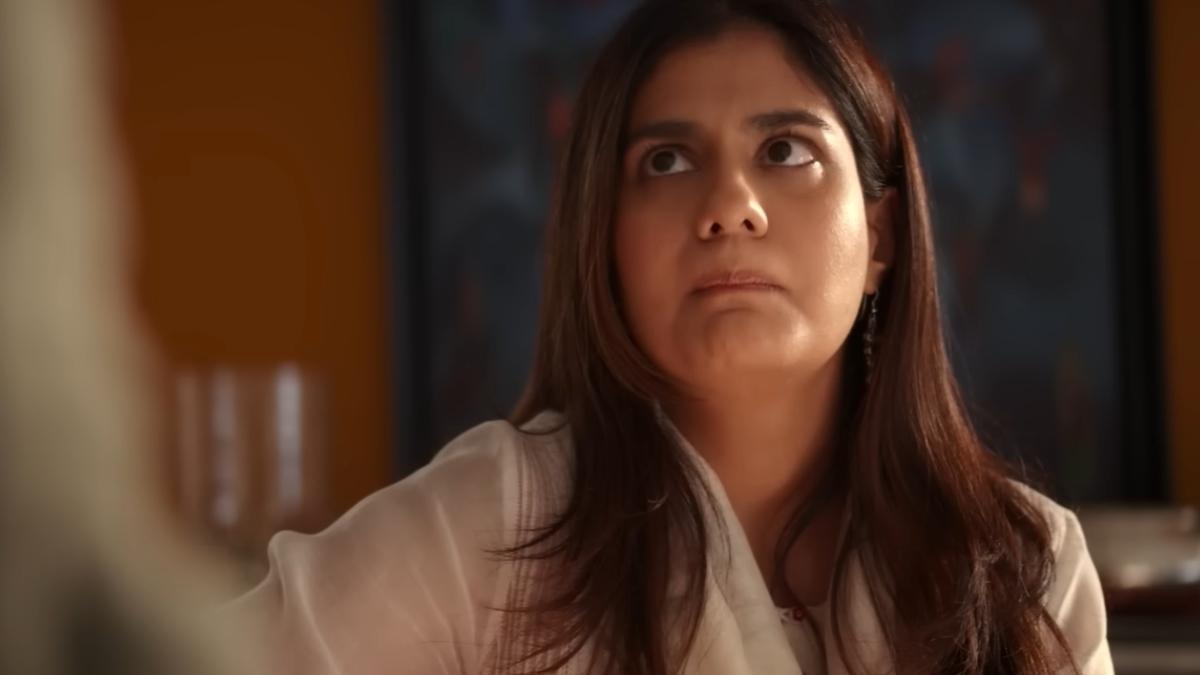
Shreya Dhanwanthary in the film
| Photo Credit:
JioHotstar/YouTube
Meanwhile, Bani’s professor friend, Amitav (Purab Kohli), and his very young protege, Latika (Joyeeta Dutta), the certified liberals in the room, turn out to be pretentious and insulated from the real world. The film effectively tells us what education can and can’t do. Akko’s perspective about the Hindu bride changes the moment she discovers that she is a doctor. At the same time, Latika can’t shed her patriarchal mindset despite her degree. She can abbreviate triple talaq to TT, but struggles to come to terms with Bani’s academic acumen.
Shunning maudlin nostalgia and slapstick, Anusha brings the unhurried confidence of a filmmaker who values restraint yet respects the audience’s time. She infuses the proceedings with the cultural specificity of a Muslim family that feels lived-in rather than performative. She prioritises deep observation over histrionics without making a show of it. Divorce, interfaith relationships, and rising communal rage on the road, Anusha lays out the contours of the times without joining the dots.
Filled with female characters, careful not to let their agency wither, its life-like, uneven perspective is a welcome departure from the formulaic, tidy tales of empowerment. The camerawork is intimate but seldom intrusive, and the crisp editing keeps the narrative from sagging.
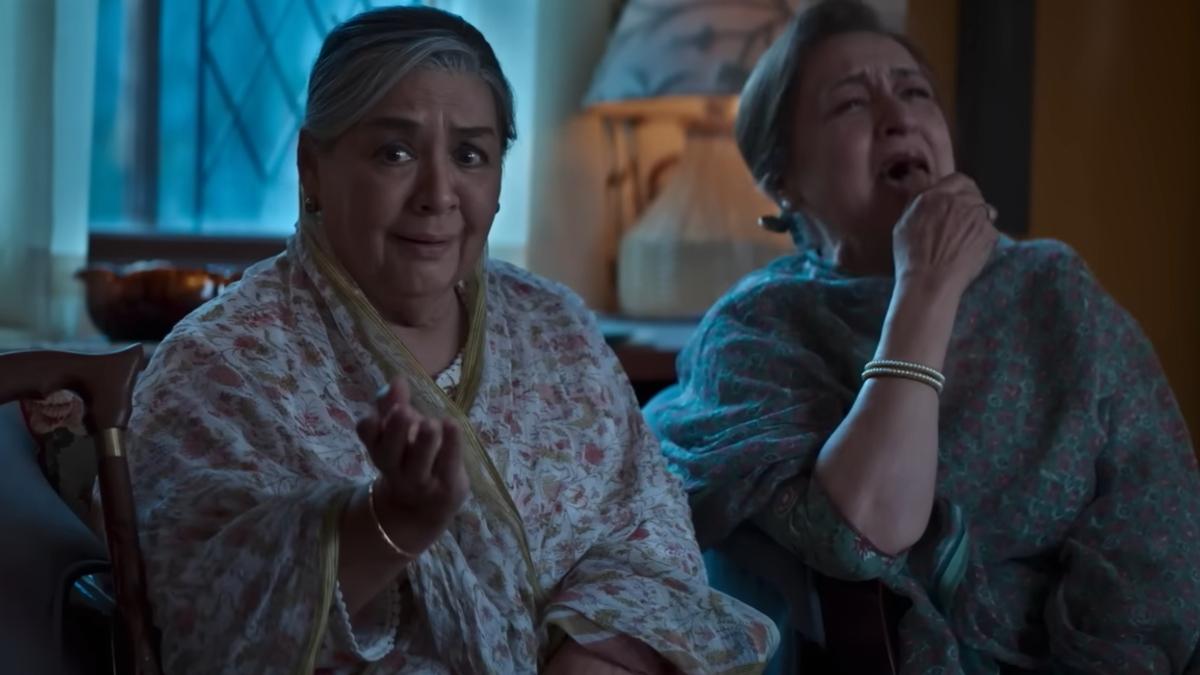
A still from the film
| Photo Credit:
JioHotstar/YouTube
Led by the formidable Farida, the power-packed ensemble ensures that the inherent staginess of the chamber drama doesn’t make it a predictable experience. As Urdu, Hindi, and English flow into each other like banks are merging these days, the conversations make you chuckle and threaten to choke when the meaning lingers for a while.
There are moments when one feels that the makers don’t want to ruffle feathers, but Anusha turns a stifled voice into an overarching expression of the film. Like the laughter stuck in the throat, the film’s subversion is also stuck somewhere, but it makes its presence felt.
(The Great Shamsuddin Family is streaming on JioHotstar)
Published – December 12, 2025 05:56 pm IST

