


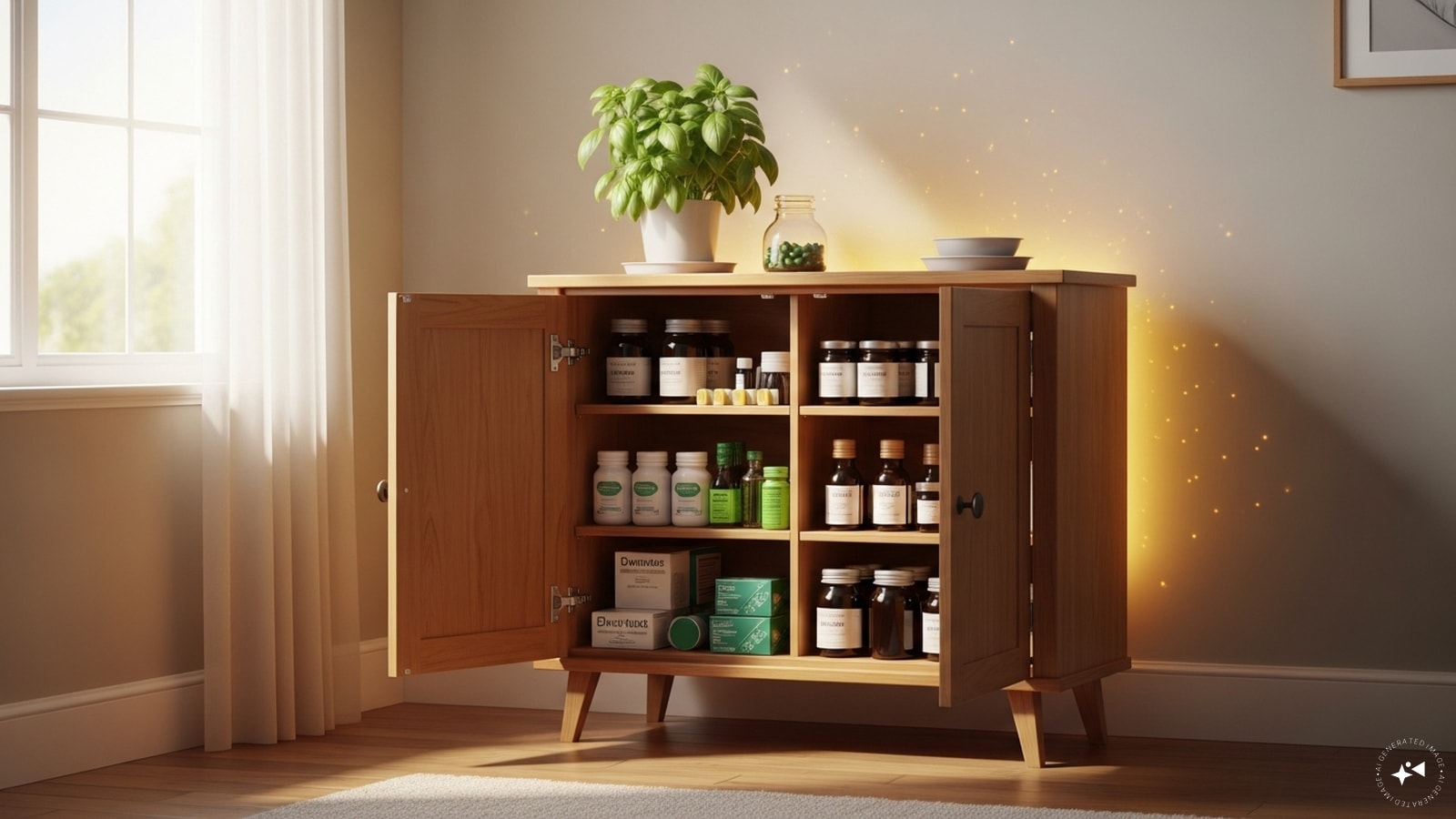
According to Vastu Shastra, medicines in the home are not just a means of treatment. But they are also considered symbols of health, energy, and positivity. If they are kept in the wrong direction or place, the effectiveness of the medicines is reduced, and the illness may persist for a longer time. However, keeping medicines in the correct direction leads to faster recovery and keeps the home environment pure and energetic. (Image: AI-Generated)
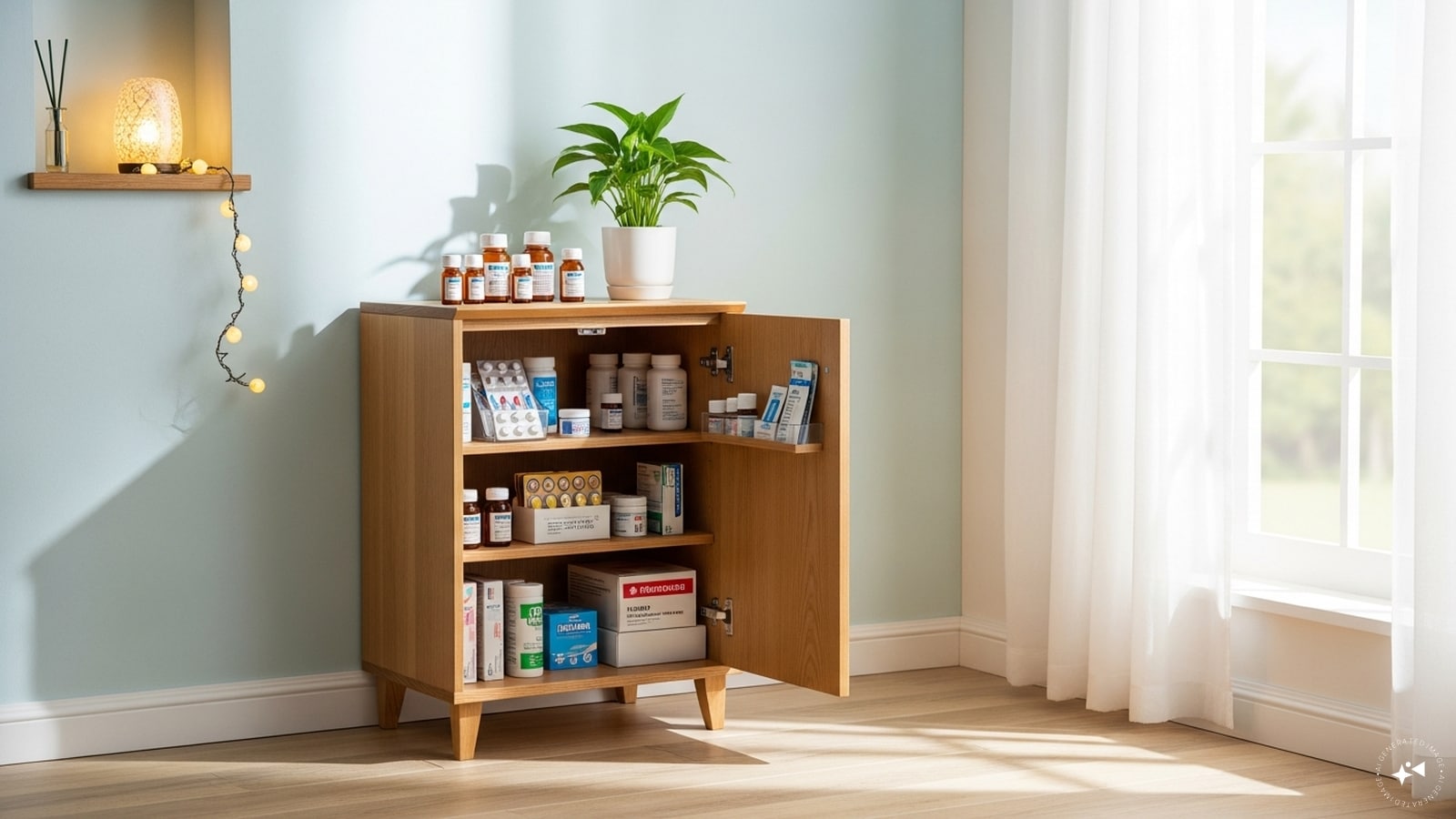
Vastu Shastra states that health is influenced not only by medicines but also by energy and the surrounding environment. Therefore, keeping medicines in the northeast direction (Ishaan Kon) is considered best. If that direction is not available, the north or east directions are also good options. Medicines should always be kept in a clean, organized, and positive environment. This not only increases the effectiveness of the medicines but also improves the health and mental well-being of the family members. (Image: AI-Generated)
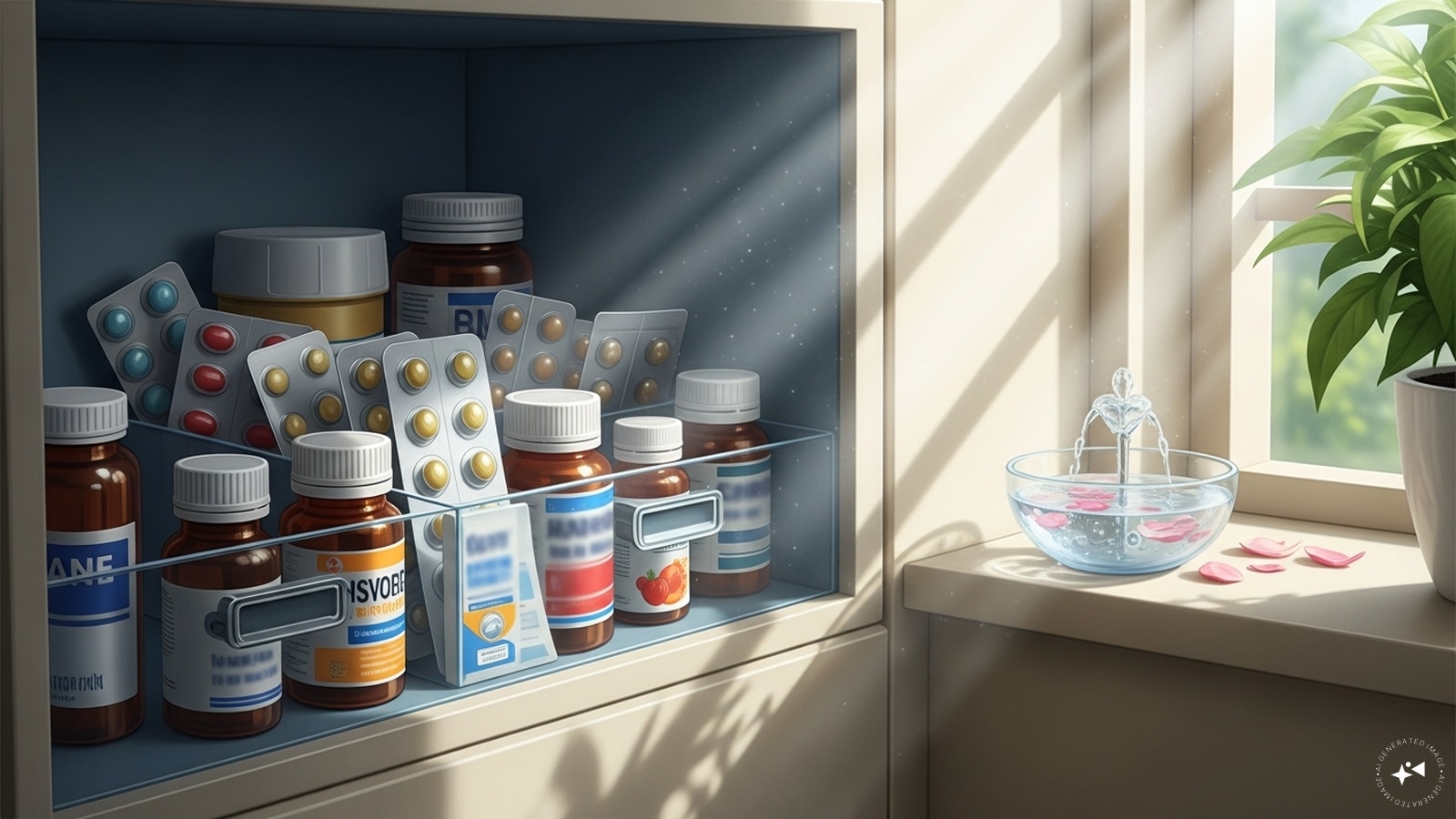
Ideal Direction for Medicines — Northeast (Ishaan Kon): As per Vastu, the most auspicious direction for keeping medicines in the house is the northeast (Ishaan Kon). This direction is associated with the water element and is considered a symbol of health, purity, and mental peace. If medicines are kept in this direction. Their effect is enhanced, and illnesses are cured faster. The northeast direction is also called the “place of the gods,” so anything related to health kept here yields auspicious results. Medicines kept here have a faster effect on the patient and enhance the body’s natural healing power. (Image: AI-Generated)
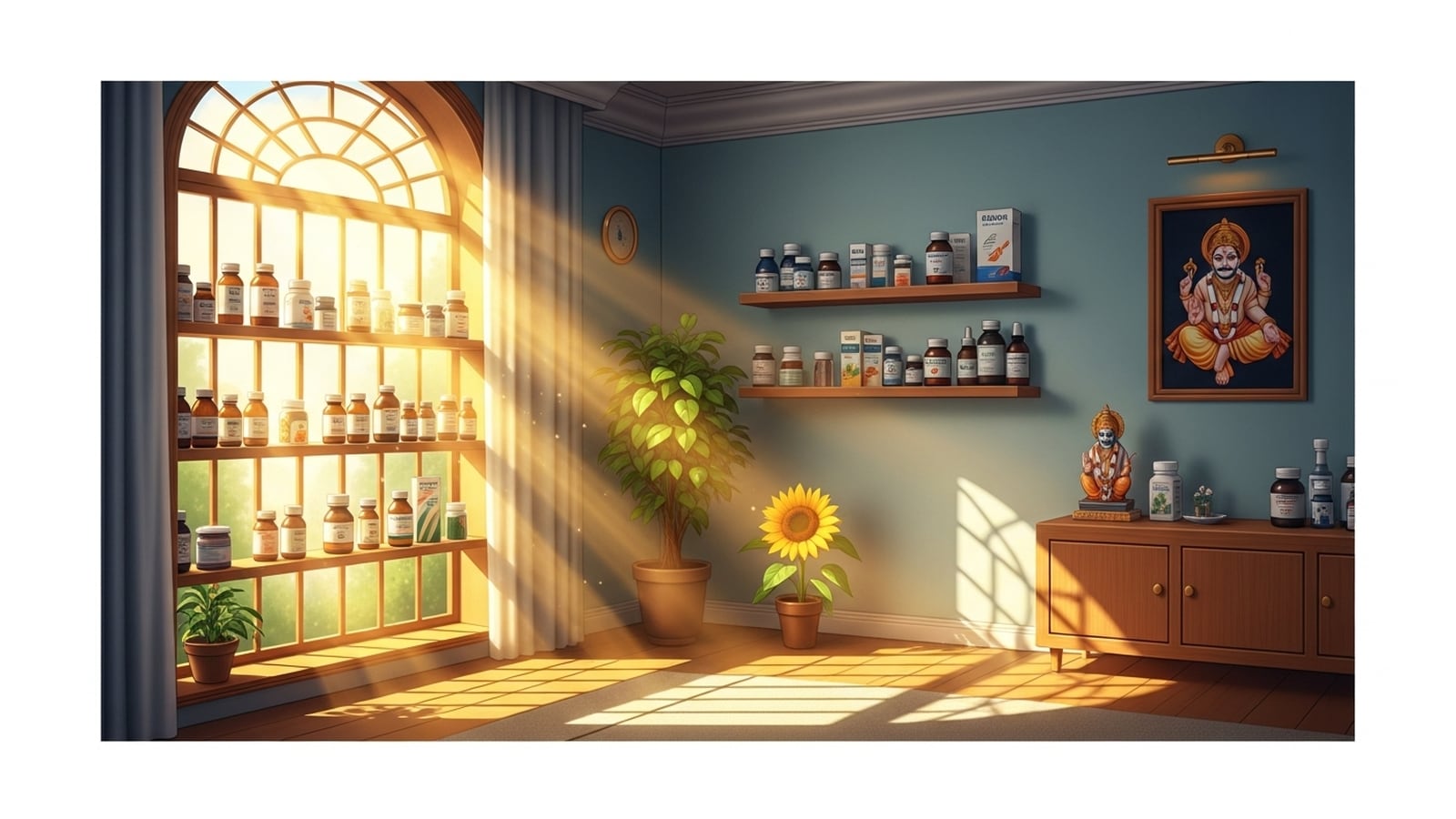
Other Auspicious Directions — North and East Directions: If it is not possible to keep medicines in the northeast direction, they can also be kept in the north or east direction. Both these directions are associated with sunlight, intelligence, and health. The east direction is the direction of the sun, which is the source of life and energy; therefore, medicines kept here are considered more effective and boost the body’s immunity. The north direction is considered the direction of Lord Kubera, who bestows both health and prosperity. Therefore, this direction is also considered positive for storing medicines. (Image: AI-Generated)

In Which Directions Should Medicines Not Be Kept? As per Vastu Shastra, keeping medicines in certain directions can reduce their effectiveness or cause recurring illnesses. You should avoid keeping medicines in these directions.
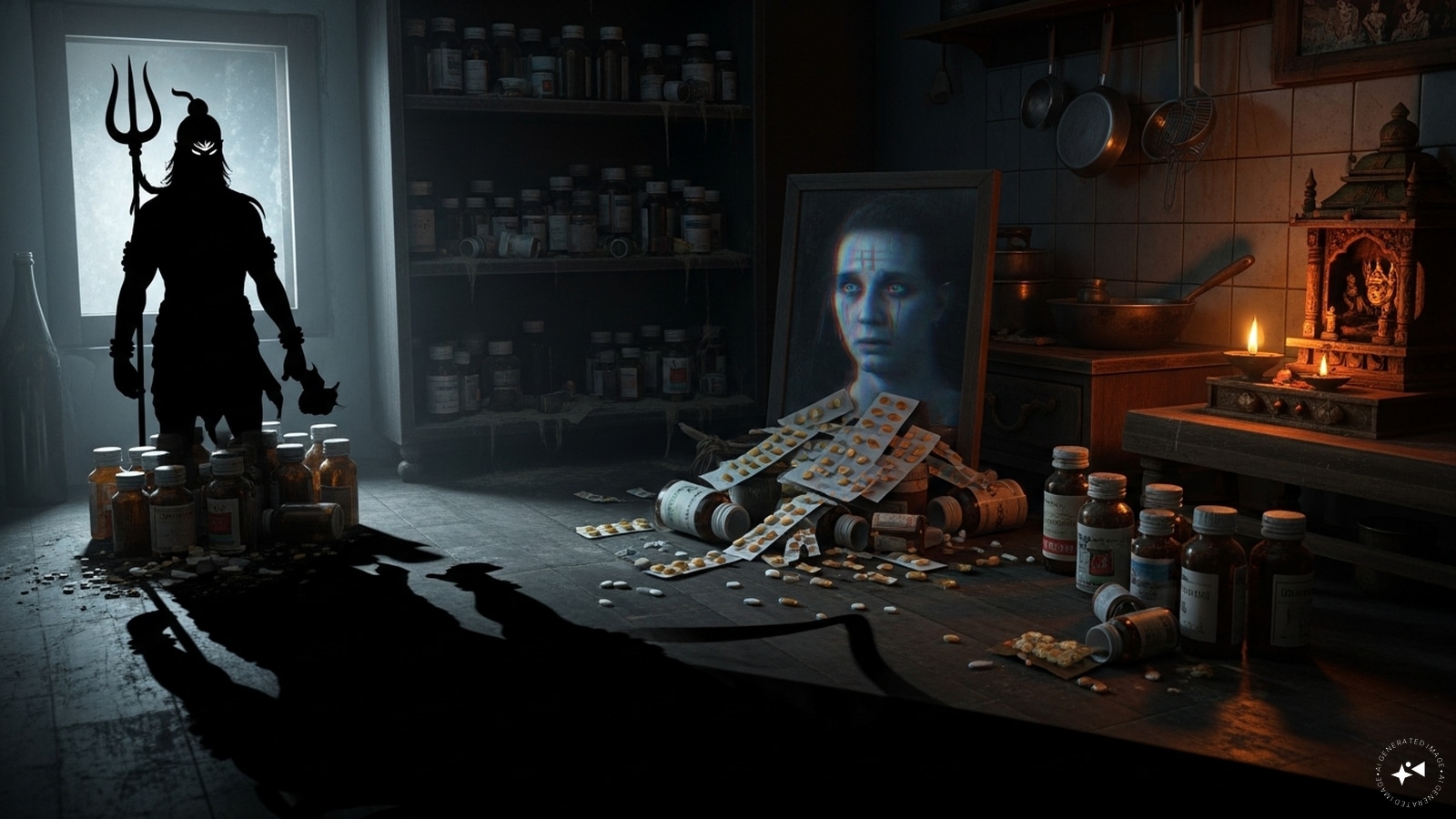
● South direction: This direction is associated with Yama (death). Keeping medicines in this direction can prolong illnesses.
● South-west (Nairitya corner): This direction represents stability, but it can also cause illnesses to persist, meaning the illness may not heal quickly.
● West direction: Medicines kept in this direction lose their effectiveness and can cause mental imbalance.
● Near the kitchen or temple: These places are considered sacred and associated with food. Keeping medicines here can increase Vastu defects. (Image: AI-Generated)
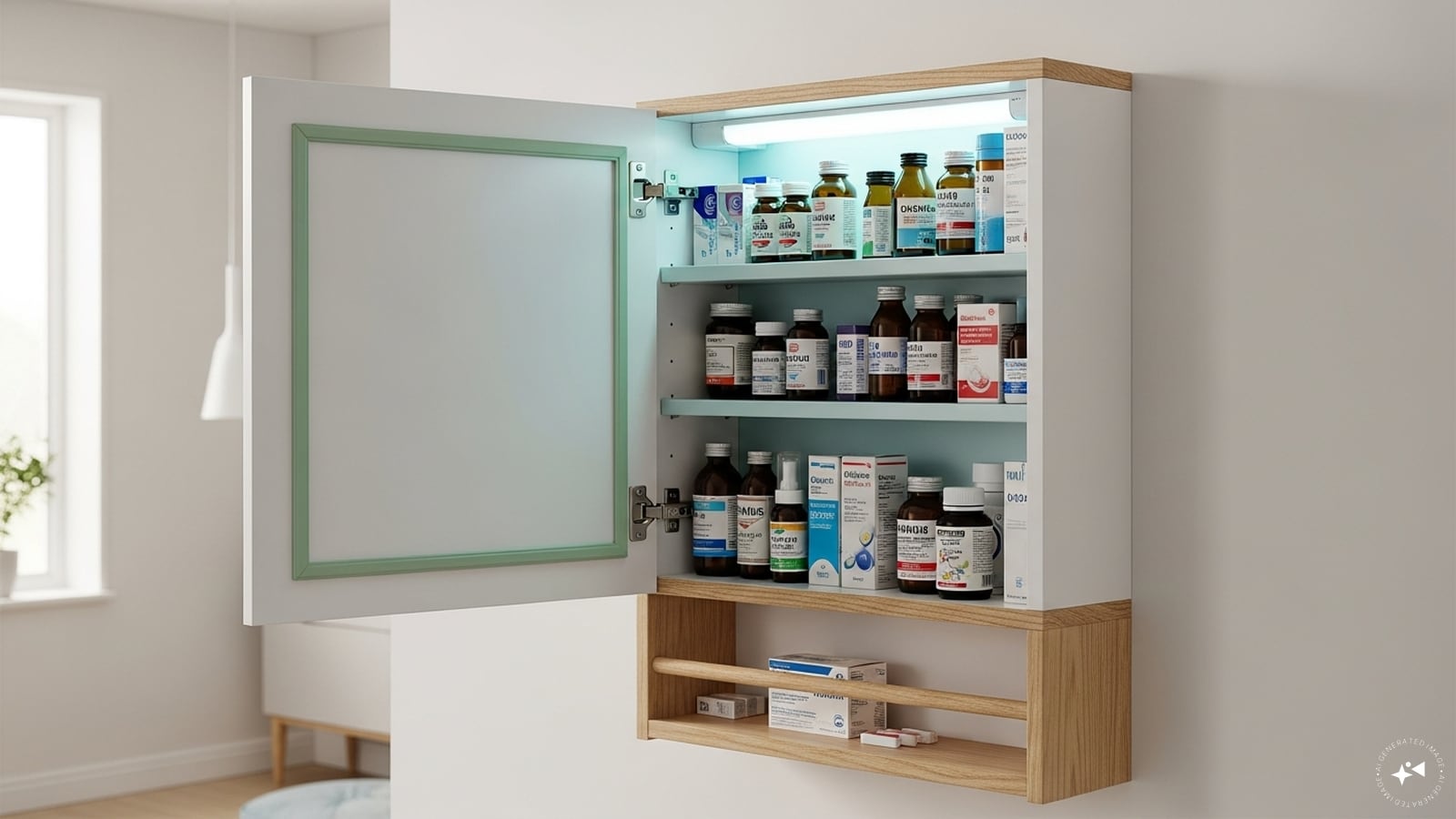
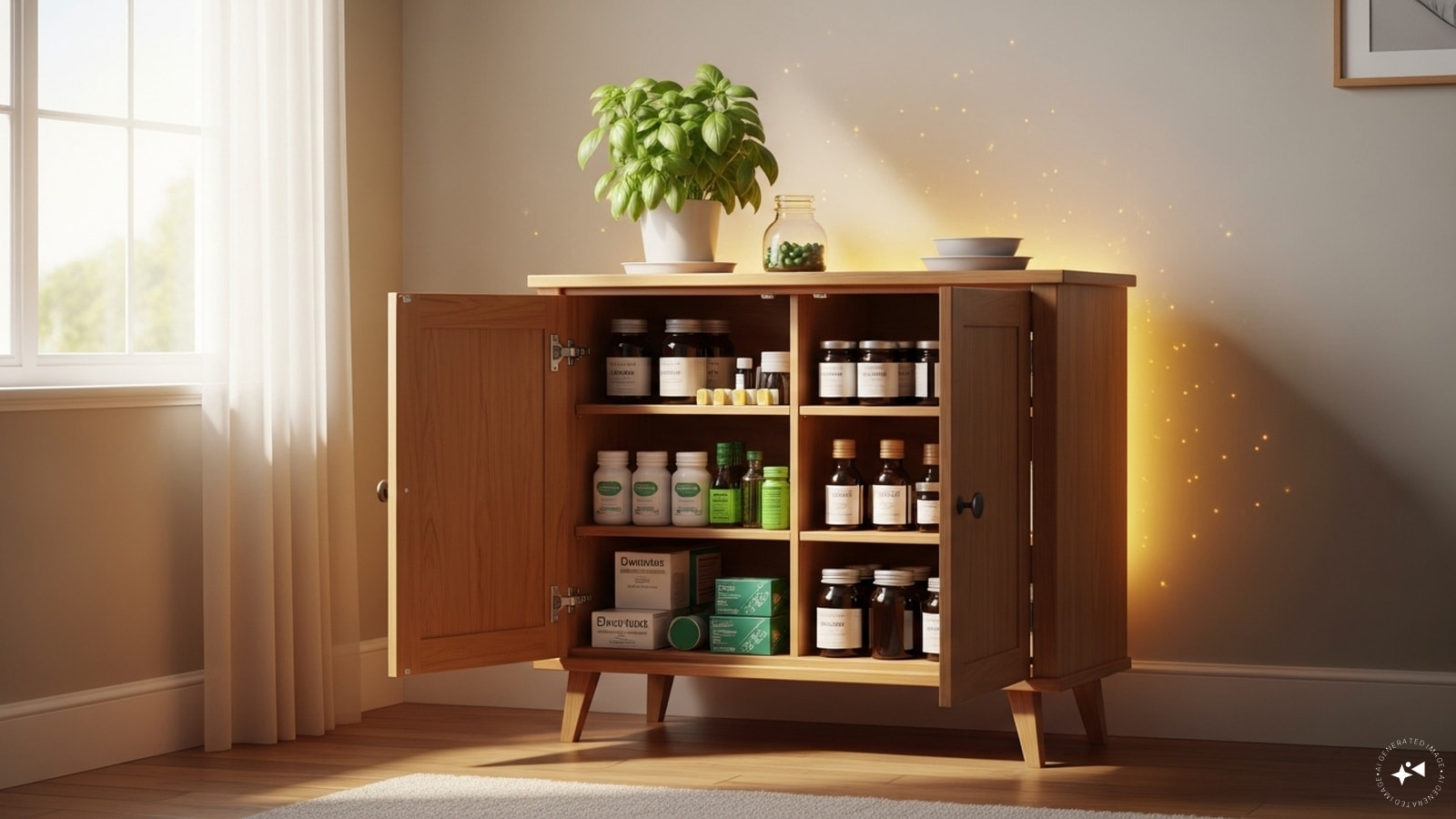
How And At What Height Should Medicines Be Kept? Always keep medicines in a clean, dry, and cool place. Keep the cupboard or box at shoulder or eye level so that children cannot reach it. It is auspicious to keep medicines in a wooden or plastic cupboard. Avoid iron or steel cupboards as a source of block energy. The door of the cupboard where medicines are kept should be white or light green, symbolizing health and balance. (Image: AI-Generated)
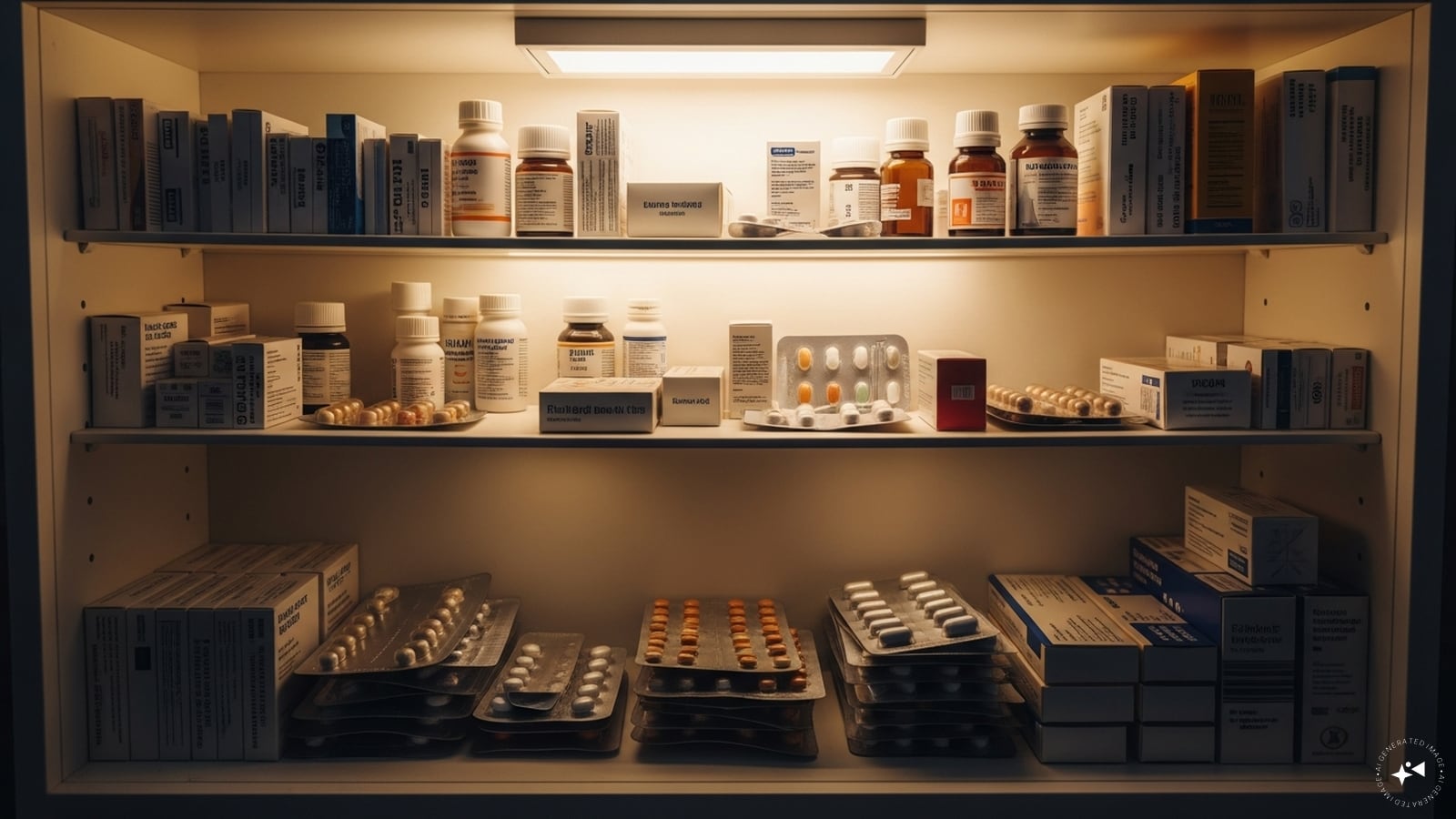
Cleanliness and Positivity of Medicines: Vastu Shastra states that dirt or clutter attracts negative energy. Therefore, the medicine cupboard or box should always be clean and organized. (Image: AI-Generated)
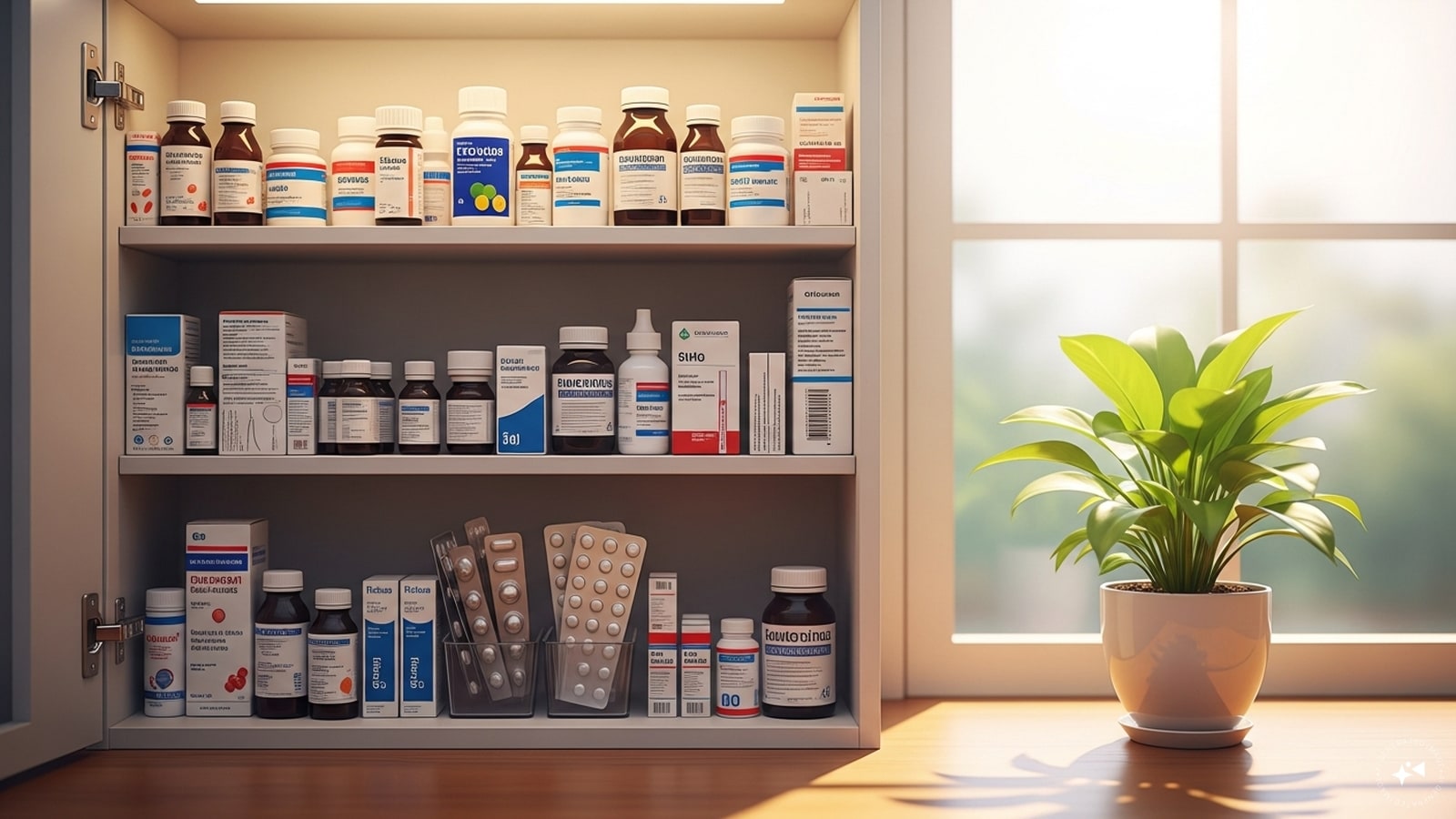
Immediately remove expired or unused medicines. If a medicine has not been used for a long time, throw it away. Regularly keep a small piece of camphor or rock salt in the cupboard – it absorbs negative energy. If you wish, you can place a small picture of Lord Dhanvantari (the deity of Ayurveda) on top of the cupboard. This keeps the energy there very auspicious. (Image: AI-Generated)