




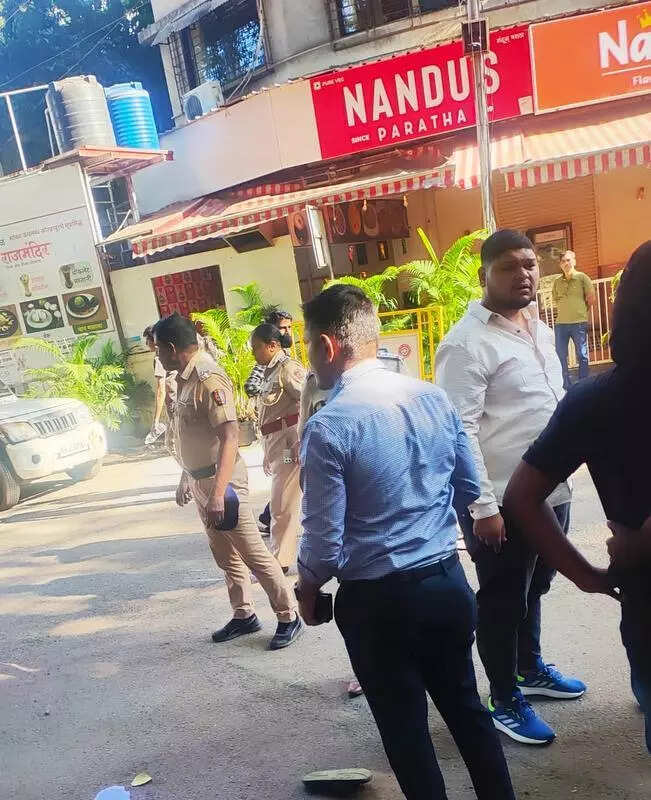
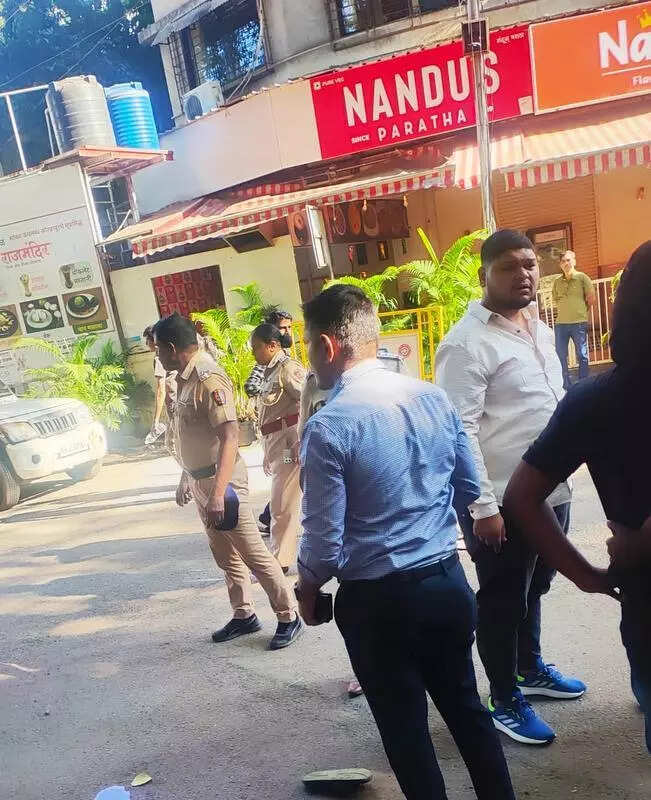
Pune: “If a local bhai knows you, nods at you, and comes to your sister’s wedding, it means you are respected. You are not invisible anymore,” said a 19-year-old from Pimpri Chinchwad, who was kept in an observation home for an attempt to murder when he was 16. The youth is not alone. Social media is abuzz with videos of youngsters in flashy clothes and knock-off aviators, revving bikes, cutting cakes, vandalising property, or spreading terror with swords and machetes. Multiple fan accounts call them “bhai”, “don”, and “company”, celebrating videos of these teenagers being held by police or seen inside police vans. Their groups are infamously referred to as “koyta gangs” by sections of the police and media. What makes these youths turn to crime? The answers, say law enforcement agencies and psychologists, are many — poverty, lack of parental supervision, an education and social system unable to keep them within the mainstream, the feeling of protection and “respect” in the association with a local gunda, absence of outlets to channel energy, a growing obsession with quick money and fame, and lack of a functional juvenile reform process. Case after case emerges According to the National Crime Records Bureau (NCRB) 2023 report released this year, Maharashtra reported the second highest cases of 1,675 juveniles in conflict with law, involved in offences including murder, kidnapping, human trafficking, rape, etc. — just slightly less than Madhya Pradesh at 2,034. Maharashtra also tops the states in juveniles involved in total cognizable Bharatiya Nyaya Sanhita (BNS) crimes, with 3,548 cases. The trend is reflected in several recent cases that caught media attention, starting with the 2023 murder of gang member Nikhil Akhade involving three minors, which reignited gang rivalries in the city. This was followed by the killings of former corporator Vanraj Andekar in 2024 and his nephew Ayush Komkar in Sept 2025, once again with minors taking part. Days ago, the daylight murder of Ganesh Kale on Bajirao Road, allegedly by three minors, has turned into a major embarrassment for the police, revealing how deep juvenile crime has seeped into the city. Behind the delinquency Creating an ‘identity’ and the commodification of masculinity are two of many reasons for increasing juvenile crime in Pune, argues Vishnu Vairagad, assistant professor (sociology) at Modern Law College. “Increasing juvenile crime here needs to be positioned in a transforming urban social structure. Economic and infrastructural growth have exposed the youth to newer forms of consumption, including fashion, food, entertainment and social media. Aspirations of the youth — including creating an ‘identity’ in society often fuelled by these forms of consumption — have limited legitimate means to achieve them. So, youngsters experience anomie; a social condition where people deviate from established norms. In some neighbourhoods, societal conditions have been created wherein the youth adopt delinquent means to create an ‘identity’. These localities also show weakened intergenerational ties, lack of social regulations, and social disorganisation,” he said. Another important aspect is the visibility of masculinity. “Inspired by movies and social media, teens pursue symbolic capital through acts like group violence, risk-taking, and performative acts to share online. These acts often invite organised groups that take advantage of the law by recruiting juveniles. Youth participation in crime is about structural dispossession and blocked mobility, rather than inherent criminality,” Vairagad added. All these factors together fuel the surge in juvenile crime, a problem that has shaken even relatively peaceful cities like Pune. Law enforcement outlook The situation has become so alarming that deputy CM Ajit Pawar recently proposed lowering the age threshold for juvenile offenders from 18 to 14 years, arguing that many minors today are aware that age protects them after committing grave crimes. Earlier, gangsters used minors to carry out crimes, knowing the law would go softer on them. But now, something more unsettling is unfolding. With many established gang leaders booked under MCOCA, jailed, etc., a vacuum has emerged in the city’s criminal network. Youngsters who once dabbled in petty crimes, are scrambling to fill that void, forming their own gangs and asserting dominance. Additional commissioner of police for Pune city, Pankaj Deshmukh, told TOI, “Drawing conclusions based on one crime is incorrect. It takes a lot of effort to be a ‘don’. Most members have to maintain allegiance to a particular gang or leader and eventually rise through the ranks.” However, he admitted that social media has accelerated the process of minors forming or joining gangs. “Minors are still being used as weapons by those looking to settle scores. Earlier, recognition was limited to a close group, but with social media, this ‘larger than life’ boost has intensified. These boys are like any other adolescents, but instead of aspiring to be tech founders or influencers, they aspire to be gang lords. Crimes by teenagers have always been brutal because of their age, but now their acts are amplified by online networks,” he explained. A common thread among juveniles in crime, Deshmukh observed, is that most are school dropouts from dysfunctional families. “This is just my observation. The father may be absent or not in control, the youth may earn more than the mother, elevating his position in the household. If he mixes with the wrong crowd, no one stops him. Addiction and social media make things worse,” he said. Both prevention and cure fall short The police, said Deshmukh, have been cracking down by monitoring social media, identifying children prone to violence, summoning them, and issuing warnings. “Even the boy involved in Ganesh Kale’s recent murder was called to the police station four days before the incident. But because of their age, our options are limited until they cross the line of the law. They are children without direction, who get sucked into crime, he said. “To counter that, we launched Operation Parivartan, many boys joined and have since left crime. But policing today is far more complex. We have to balance citizens’ rights and freedoms while ensuring these don’t infringe on others’ liberty,” he added. Sandesh Borde, whose foundation works with children in conflict with law and children in slums prone to violence, said the biggest problem is a lack of a support system when delinquents come back to society after spending time in observation homes. “They go back to the same dysfunctional homes, same group of friends, same circumstances that forced them into crime. Unless govt comes up with a plan and executes it with will and funding, the rehabilitation system won’t work. Moreover, there is a need for all social systems to identify areas from where children are getting into crime and provide an avenue to channelise their energy. They must understand that there is a way out to live a better life. Till that time, society has failed our children. There will be many more Lawrence Bishnois from Pune in the next 10 years.” Expert SpeakPune, a peaceful city, is gaining notoriety due to increasing crime rates, especially involving minors. In such cases, it is important for police officers to remain sensitive to the plight of the children in conflict with the law. These children need to be provided with counselling by social workers, sent to school, provided with useful vocational skills, and turned into responsible adults. It is imperative that even after a change in unit-in-charge, good initiatives continue for a long time. Assistance should be taken from voluntary organisations, child psychiatrists, child guidance clinics, social care workers, and probation officers. Police officers should also visit shelter and remand homes frequently to ensure adequate support and security are available. Efforts should be made to detect such children in a pre-delinquent situation and isolate destitute and neglected children. Areas that are breeding grounds of delinquency may be identified and regularly patrolled. Initiatives, like organising recreational programmes, sports tournaments, holiday camps, and band displays, create enthusiasm — Praveen Dixit | IPS, former DGP of Maharashtra, special rapporteur at NHRC (Maharashtra and Goa in-charge) When we talk of a holistic approach in the juvenile rehabilitation system, every stakeholder must be accountable. Questions are always asked of the police, but what about those meant to reform and rehabilitate them? Many of these minors have been in and out of observation homes. Why isn’t anyone there held responsible for their relapse? What about the systems meant to keep children protected and in school? The police are an easy target, but the right questions need to be asked of everyone involved — A senior officer in Pune city police