




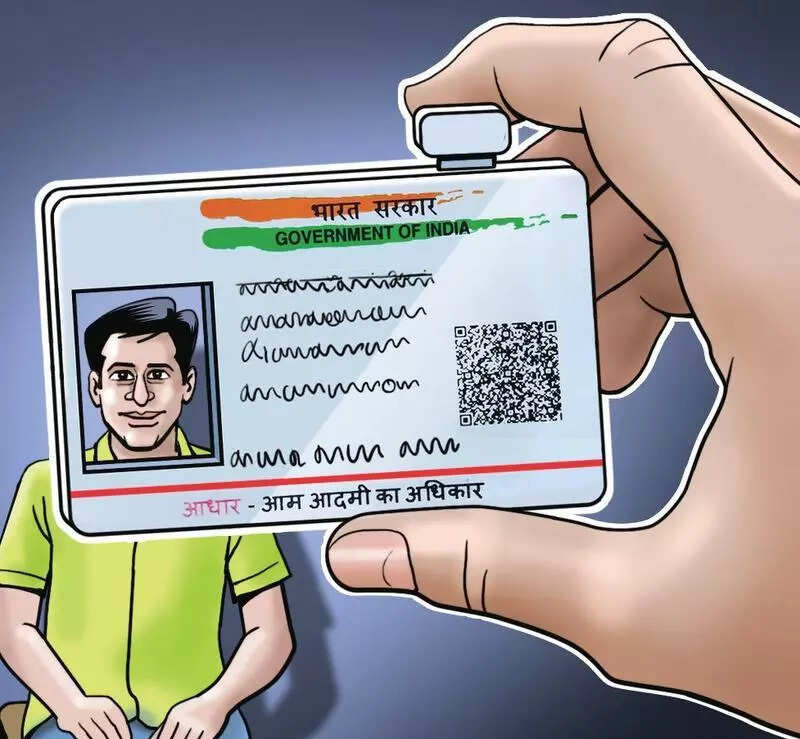

Pune: The Unique Identification Authority of India (UIDAI) deactivated over 1.4 crore Aadhaar numbers linked to deceased individuals across India under a cleanup drive launched last year to prevent identity fraud and ensure that govt benefits reached the right hands.Bhuvanesh Kumar, the CEO of UIDAI, said, “Deactivating Aadhaar numbers of the deceased is essential to preserve the credibility of welfare schemes and prevent misuse. It ensures that public funds are not siphoned off through fake claims or identity fraud.”The Aadhaar cleanup drive was launched in the middle of 2024. It is a continuous process. The UIDAI aims to deactivate 2 crore Aadhaar numbers by December, another senior official of the UIDAI said.The Aadhaar cleanup initiative, though vital, has been fraught with challenges. One of the biggest obstacles is Aadhaar not being mandatory for death registration. “This leads to significant gaps in data,” the UIDAI official said.Cases of benefits being disbursed in the names of deceased individuals have been reported in the past. UIDAI officials said it was necessary to plug these gaps.“Many death records either don’t include Aadhaar numbers or contain incorrect or poorly formatted information. In some cases, data is dispersed across various financial and non-financial institutions. These make verification and validation even more complex,” the senior UIDAI official said.Aadhaar is linked to over 3,300 govt schemes, including pension, subsidies and financial aids. “Active Aadhaar numbers of deceased individuals leave the system vulnerable,” he said.UIDAI sources death data from multiple channels. Records come through the Registrar General of India (RGI) from states and Union Territories on the Civil Registration System (CRS). The data is collected independently from states not on the CRS, like Karnataka, Delhi, Tamil Nadu, Kerala, Punjab, Puducherry, Goa, Rajasthan, Telangana, Odisha and West Bengal. The UIDAI also works with banks, insurance companies, pension funds and Public Distribution System authorities to update Aadhaar data.A key technical boost came through the Application Programming Interfaces (API)-based integration of UIDAI data with state registries. So far, Karnataka and Punjab implemented this integration successfully, enabling real-time data-sharing. Other states are expected to join the integrated system in the coming months.UIDAI has urged all registrars, financial institutions and departments to proactively share the deceased data, and called on citizens to report deaths through the MyAadhaar portal. “Maintaining a clean and accurate Aadhaar database is essential to protect millions of beneficiaries and strengthen India’s digital identity ecosystem,” UIDAI CEO Kumar said.To involve citizens directly, UIDAI this year launched the “Report Death of a Family Member” feature on the MyAadhaar portal. “Over 3,100 users have used this tool to notify us of a family member’s death, helping us update records swiftly. Only about 500 had to be corrected because of death certificates or other demographic validation not being correct,” said another senior official of the UIDAI.Citizen groups feel the process of reporting death data should be more simplified. “Uploading death certificates and verifying them is bound to take time. There should be a better system,”said Meena Khare, who tried to upload data through the portal.