






Last year, Australia cancelled his visa. Last month, the UK blocked his entry. On May 23, India will throw open the gates of Delhi’s Jawaharlal Nehru Stadium for him.
When American rapper and songwriter Kanye West, now legally changed to Ye, was announced as a headliner for London’s annual rap and hip-hop music festival Wireless this March, the backlash reached 10 Downing Street. Prime Minister Sir Keir Starmer called his invitation “deeply concerning”. Within days, West’s Electronic Travel Authorisation was revoked, with the Home Office declaring his presence as “not conducive to the public good”. Pepsi and Diageo withdrew sponsorship. The festival was called off.

In July of last year, Australia refused West entry after the release of his heavily panned song ‘Heil Hitler’, timed to coincide with the 80th anniversary of Nazi Germany’s defeat.
West’s most infamous public disruption — where he stormed on stage during Taylor Swift’s acceptance speech at the 2009 MTV Awards to give Beyonce a shoutout — seems like a distant memory. But it pales in comparison to provocations that followed: calling slavery a “choice” and selling swastika branded T-shirts online. Even before the Wireless fallout, the mayor of Marseille, concerned that he would use his stage to promote Nazism during his upcoming concert, said he was “not welcome”.
Yet, on May 23, West will make his India debut in front of thousands in New Delhi. If parts of western democracies are silencing his rhetoric, India is handing him a microphone.
This contradiction sits at the intersection of India’s ever-evolving concert economy. No longer perceived as a pitstop between Asian or West Asia tours, India today enjoys an undisputed spot on the world tour map.
“India is not a fly-over country anymore,” says Andre Timmins, co-founder, Wizcraft, one of the promoters and organisers bringing West to India. “It’s becoming a must-stop.” He adds that “The young concert-going audience here are tuned into global conversations surrounding their favourite performers. An artist’s identity does register.”

However, in India’s live performance ecosystem, that notoriety is managed. “When getting performers to India, we are well-versed with controversy that precedes them and associated risks,” says Deepak Choudhary, founder and MD, Eva Live, which has previously brought Bryan Adams and Enrique Iglesias to India.
He adds that the promoters have a record of their artists’ reputational setbacks, scandals, and problematic comments. “The biggest fallout is always commercial, as sponsors and brands may opt out,” Choudhary says. But controversy rarely affects the key variable of the live entertainment equation: the audience.
“The consumer knows what it wants. If they want to see Kanye West, they will come,” says Deepak. This paradox shapes the Indian concert economy.
Music journalist and co-founder of The Indian Music Charts Podcast, Amit Gurbaxani feels that on the whole, Indian audiences do not care. He cites the Backstreet Boys as an example: their lead vocalist Nick Carter has been embroiled in legal controversies, , yet when the band performed in India in 2023, the market response outweighed the controversy. American DJ Diplo, despite facing similar charges, performed to a packed crowd at Goa’s Royal Enfield Motoverse festival in 2025.
Spectacle over controversy
This is what makes India uniquely positioned for international artistes: while controversy may hamper sponsorship, it rarely hinders public demand. The system does not bar controversial artistes. Instead it softens the impact of that controversy without compromising the spectacle.
“Before even the international act arrives in India, what they can say, wear, comment or even sing, is already communicated to them,” says Akshat Mudbidri, founder, Adventure Global Talent. “We not only research who is sellable, but also if their political stance could stir a controversy here.” Concerned that the scrutiny has intensified in India’s prevailing ideologically-sensitive climate, he says, “These days, we are given mandates by local government authorities — no obscenity, no profanity, and must not challenge the current political standing of the country,” says Mudbidri.
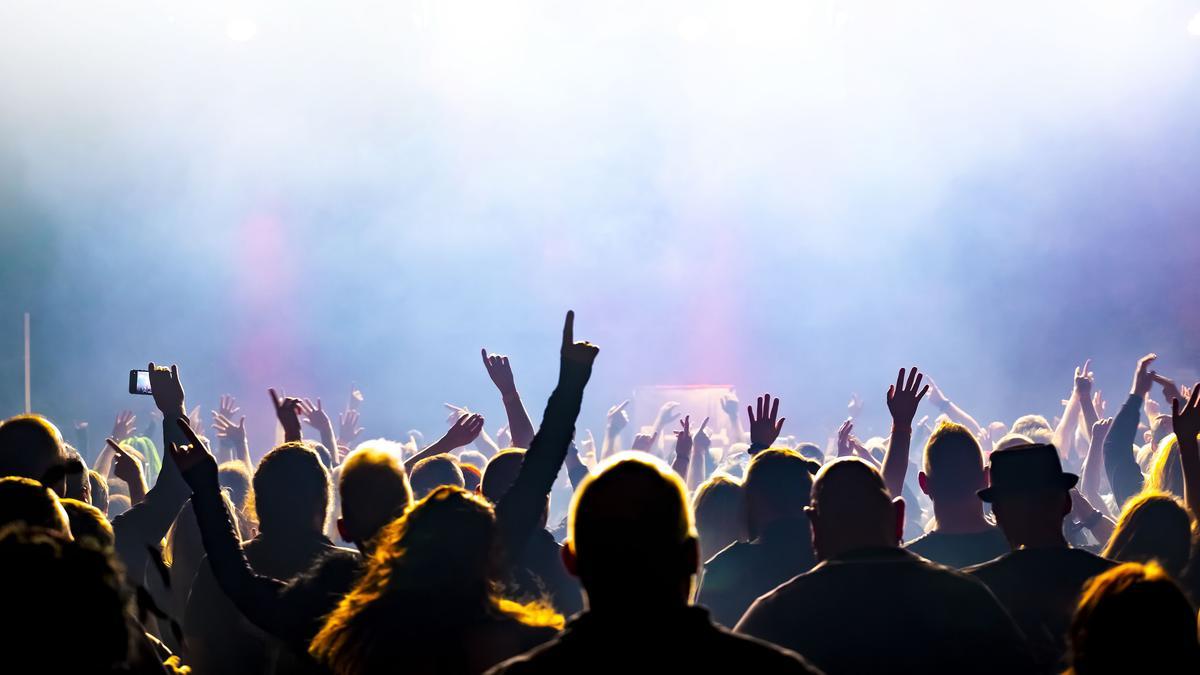
This is what makes India uniquely positioned for international artistes: while controversy may hamper sponsorship, it rarely hinders public demand
| Photo Credit:
Getty Images
Promoters say heightened scrutiny from human rights groups, women’s organisations and watchdogs ahead of a performer’s arrival often pushes organisers towards pre-emptive censorship to avoid backlash. These pressures shape both the performer and the performance.
Choudhary recalls how Enrique Iglesias suggested inviting a female fan on stage for a flirtatious number, a familiar trope in his concerts abroad. Choudhary nixed the idea immediately. “The police could get involved; I told him. And promoters become accountable.” A harmless gesture could escalate into a liability. “Artistes are briefed about cultural sensitivities. Restrictions are explicitly mentioned in the contracts,” he says.
In India, the concert economy monitors even spontaneity.
“There have been times where my artiste had to tweak lyrics — no references to alcohol, drugs or physical attributes of women,” says Mudbidri who manages Romanian singer-songwriter Akcent. “We have alternate versions of his song prepared for Indian concerts.”
Even the artiste-crowd conversations, the on-stage banter, jokes, all seemingly spontaneous, may not entirely be so. “Many interactions with the audience are scripted. International acts use teleprompters so that the lines and situations are delivered naturally,” Mudbidri says.

Even the wardrobe isn’t spared. For a show in Hyderabad, Akcent intentionally wore a kurta, simply because it coincided with Eid and it helped him resonate more with his crowd. To Gauri Aayeer, music label head and frequent concert goer, these visual representations matter, recalling how rapper Central Cee wore a Mahadev t-shirt at Rolling Loud Mumbai. “Audiences respond to it every single time,” she says.
However, the difference in the same performer’s act becomes evident when in different political environments. While attending Coldplay’s London concert, Aayeer says that the band’s support for Palestine was a recurring theme. “They even invited a Palestinian artiste to perform.” In India, the same artiste shifted his tone. He referenced British colonial history, waved the LGBTQ+ rainbow flag and read out a Hindu chant. “A political statement lands differently in the West than it does in India,” Aayeer says.
When the controversy directly involves India, promoters steer clear.
Gurbaxani points to how Canadian-Punjabi rapper Shubh’s tour was called off in 2023 after backlash over a social media post featuring an altered image of the Indian map. Gurbaxani observes, “No promoter has attempted to stage another tour with him since then.”

For Timmins, the decision to bring West to India is not about his politics, though it includes his public image and the global discourse around him. “But you have to look at the complete picture,” he says. He recalls bringing Michael Jackson to India in 1996. “He was arguably the most polarising figure at the time,” Timmins says. “But we focussed on his craft and the cultural bridge his presence could build.”
Today, Timmins already has donned the hat of a ‘cultural translator’. “We are having clear conversations with the artist’s teams, not to censor him, but to provide on-ground context,” he says.
And it is this ‘cultural translation’ that separates India’s concert economy from the rest.
Kanye West may arrive in India amid significant backlash. But once the lights go up in Delhi, he will enter an ecosystem adept at translating, editing and softening controversy before it reaches the stage. Politics will be dialled down, lyrics tweaked and spontaneity supervised, filtered heavily through a cultural and legal lens.
And even if an accidental moment does slip through, there is always music filling the space to drown it out.

