





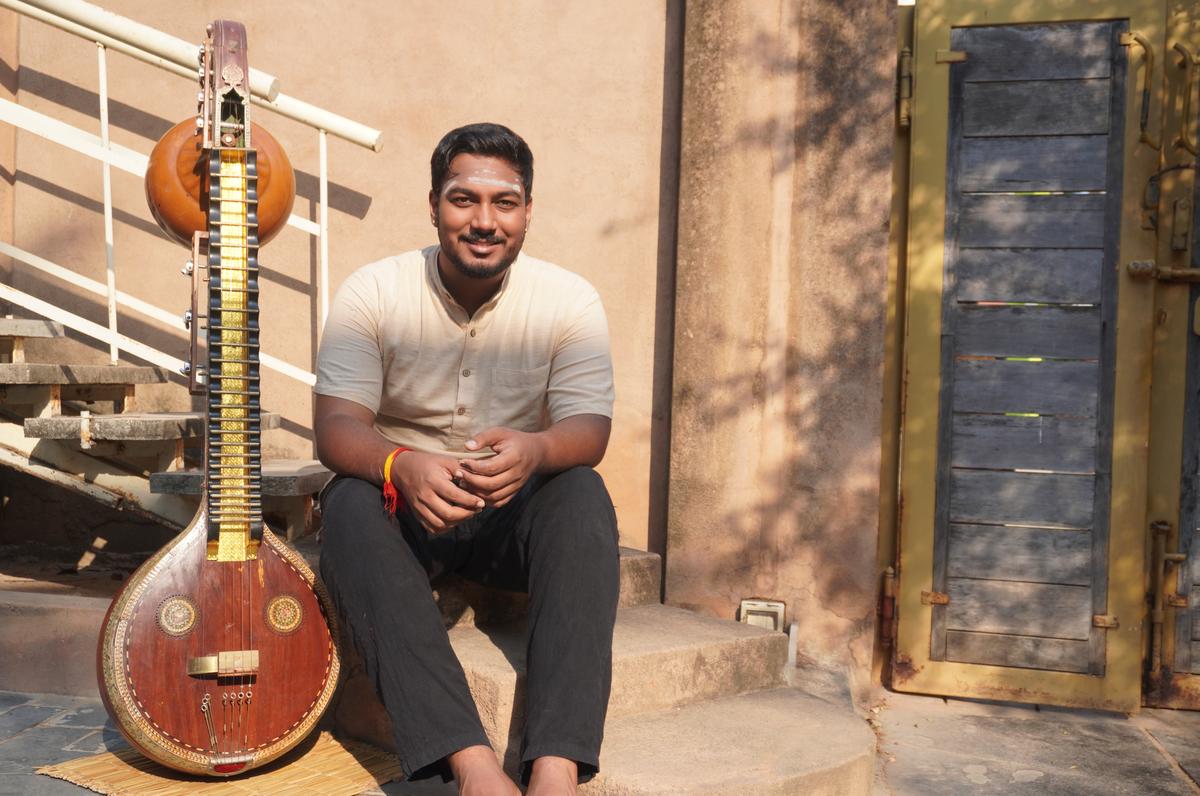
A classical veena interlude in Dhurandharis making waves.
Featured in singer Arijit Singh’s ‘Phir Se’ track in the recent Bollywood superhit starring Ranveer Singh, this zingy instrumental bit is being recreated on social in Reels and is receiving praise from music lovers.
The man behind the interlude is Tiruvannamalai-based Ramana Balachandran, a fast-rising musician who is already popular in Chennai’s kutcheri circuit. “It happened quite serendipitously,” recalls Ramana, “Shashwat bhai (music director) had been following my work on Instagram, and we connected through a common friend. The Dhurandhar team was warm, and asked me to keep in mind that it was a bittersweet situation. I was randomly playing some stuff, and we chanced upon the interlude. It was nice to get the freedom to express myself musically… but we had no idea that it would blow up so much.”
For Ramana, a musician who has largely avoided film work despite offers coming his way, the Dhurandharouting has catapulted him to the national stage, with more popular music directors seeking his contribution to their tracks. “When a piece of work moves people deeply, it is very satisfying. To see such a short interlude resonating with people from a variety of backgrounds gave me joy. I’m very interested in technical aspects of recording and mixing; in fact, for my veena interlude, the microphone was kept 2.5 feet above the instrument, which gave a different kind of sound that was new to me.”
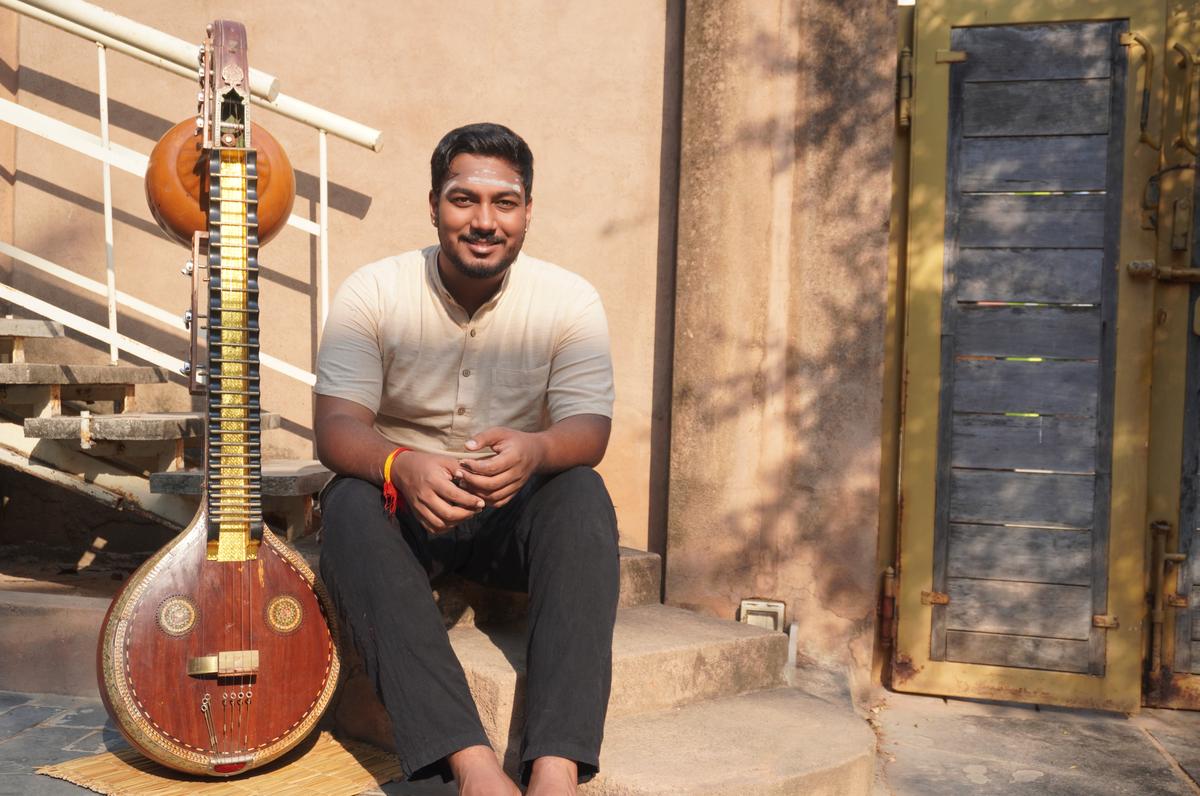
Ramana Balachandran, at his Tiruvannamalai residence
| Photo Credit:
Thamodharan B
Musical beginnings
This young musician’s story starts off in Bengaluru, where he grew up, to parents who were both passionate about music. With his father interested in vocal and his mother playing the veena, Ramana’s childhood was filled with music. “I would watch entire episodes of Super Singer, and have my father sing some Kaapi (raga) at home,” he recalls. Ramana did enroll in mridangam classes when he was a toddler, when music was still, like he describes it, a “shallow hobby”.
The big turning point came when he was nine when a young Ramana caught an error when his mother, Sharanya, was playing the veena. “She was playing ‘Saadhinchane’ (one of the five celebrated Pancharatna Kritis of Saint Thyagaraja),” he recalls, “I kept telling her that she was getting one particular phrase wrong, though I couldn’t play it myself.”
That particular comment from her young child made the mother sit up and take notice. Soon, Ramana was put in veena classes – under B Nagalakshmi – and he made rapid strides in it, even as he juggled mridangam sessions, vocal classes and school.
In between all these rapid changes, the Ramana household moved lock, stock and barrel from Bengaluru to Tiruvannamalai, a decision that impacted his cultural and musical understanding in ways he could hardly understand then. “My father had had enough of his corporate life and wanted to live the slower life in a smaller town. He also wanted me to not fall into the herd instinct, which does not give you the time to even find what you really love,” he states.
In Tiruvannamalai, even as he was home-schooled in a residence that was barely a stone’s throw from one of the State’s most significant temples, Ramana’s life became more about music and spirituality. “Here, we see so many people who have renounced luxurious lives and doing such quality work, without making a big fuss about it. Watching all that close quarters deeply inspired me.”
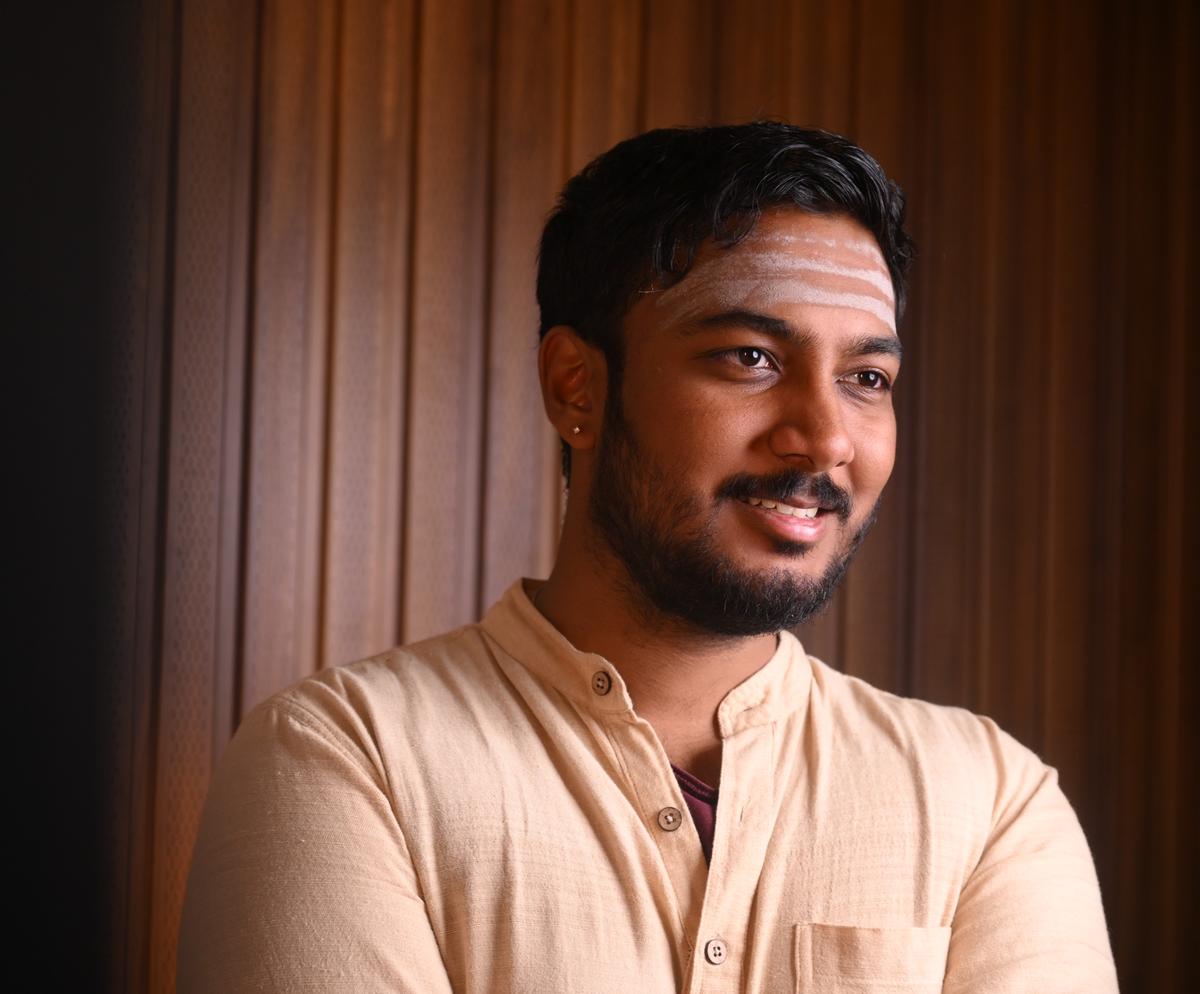
Ramana Balachandran
| Photo Credit:
S Shiva Raj
A different track
Today, Ramana is extremely comfortable in a classical music space, but is still taking baby steps in the film music space. “In film music, there is a huge emphasis on emotive appeal, which may or may not exist in classical music. In olden film music, the emphasis was on melody, while today, it is on arrangements and sound. Both of these are interesting to me, and I try to include both in my work: how to stretch the boundaries of what we are doing without sounding cringe?”
Currently, the 24-year-old is on a mission: not just to package classical music and make it more accessible to the public, but also propagate the richness of the veena aura landscape.
“My priority is not films, because I am first and foremost a Carnatic vainika, and I feel there is an ocean of work here to delve into,” says Ramana, whose most recent exploration revolves around the Shanmukhapriya ragam, “Musicians have to educate the public about their work; simple things like tell a line or two about the track you are presenting. They feel engaged with the performance if you do that. I feel like I have a responsibility as a Carnatic artiste to showcase its beauty, and at the same time, be open to welcome the richness that exists in other forms of music.”
Published – May 14, 2026 07:07 am IST
