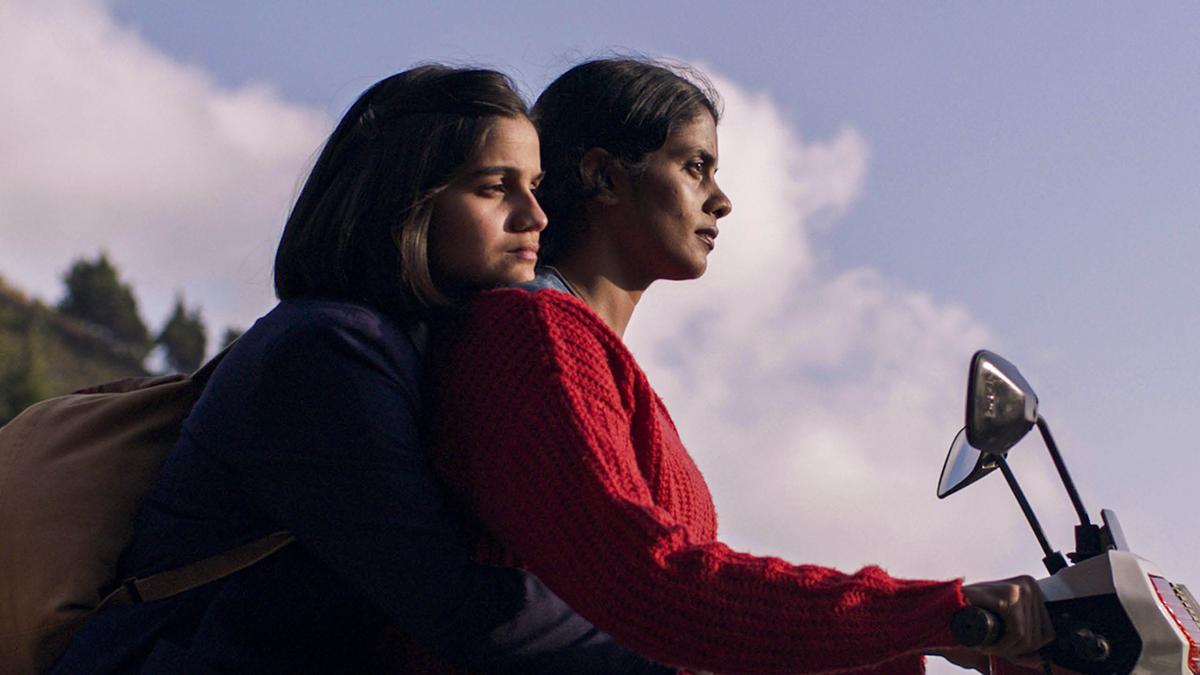





There are films that show women, and then there is Shuchi Talati, who turns inward, revealing what it feels like to be inside women’s minds and bodies. Asserting that desire and shame, love and resentment can co-exist. Her diary-like personal storytelling has raw, uncomfortable immediacy, quite unlike, say, Payal Kapadia’s poetic abstraction, or Mira Nair’s expansive, social canvas, or Céline Sciamma’s controlled, stylised, painterly aesthetic. Through pauses, glances and restrained characters, Talati leans into moments most filmmakers avoid — awkward silences, misread signals and emotional tension that doesn’t resolve neatly.
After the mega success (two prestigious Sundance awards, among others) of her feature debut Girls will be Girls (2024), starring Kani Kusruti, Preeti Panigrahi and Kesav Binoy Kiron, and co-produced by Richa Chadha and Ali Fazal’s Pushing Buttons Studios, Talati is back with a short film, this time in Japanese. Hidden Sun, starring Pakistani actress Samiya Mumtaz and Japanese actors Kazuki Kitamura and Mieko Harada, recently premiered at the Indian Film Festival of Los Angeles (IFFLA).

In the film, an older couple (an astrophysicist Chicago-bred Japanese husband and his moral philosopher Indian wife) moves to Japan and meets a flamenco dancer at her last show before she hangs up her boots. Edited excerpts from a conversation with Talati:
Q. Girlswill be Girls bagged two awards at the 2024 Sundance Film Festival, and then some. And a 100% Rotten Tomatoes rating. How have recognition and awards changed your life?
A. In some ways, they changed my life a lot. And in some other ways, not at all. Now, I can go knock doors that were always closed to me, and they will be open because I can say Sundance, or Indie (Film Independent) Spirit Awards [John Cassavetes Award], or Filmfare Awards… But the proof will be in the pudding once I start fundraising for my next film. As a filmmaker, a Sundance win is validating, but it doesn’t have a huge material impact on my day-to-day filming. It’s still, creatively, very, very hard to make a good film.
Q. How do you react when people call you a bold feminist storyteller?
A. I absolutely identify as a feminist. I would like to tell stereotype-defying stories. But this is not how one creates. You feel your way through characters. And that’s murkier. What does this person want? What am I grappling with in my life right now that I can use this story to communicate, etc.
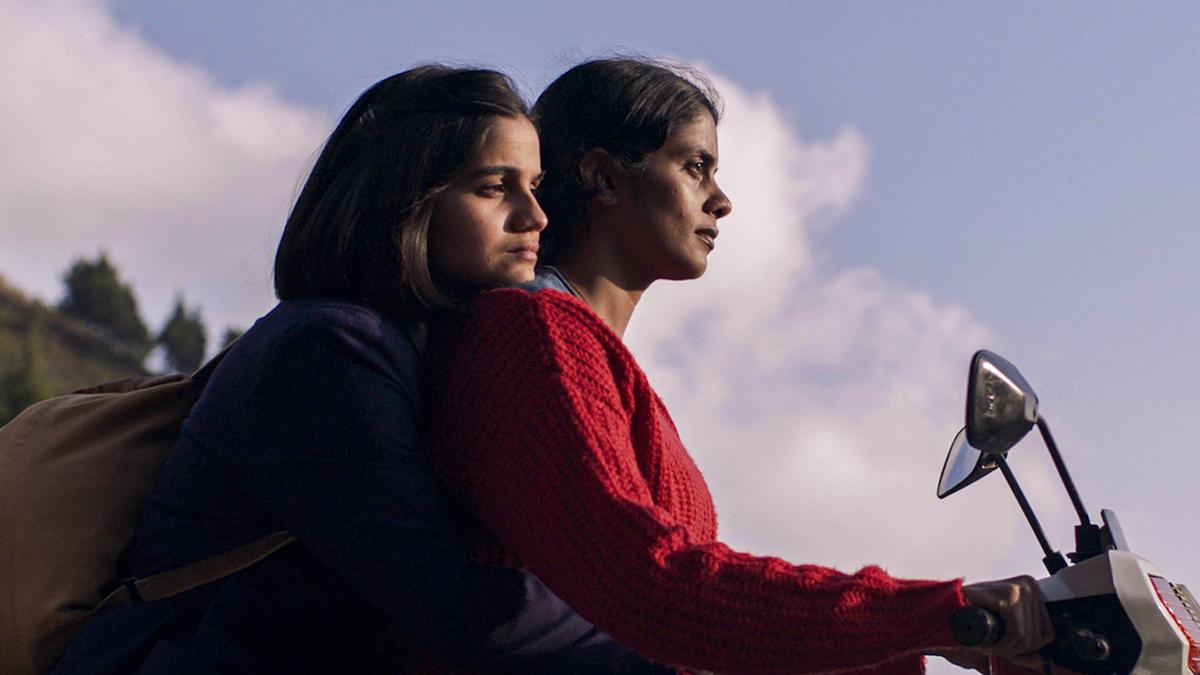
Preeti Panigrahi and Kani Kusruti in a still from ‘Girls will be Girls’ (2024).
| Photo Credit:
Special arrangement
Q. The protagonist of Girls Will Be Girls was a teenager. In your short film Hidden Sun, the lens shifts to an older couple. How was the transition?
A. My last film had teenagers, but it also had a mother character, who is a co-protagonist. And then my other films have had characters in their 20s, 30s… I think, I was very interested in the older couple [for the short]. In our cinema, often when we see older people, they are in a supporting role to younger, attractive protagonists. They are shown as not having desires. They are willing to sacrifice themselves, whether it’s parents or grandparents. And somehow, I think that doesn’t ring true to me. There are people in our lives who say, ‘Oh, I may be 50 or 60, but I really feel like I’m 20 in my head’. People still have the same insecurities. People still have desire. They can still be immature and act out and be competitive. And, so for me, it was really important to give space to that desire and competition and even a little jealousy and pettiness, but also a thirst for life in an older 50-something couple.

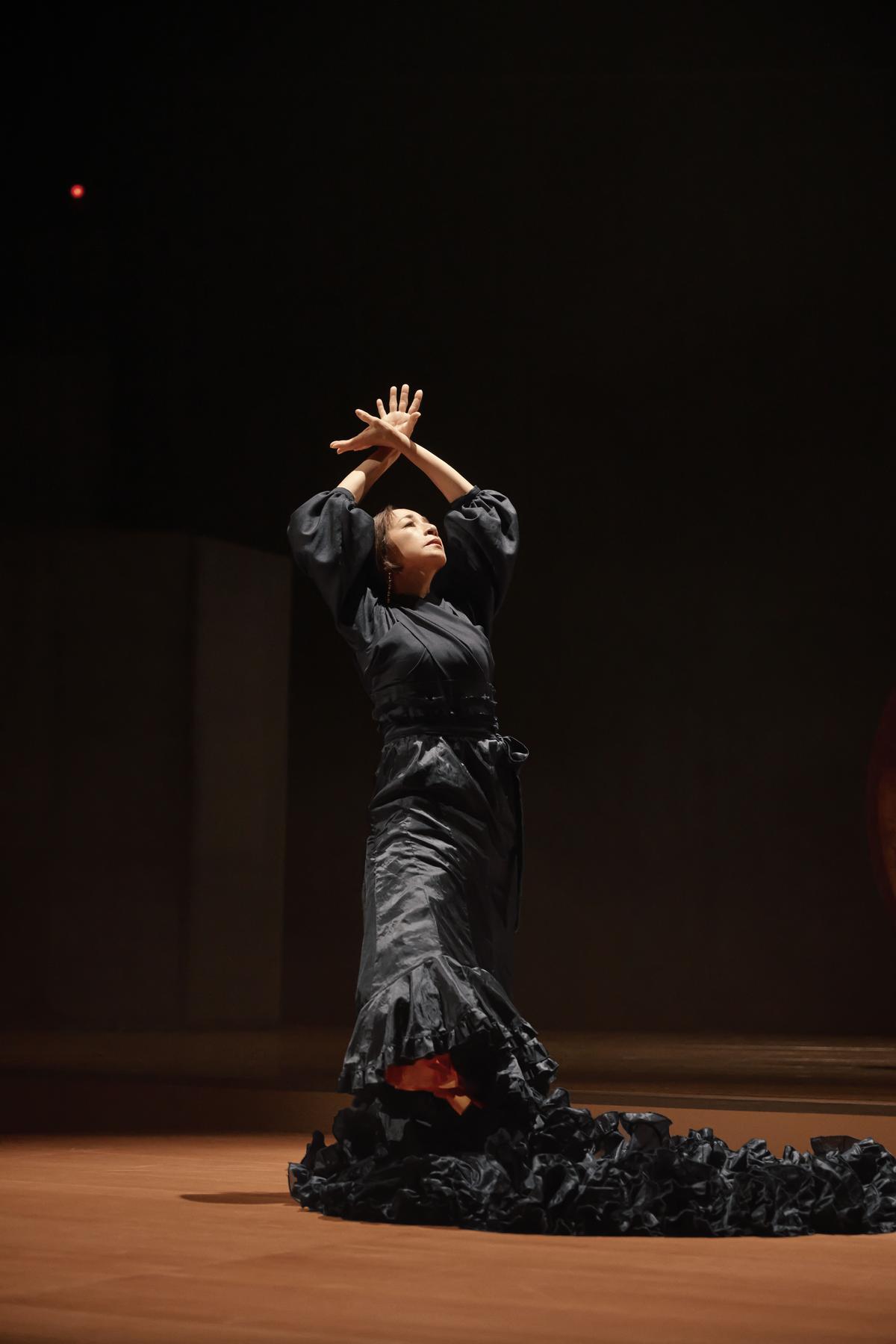
Mieko Harada in a still from ‘Hidden Sun’.
| Photo Credit:
Special arrangement
Q. What was the image with which you started this film: the flamenco dance or this loveless older couple?
A: So, the film is an adaptation. It’s based on a chapter of a novel that is going to be published later this year called Sutra Americana by my writer-friend Monona Wali. I was really taken by this one chapter where this couple, who are both academics and people of the mind, are taken by this dancer. And through dance they are able to express things that they might not be able to say to each other otherwise. The last part of the chapter is this final dance, and that really captivated me. I said to Monona that this would make a great short film; never thinking that I’d make it until this producer from Japan reached out to me [as a part of Japanese stationery company Kokuyo’s 120th anniversary celebration]. But it was really the final dance performance, where so much of everything that is unspoken expresses itself through physicality and movement, which is something that I really love to do in films.
Q. In a broad sweep, can one call your filmmaking the cinema of desire and discomfort?
A. That seems like a good description even though I’ve never used it myself. The way I think about it is, putting under the microscope, desire, subtle power shifts in relationships, what happens, and how people act out of that. And discomfort comes often from recognition. Viewers recognise this moment. This slight competition that you might immediately have with your partner. That little cruel thing which we may do all the time in passing, I like to put that under the microscope and look at it, and that elicits discomfort and from that discomfort, sometimes, comes laughter and humour.
Q. It’s beautiful how you as a filmmaker rescue your characters — whether the mother in Girls… or the older wife in Hidden Sun — from being judged, by you or the audience.
A. Thank you for saying that. For me, it’s very important to have compassion for all the characters that I’m writing. Because even if they’re flawed, as long as you understand where they’re coming from, their foibles are things that you recognise in yourself and people you love. In workshops with actors, I will often try to build some kind of backstory.

For Girls will be Girls, a lot of the workshops were on the backstory, the early relationship and moments between Meera and her mother, moments where there might have been love, as well as irritation and annoyance. Like a memory bank to draw from.
This time, it was more difficult or different, because I was directing partially in a language that I don’t speak. There were a couple of scenes in Japanese, and neither of the Japanese leads, Mieko Harada, who plays Mako, or Kazuki Kitamura, who plays the male lead, speaks English. And the couple, when they would have met for the first time, didn’t share a common language. So, we couldn’t have a backstory rehearsal or bank, and they had to improvise. Kazuki-san had an English diction coach, and he learnt the sounds of the words not necessarily knowing what the words mean. That’s quite a skill.
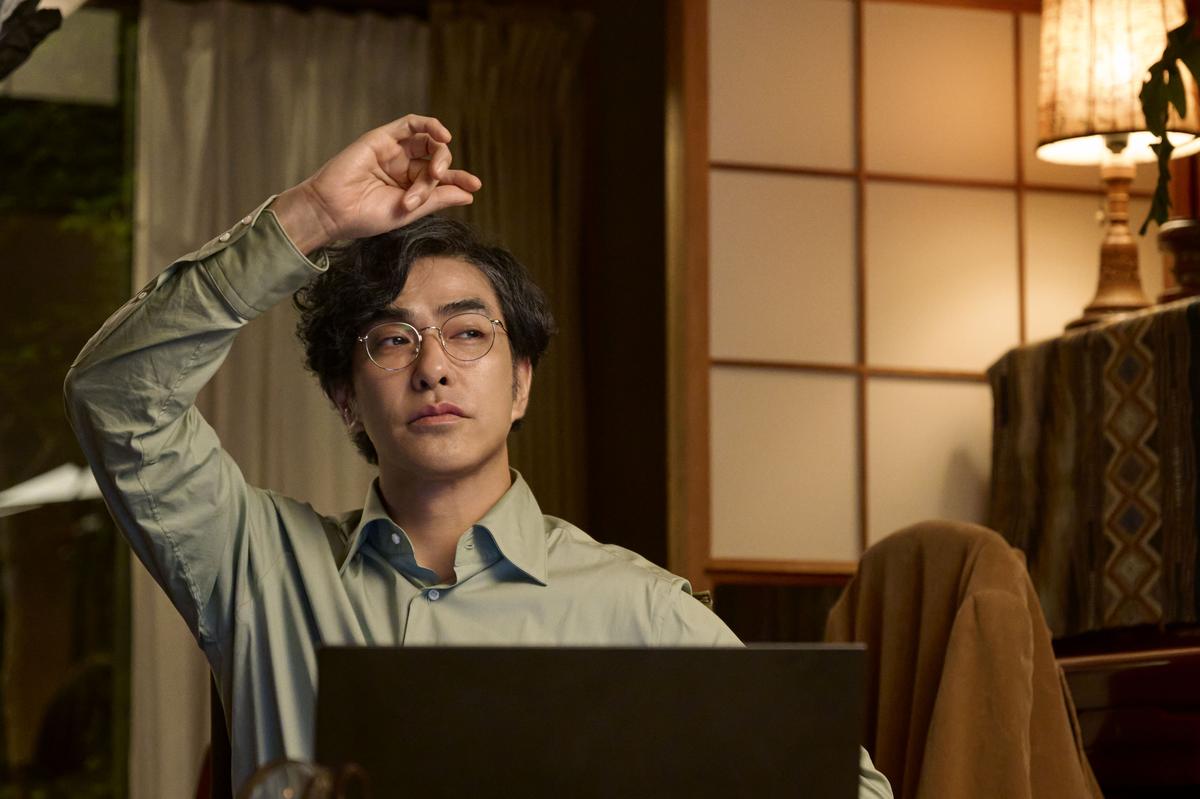
Kazuki Kitamura in a still from ‘Hidden Sun’.
| Photo Credit:
Special arrangement
Q. The male protagonist says in a scene: ‘[a] cut flower is a dead flower’. A metaphorical reference to being an outsider. As an Indian, do you feel like an outsider in America?
A. Sure, I feel like an outsider in the U.S., and then also in India, when I return. I feel I’m from neither place. When here, I feel I’m not American, and in India, I feel I’m not seen as Indian. As an artist… I don’t know if it’s a good thing or a bad thing, it is just a thing.
Q. How did you think of putting Spanish flamenco in a Japanese setting? It adds to the ‘outsider’ theme.
A. Outside of Spain, Japan is flamenco’s second home. I’ve heard people say that for societies which are controlled and repressed and where free expression of emotion is not allowed, they take to the expressive flamenco. Shiho Morita, a world-class Japanese flamenco dancer, choreographed, and (composer) Mao Kitagishi created an original music piece. Also, flamenco has influences of some Rajasthani folk dance (tracing to the Romani people). Just the confluence intrigued me.

Q. How does a short film lend itself to a story better than a feature?
A. The short film form allows for, sometimes, more experimentation and more things are left unsaid. Because it always is a structure of a joke. Not that it has to be funny, but it’s like there’s a setup and there’s a payoff. It can’t narratively hold more. So, it allows for experimentation of form, but as a filmmaker, it just allows you to finish a work faster, quicker. Girls… took eight years to make. My next feature won’t be that long, but will still take multiple years.
tanushree.ghosh@thehindu.co.in