


Celsius founder Alexander Mashinsky agreed to a US Federal Trade Commission (FTC) settlement that permanently bars him from promoting asset-related products and requires a $10 million payment tied to a broader, mostly suspended $4.72 billion judgment.
The stipulated order, entered by Judge Denise Cote in the Southern District of New York on Tuesday, said Mashinsky is “permanently restrained and enjoined” from advertising, marketing, promoting, offering or distributing any product or service that can be used to “deposit, exchange, invest, or withdraw assets.”
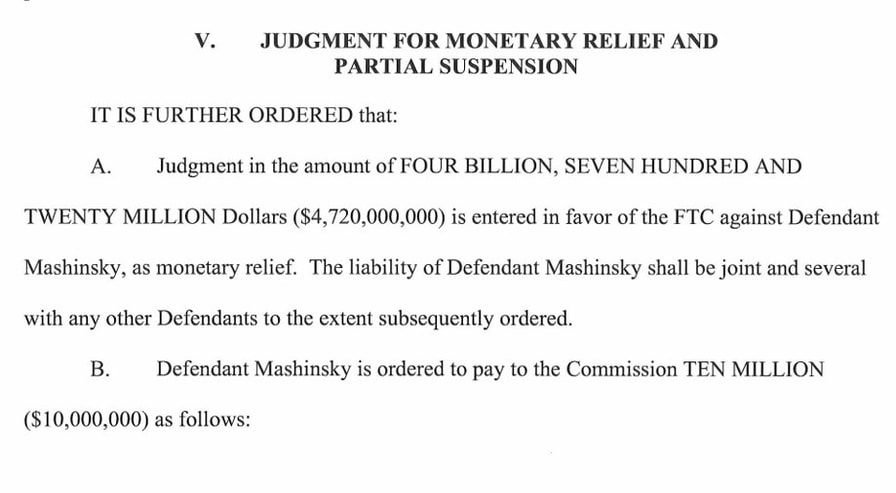
The order entered a $4.72 billion monetary judgment in favor of the FTC against Mashinsky, but most of it was suspended. Mashinsky must now pay $10 million to the FTC. However, the order said this obligation can also be satisfied if he pays at least $10 million to the US Department of Justice under the forfeiture order in his criminal case.
The settlement adds to the legal fallout from Celsius’s 2022 collapse, while preserving the FTC’s ability to pursue the larger judgment if Mashinsky is found to have misstated or omitted assets in financial disclosures.
In May 2025, Mashinsky was sentenced to 12 years in prison after pleading guilty to commodities fraud and securities fraud, with prosecutors saying he misled Celsius customers about the company’s profitability, investment risks and the safety of customer funds.
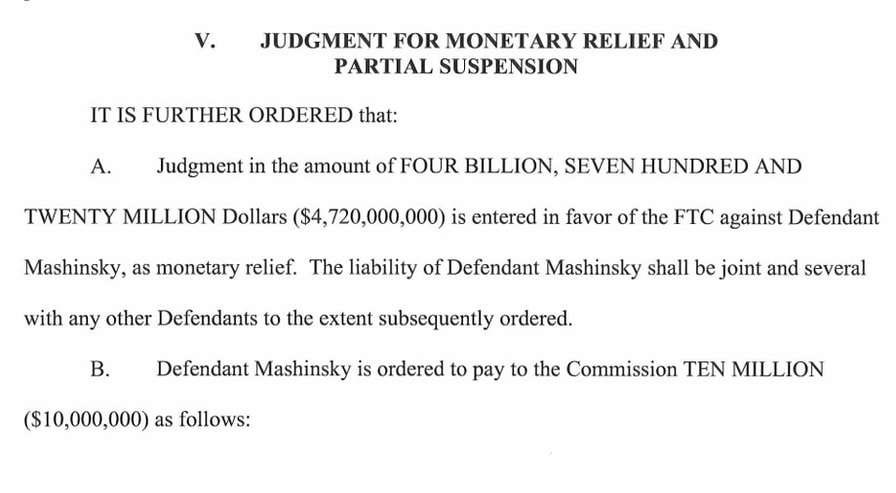
Excerpt from the court filing. Source Court Listener
Suspended judgment can be revived
According to the order, the remainder of the judgment beyond the $10 million payment obligation is suspended, but the suspension is conditional.
It can be lifted if the FTC asks the court to do so and the court finds that Mashinsky failed to disclose a material asset, misstated the value of an asset or made another material misstatement or omission in his financial disclosures.
Related: Judge rejects new trial for former FTX CEO Sam Bankman-Fried
If the suspension is lifted, the order said the $4.72 billion judgment would become immediately due against Mashinsky.
That amount would be reduced by any payments already made under the FTC order, any amount paid to consumers through the DOJ forfeiture order in his criminal case or any amounts Mashinsky can show were paid to consumers by other defendants, including through the Celsius bankruptcy case.
The structure allows the FTC to preserve a larger consumer-redress claim while limiting Mashinsky’s immediate payment obligation.