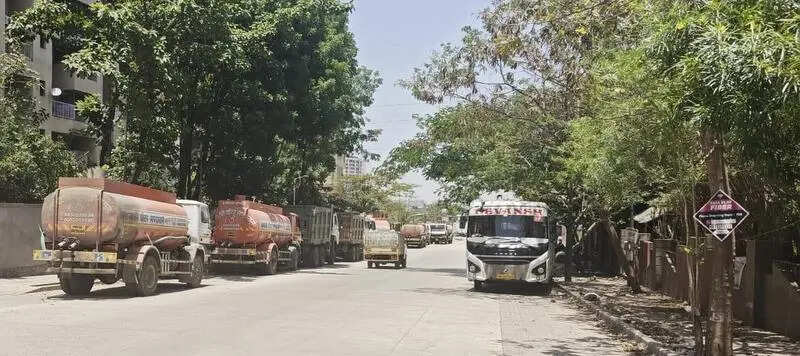

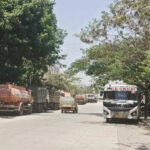

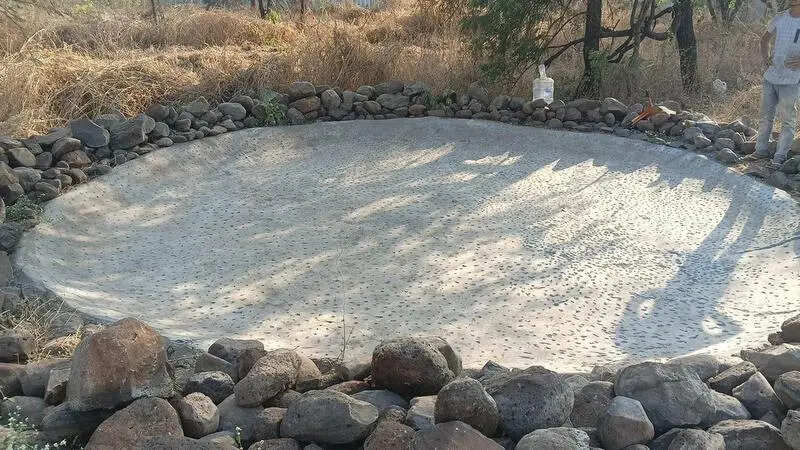
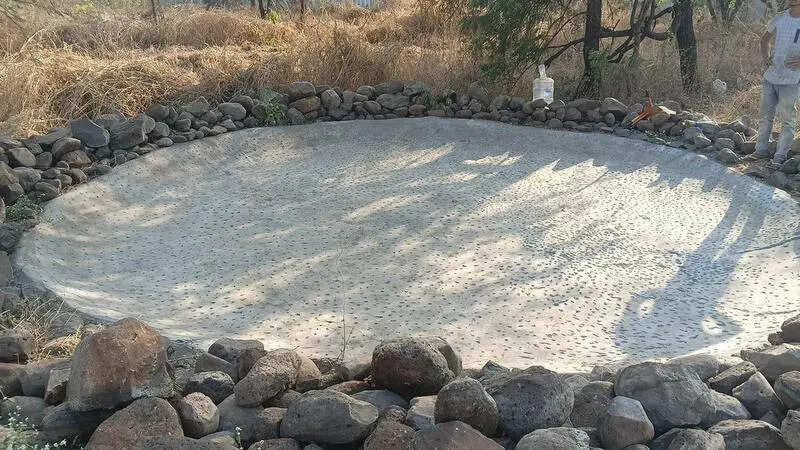
Pune: The survival of thousands of trees and birds on tekdis came under threat because of the water tanker strike when the city is experiencing the hottest spell of this summer so far.Several tekdi plantations depend on tanker water. Its demand increased with the mercury soaring to nearly 42°C in Lohegaon and about 40°C in Shivajinagar. Bhupesh Sharma, secretary, Anandvan Foundation, which conducts afforestation drives in the Anandvan Reserve Forest area, said, “The heat impact is very high. The water we store for birds is drying up within 24 hours. The heat over the last four-five days has made it worse.”Sprawling over around 250 acres with nearly 85,000 plants, the site requires daily watering of 10,000 to 15,000 trees. This translates to an estimated two lakh litres of water per day — sourced entirely through tankers.“The tanker water supply stopped from Tuesday because of the strike. We tried to store some water,” Sharma said.Pandurang Chandrakant Bhujbal, the founder member of Vasundhara Abhiyan Baner, an environmental NGO working on the Baner-Pashan hills since 2006, said the group had planted over 55,000 indigenous saplings so far and added 4,000–5,000 plants every monsoon. These saplings require sustained care for several years to survive, especially under harsh summer conditions.“In temperatures of around 40°C, and on rocky hill terrain, these plants require a large volume of water. We need around five to six tankers per day,” he said.Bhujbal said the supply had dropped significantly because of the tanker operators’ strike. “Water was falling short and prolonged disruption could have put plantations at risk,” he said.At Warje Urban Forest, tanker availability had been a concern even before the strike because of logistical challenges and lack of institutional support.Kishor Moholkar, founder of Yogdevvan Foundation, which manages plantation efforts at Smriti Van in Warje, said the area spanned roughly 60 hectares and faced persistent water access issues. “Some plants dried up because of lack of water,” he said.Some groups have developed alternative systems to cope with rising temperatures and unreliable tanker supply. Ravindra Sinha of Baner Pashan Link Road Welfare Trust said, “We have connected two housing societies in Pashan to our plantation sites using flexible HDPE (high-density polyethylene) pipes. These societies have their own sewage treatment plants and provide us treated water a few times a week,” Sinha said.“This water is essential for the survival of hundreds of saplings. We rely on this recycled water and regular mulching to keep plants alive during extreme heat,” he added.