





Jyoti Shrestha, a Nepal–India-based visual artist and photographer, first came across Nepal’s current Prime Minister, Balendra Shah — sworn in this March — during his earlier life as a rapper known as Balen, through Raw Barz, a YouTube rap battle platform that gained traction in the early 2010s. It was also her introduction to rap battles in Nepal. “I was struck by how many emerging rappers the country had at the time. He was not widely known then, but his visibility grew steadily after Raw Barz as he began releasing music focussed on corruption and public commentary, themes that resonated deeply with frustrated youth,” she says.
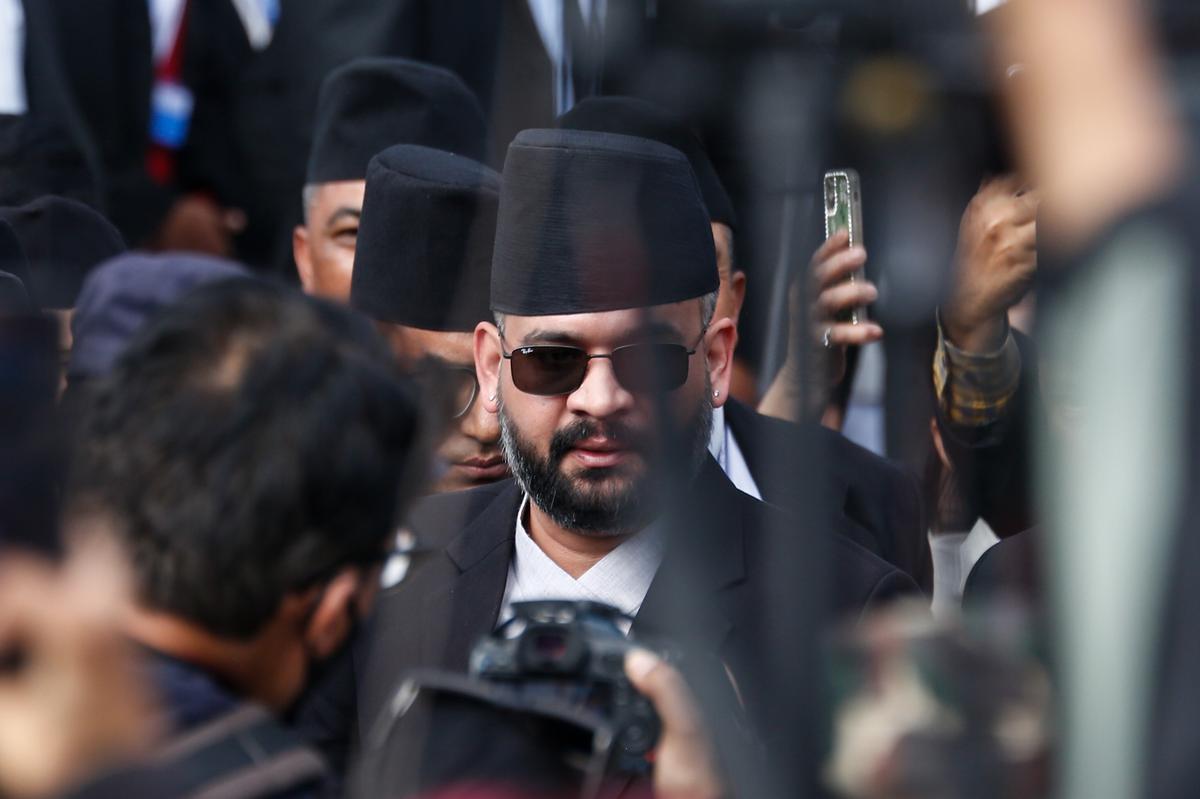
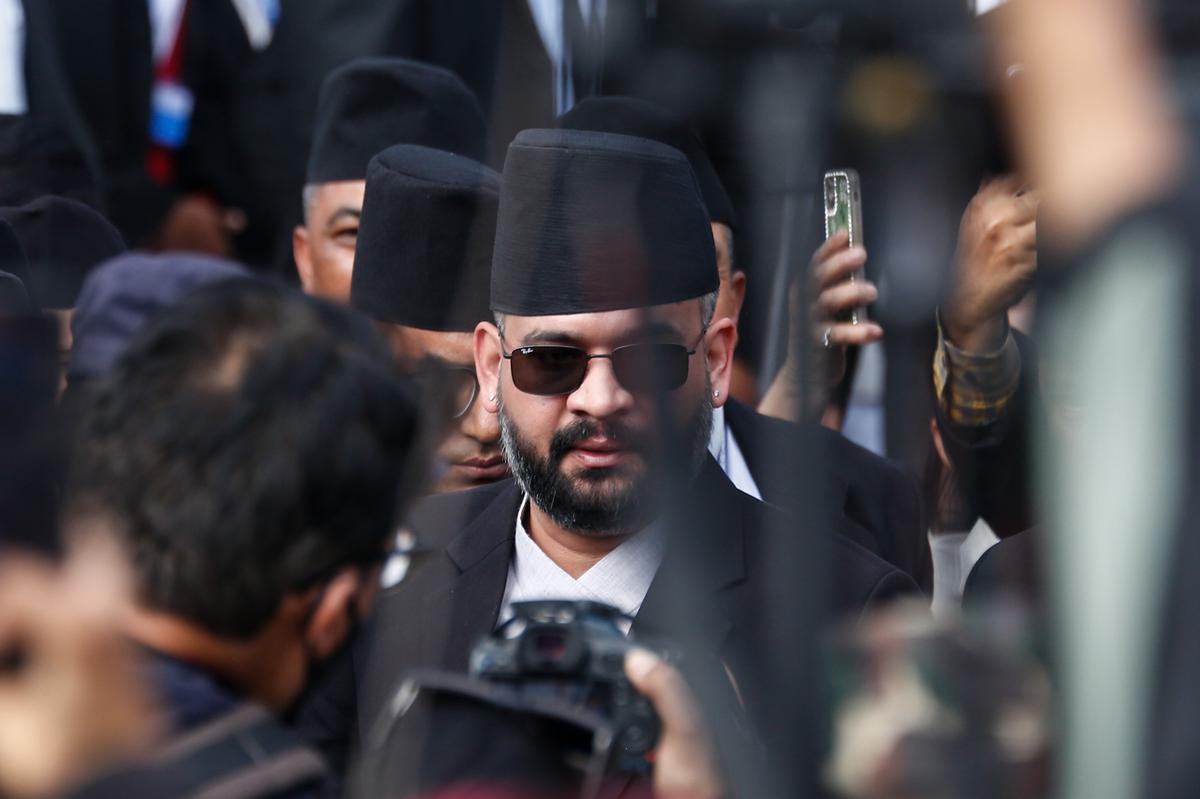
Balendra Shah, senior leader of the Rastriya Swatantra Party (RSP), arrives at the federal parliament premises in Kathmandu, on March 26, a day ahead of his swearing-in as Prime Minister
| Photo Credit:
Getty Images
The video, which has amassed around 15 million views on YouTube is rough by current standards, but its unfiltered quality feels true to the format. Dressed in a white shirt and black waistcoat, Balendra performs in Raw Barz’s signature open, public-facing cypher spaces, with live crowds gathered around. Even then, his style is restrained, controlled, and almost speech-like, eschewing theatrics in favour of a delivery that hinted at social frustration before it was fully articulated.
That same clarity would later define his political rise. Running as an independent candidate in the 2022 Kathmandu mayoral elections, he secured over 61,000 votes. The 35-year-old’s campaign was notably low-budget and digitally driven, relying heavily on social media, word of mouth, and a growing base of young voters disillusioned with traditional politics. Eschewing large rallies and party machinery, he positioned himself as an outsider — an engineer, rapper and citizen — promising administrative reform, transparency and accountability.

Balendra Shah
| Photo Credit:
Instagram/balenshah
As mayor, his tenure was marked by highly visible anti-corruption drives and urban interventions, from clearing illegal encroachments, often using bulldozers that became emblematic of his governance style, to pushing reforms in waste management, public schools and city infrastructure. “His use of bulldozers to remove illegal structures generated significant debate, becoming a symbol of his approach to governance, which is forceful, visible, and difficult to ignore,” says Jyoti.
His public image also became more defined during this time, she adds, including elements like his signature sunglasses, which became a recognisable part of his persona. “He gained further visibility during the Gen Z protests in 2025, when his songs circulated widely,” she says.
Public shift
Over time, even in those early videos, Balendra’s style feels anomalous and more about a clipped, almost bureaucratic cadence that prioritises clarity over cleverness, a delivery that sounds like he is addressing a room rather than performing for it. By the time he released Balidan, roughly six years ago, that instinct had hardened into purpose with minimal production, direct writing, and an unambiguous critique of corruption and systemic failure, at a moment when Nepal’s post-republic fatigue was becoming more visible among urban youth.
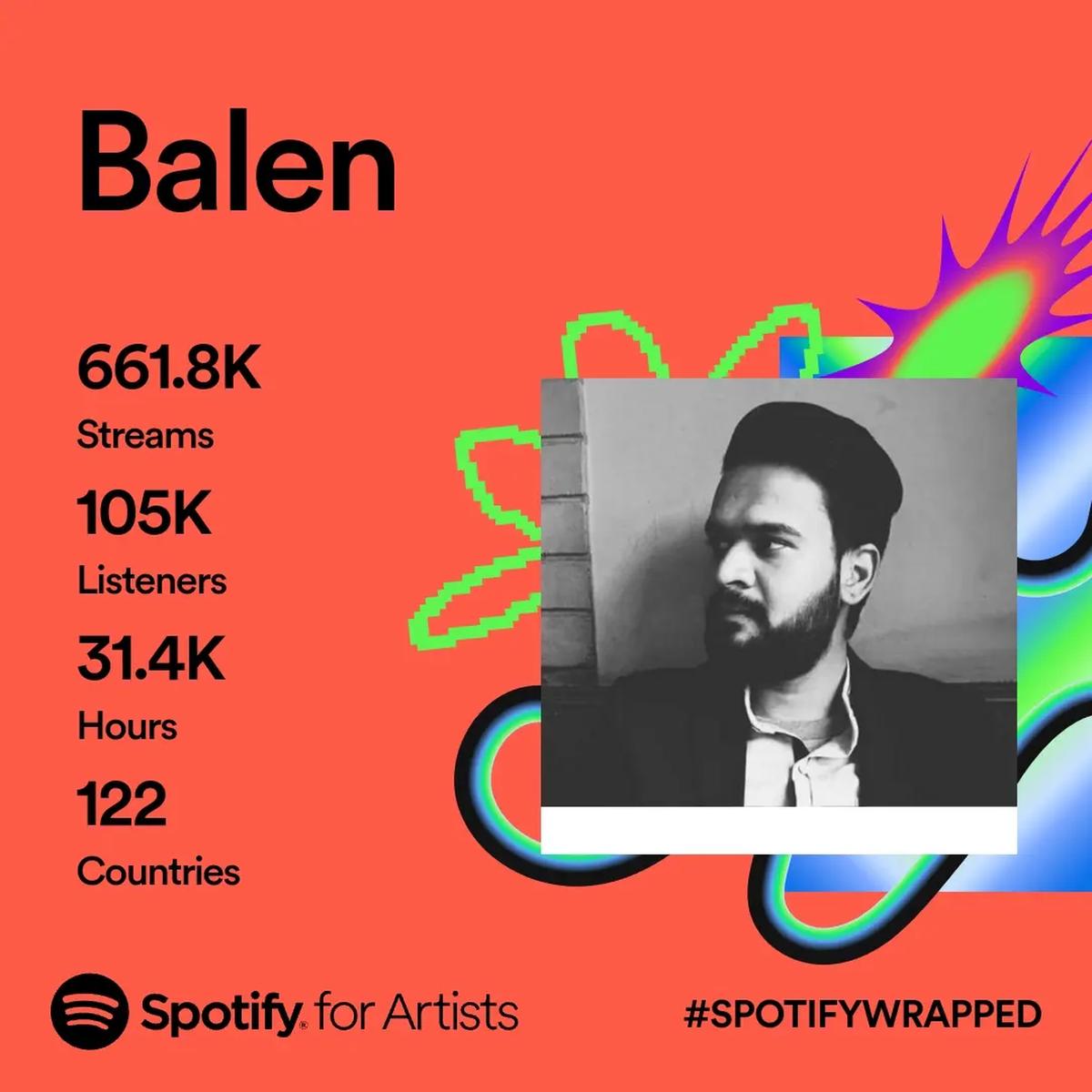
Balendra’s Spotify Wrapped from 2023
| Photo Credit:
Instagram/balenshah
For longtime listener Bnesh Shrestha, who has followed his work for over a decade, that clarity is central to the appeal. “Rhyming and metaphors play a significant part in a rap song. Balen dai’s songs encapsulate them greatly. He is really good with Nepali words and rhyming. Moreover, his poems are worth reading,” he says. “Balidan and Nepal Haseko are two of my favourites. In the former, he talks about the ill doings of political parties, while in the latter, the title says it all — he wants to see Nepal and Nepali people smiling.” He also points to Aam Nepali Buwa as one of Balen’s more affecting songs: “He talks about an ordinary Nepali father who is doing everything in his might for the well-being of his family, while still not getting his due respect.”
Nepal Haseko, which exists in multiple iterations but resurfaced strongly around 2024–2025, briefly widens his emotional register with the inclusion of the sarangi and a more expansive visual language that moves through Kathmandu, suggesting nostalgia, even tenderness. Yet he never fully commits to that softness, returning to commentary before the song can settle, reinforcing the sense that introspection is not his primary instinct. Savage (released around 2017–2018) sits awkwardly in this timeline: a darker, more globally coded rap track where his flow tightens but his perspective narrows, leaning on aggression and familiar tropes that dilute what makes him distinct.
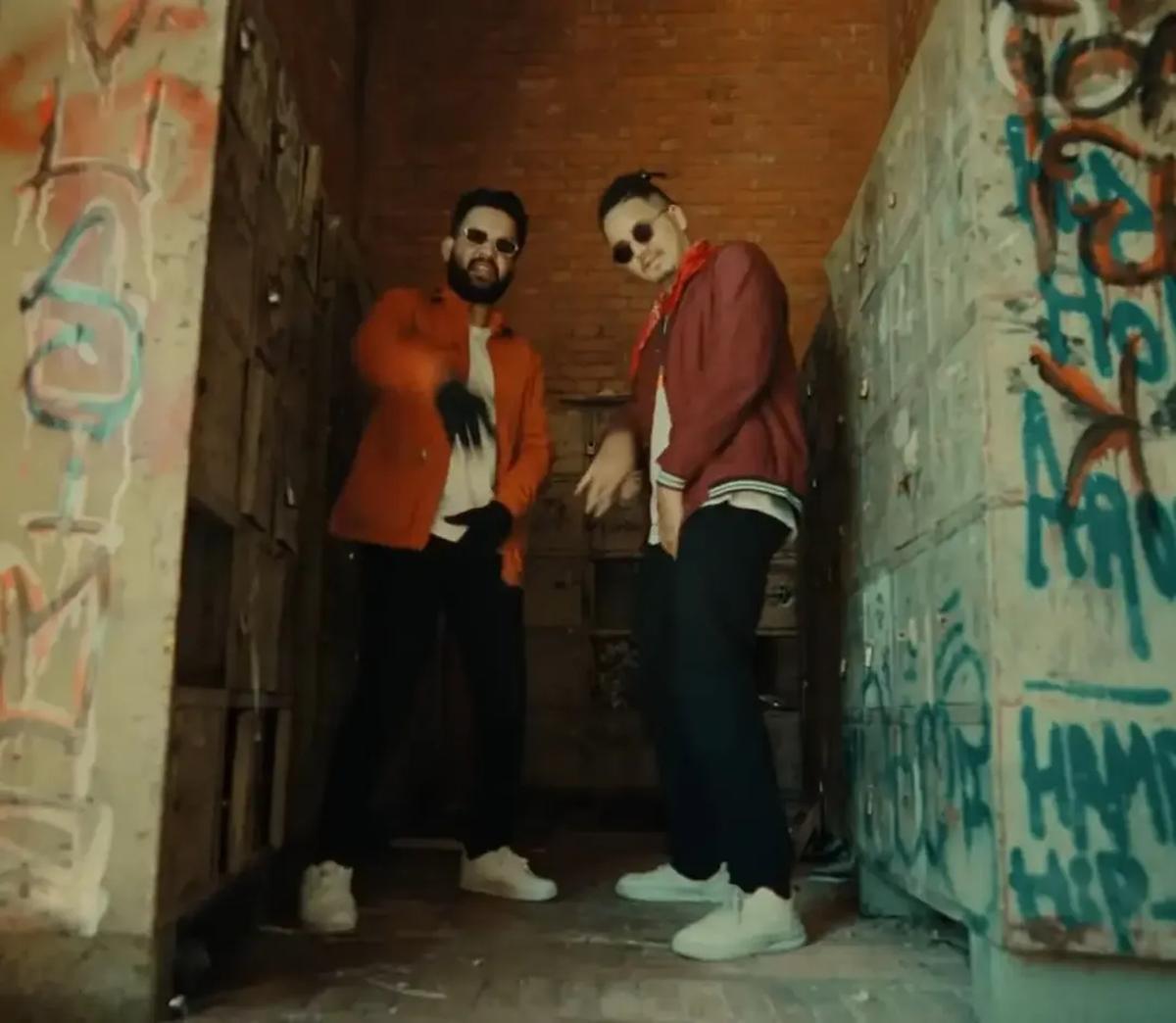
A shot from Balen’s Local Thito music video, released in 2020
| Photo Credit:
Instagram/balenshah
Nobel Rimal, a Kathmandu-based researcher of digital subcultures and political strategist specialising in online memes, says Balendra was already a well-known figure before his 2022 mayoral run, “though his fame was initially rooted in a very specific, highly engaged youth subculture”. His political engagement, he notes, began through music. “Sadak Balak (2012) tackled systemic neglect. Like most artistes, he understood that culture drives politics, and through his music, it seems he has always viewed his art as an instrument of culture that, in turn, affects statecraft,” says Nobel.
In a 2013 post, Nobel adds, Balen wrote: “I fight with pen and paper, weaponise literature and art to glorify Nepal, representing the aspirations of the Nepali people.”
“Politics, at its core, is an exercise in myth-building, and whoever controls cultural symbols ultimately controls the State,” Nobel says. “Rap is rhythm and poetry. What created Balen’s success is the widespread appeal of a poet who speaks for the people, combined with decentralised digital networks amplifying these sentiments.”
For him, Balendra’s rise is emblematic of a generational shift. “The old political establishment probably thinks an underground music video with expletives, girls and weed is a career-ending scandal. But if you grew up in Nepal as a young person, you grew up with a phone and the Internet. Nepali youth look at traditional leaders — men dressed in pristine daura suruwals (a traditional Nepali kurta-trouser combination) who have systematically looted the country and stalled development for decades — and come to a clear conclusion. We would much rather have the raw, authentic guy from Raw Barz than the sanitised, optimised thief in a government office.”
The people’s leader
And then there is Jay Mahakaali, re-released on March 26, just before he was sworn in as Prime Minister, its video folding campaign imagery into religious symbolism and invoking Mahakali to frame anger as moral force, at a time when Nepal had just emerged from the September 2025 youth-led protests that toppled the government and left at least 77 people dead.
For multi-genre music producer and DJ Foseal, the association has always been rooted in music. “I had the privilege of producing his track Nepal Haseko, which received a wonderful response from listeners,” he says. Although their interactions have largely taken place in the studio, Foseal describes Balendra as an attentive and exacting collaborator. “He listens thoughtfully to suggestions and provides meaningful feedback. He’s also a genuine collaborator, actively engaging not only in the music-making process but also in the mixing and mastering stages of songwriting.”
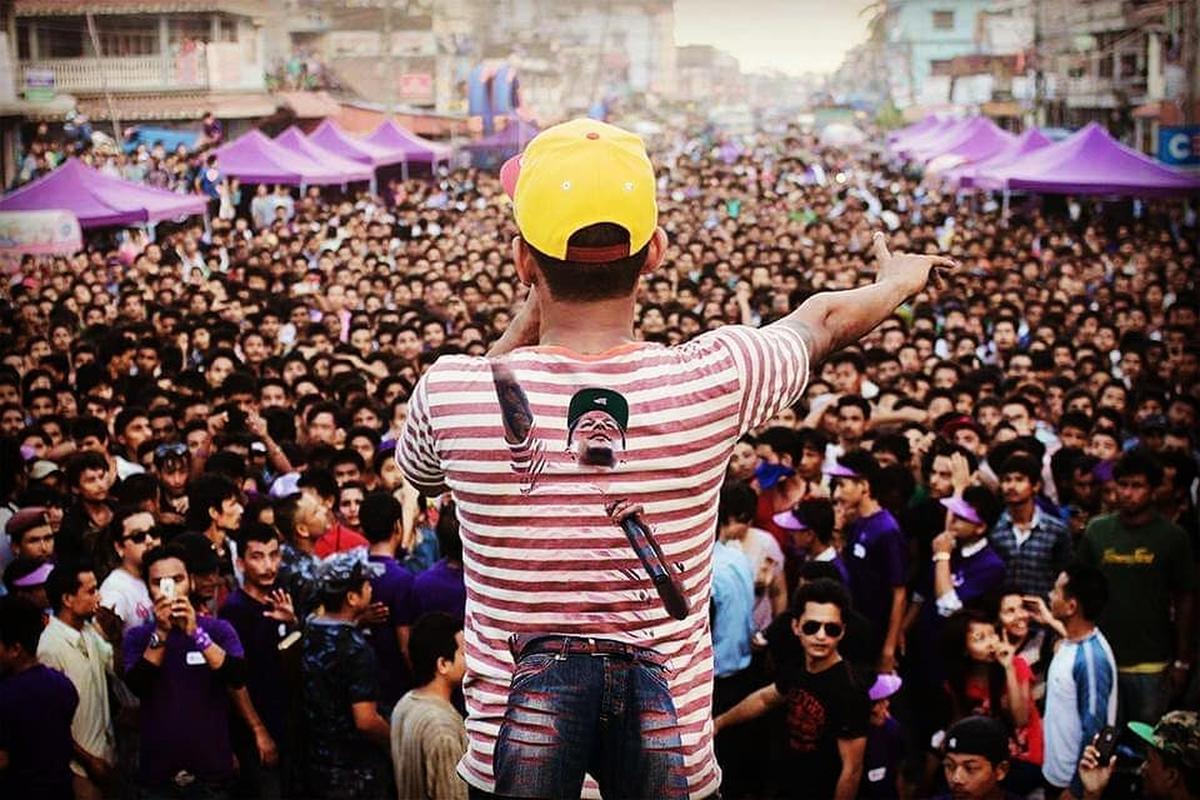
Crowd greets Balen
| Photo Credit:
Instagram/balenshah
Across all of this, his rap style remains consistent, rooted in a refusal of ornamentation, a reliance on plainspoken Nepali, and a delivery that sits somewhere between rap and speech. It limits him musically — there is little evolution in flow, production remains secondary, and the emotional range stays narrow — but it also gives him something most technically stronger rappers lack: rhetorical authority.
Balendra Shah’s music moves in parallel with Nepal’s political climate; absorbing frustrations, amplifying them, and eventually stepping out of the frame of music altogether to act.