




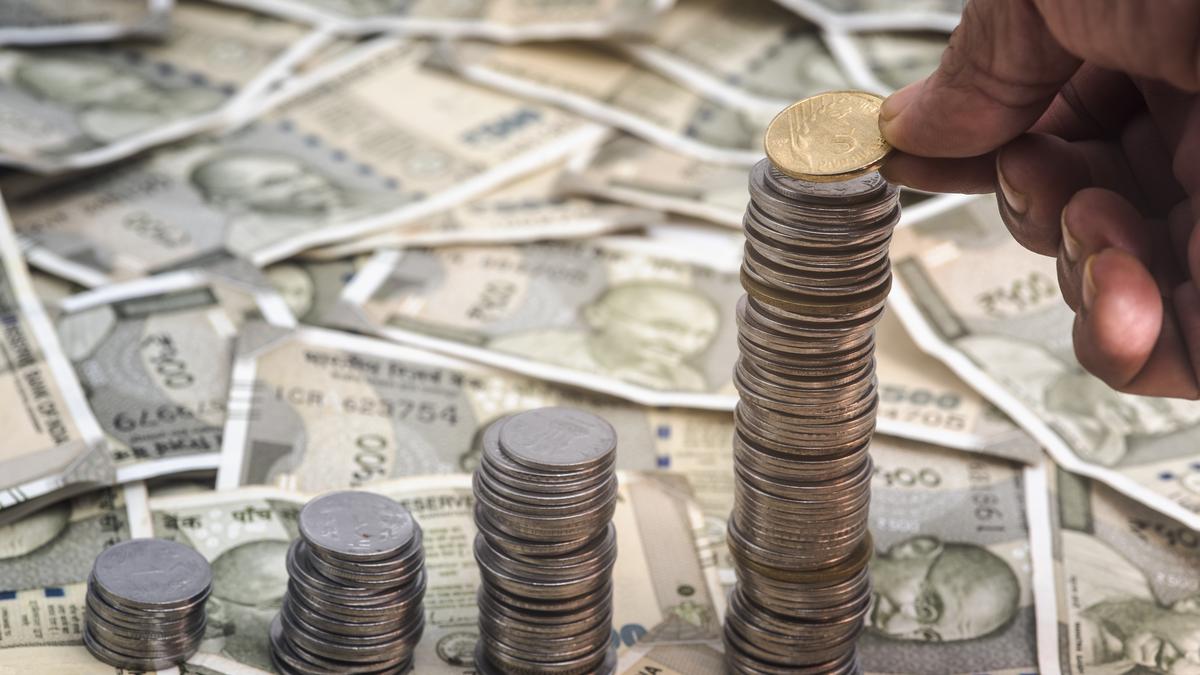
Representative image.
| Photo Credit: Getty Images/iStockphoto
The Indian rupee closed nearly unchanged on Monday (April 6, 2026), wedged between dollar sales spurred by the unwinding of arbitrage positions and importers’ hedging demand amid swirling risks from the Iran war.
The rupee closed at 93.06 against the dollar, after closing at 93.10 in the previous session on Thursday (April 2, 2026). The rupee had climbed nearly 2% on Thursday (April 2, 2026), as it bounced back from a record low of 95.21 after the Reserve Bank of India doubled down on curbing speculation.

The currency rose to a two-week high of 92.7925 in early trading on Monday (April 6, 2026), but shed much of it as importers stepped in to lock in hedges, while traders also pointed to dollar demand linked to foreign portfolio outflows.
The heightened importer demand was also reflected in hedging costs, which rose by the most since the 2007-2009 global financial crisis. Thin forward market liquidity amid uncertainty over the fallout of the RBI’s measures to curb FX arbitrage trades amplified the move, along with a shift of offshore positions to the onshore market.

The 1-year dollar-rupee implied yield touched a peak of 3.96% before retreating to 3.57%. Concurrently, India’s one-year OIS rate fell nearly 20 basis points to 6.17%, signalling disparate price action in markets that typically move in congruence with each other.
“USD/INR and forwards seem more driven by flows than fundamentals at the moment, which could persist this week as the impact of the RBI measures plays out,” an FX salesperson at a foreign bank said.
Meanwhile, global markets were on tenterhooks after U.S. President Donald Trump warned of “hell” for Iran unless it reopened the Strait of Hormuz by Tuesday (April 7, 2026). Reports of a push for a ceasefire, though, helped calm some nerves and pushed Asian stocks higher, while futures pointed to a positive start on Wall Street.

Back in India, RBI’s monetary policy decision is due on Wednesday (April 8, 2026), and the central bank is widely expected to keep rates unchanged.
“In our view, the tone of the policy should be to demonstrate a sense of calm and reaffirm RBI’s commitment to temper any large market moves on the back of heightened uncertainty,” economists at Citi said in a note.
Published – April 06, 2026 06:23 pm IST