






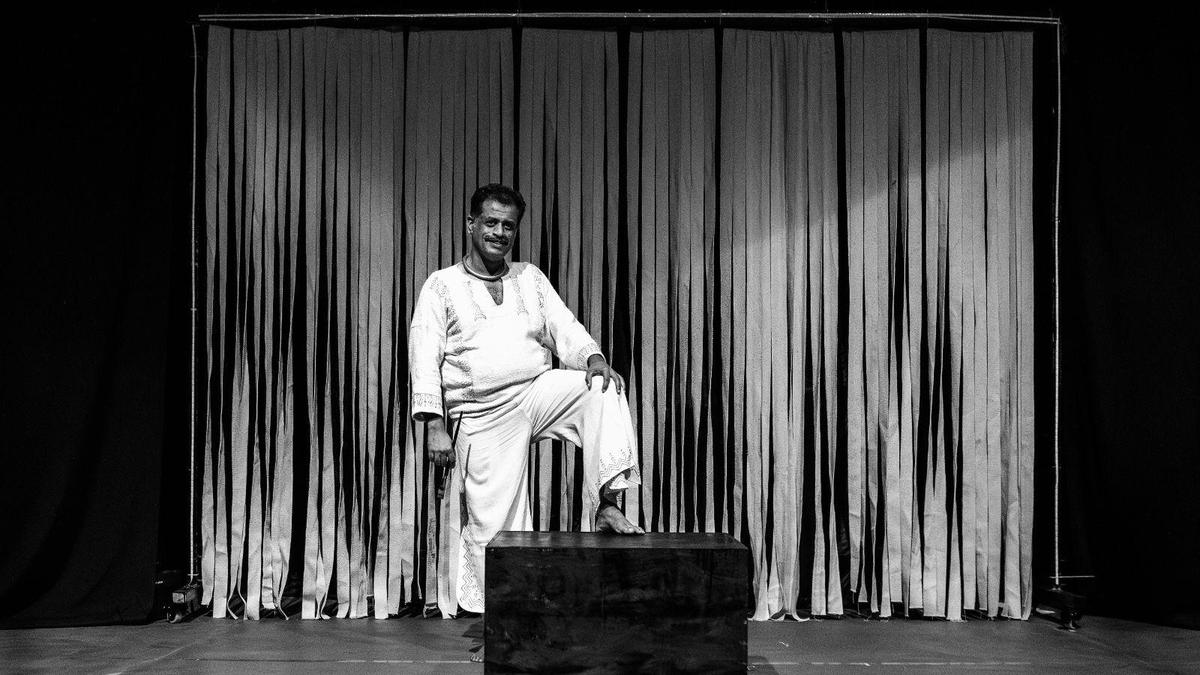
From the play Hand of God
| Photo Credit: SPECIAL ARRANGEMENT
Hand of God explores consent and violence in intimate relationships to show how love, marriage, and power become tools of control. The installation pivots marital rape, and because of the interactive nature of its conception, the play demands its audience take a stance. There is no escaping whether it makes them uncomfortable, overwhelmsed or is triggering.
“It has been different each time it has been staged, depending on how the audience responds to it. The shows have been intense, provoking intense debate within the audience. Often, we, the crew and actors, have been surprised by the outcome,” he says. Arun straddles mediums, he is the writer of films such as Nellikka, Jamna Pyari and Finals, which he also directed. His web series Pharma is streaming on JioHotstar.
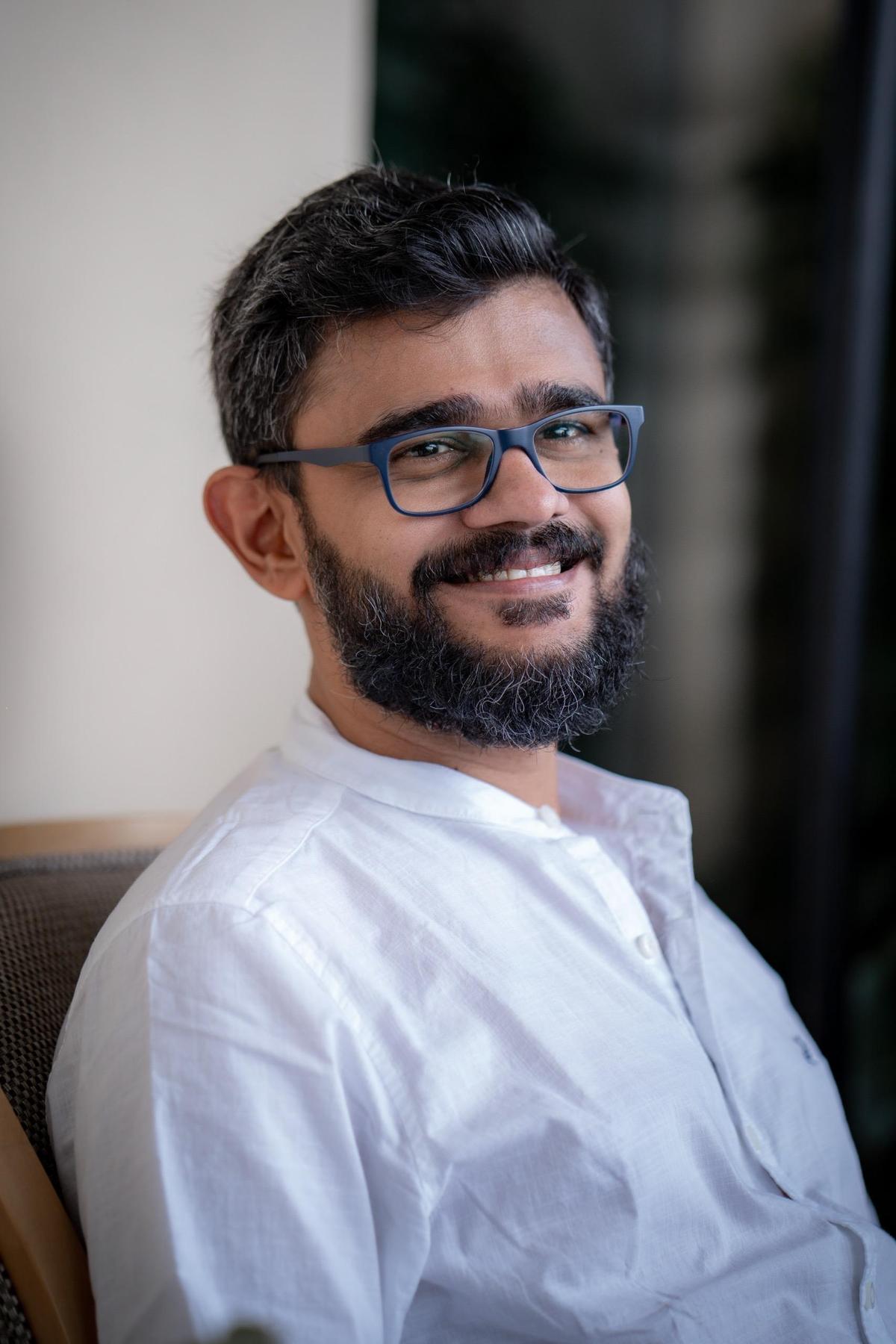
Theatre and movie director PR Arun
| Photo Credit:
SPECIAL ARRANGEMENT
Hand of God shapeshifts per performance depending on the ‘collective conscience’ of the audience. “If one day it was emotional, another day it triggered intense debate. The audience decides the climax, the action progresses as the majority wants,” Arun says.
He first wrote the play in English in 2019. “Why I wrote it in English, I don’t know. Today, I feel that being local is being global, especially topics that have to do with gender and sexuality should be spoken about in the native language. That is how the play got rewritten in Malayalam, in another format itself!”

God is at the centre of a world where power, justice and love collide. However, God is not God as we know. It is a metaphor for systems — societal and familial — that decide whose suffering deserves precedence. So the audience gets to vote for who pays the price. There is no black and white in this world where the characters are complicit and affected by what happens.
This invites the audience to confront the uncomfortable shades of grey. The play uses a blend of dark humour, sensuality and unease to reflect on gender, politics of the body, faith and democracy.
Misogyny manifested
Among the main characters are a king, queen and slave; at the heart of the play lies the queen’s rape, first by the slave and then by her husband, the king. The uncomfortable questions begin here. Audience response has ranged from cheering when the king asserts his ‘ownership’ of his wife’s body, victim blaming and slut-shaming, to the manifestation of misogyny and patriarchy, Arun says. Astonishingly, some of these responses were by women, which makes it even more interesting. He plans to share the results of voting, where the audience cast votes for the character they feel is guilty, with experts for a sociological study.
“It is extremely provocative, and is for mature audiences; it is not for children,” Arun asserts.
The cast includes Jeo Baby, Meenakshy Madhavy, Anagha Narayanan, Sidharth Varma, Mallika M, Kishore Roshik, and Joshy Johnson. Of casting Jeo Baby, who has proven his acting chops in films, Arun says, “For the role of the king, we were looking for an actor ‘like Jeo Baby’. That thinking led to ‘why not ask him?’” He spoke to Jeo, who, at the time, was looking to give theatre a shot. Anagha Narayanan has been seen in Thinkalazhcha Nishchayam, Anpodu Kanmani, and Vasshi among other films apart from being an active presence in theatre plays.
The play has been staged at six venues in Kochi, including the Kochi Muziris Biennale. Arun intends to take the play to other cities and towns in Kerala including Thiruvananthapuram, Calicut, and Kanhangad, and Bengaluru.
Published – March 27, 2026 12:23 pm IST